
The short answer
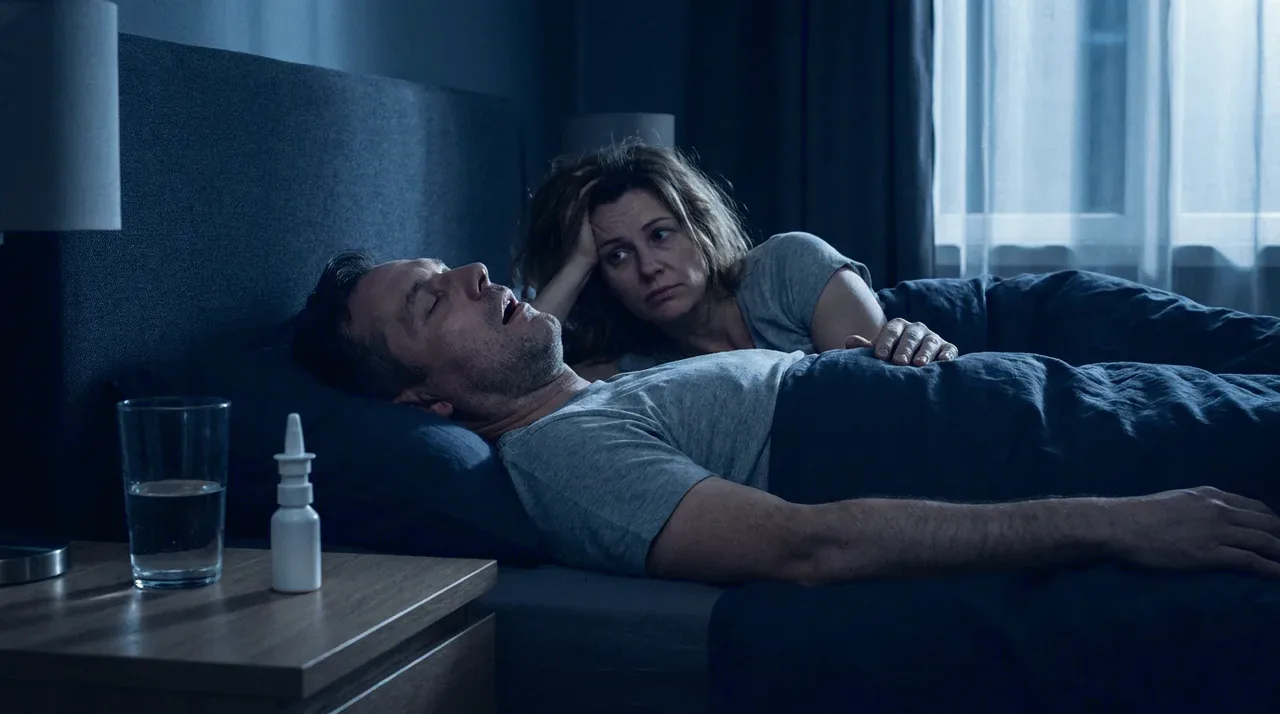
Still snoring after an operation is common and does not mean it went wrong. Snoring often comes from more than one place at once (nose, palate, tongue, epiglottis), and an operation only treats the area that was operated on. Other times something has changed since: extra weight, alcohol or sleeping on your back. The sensible step is not to operate again blindly: first find out where the snoring comes from now.
First: has enough time passed?
In the first weeks the nose or throat is swollen, with crusts or splints, and it is normal to snore even more. Do not judge the result before your surgeon considers the recovery complete. What to expect in those weeks is explained in recovery after snoring and apnea surgery.
Why you may still snore
1. The snoring came from more than one place
In a series of 1,249 people examined with sleep endoscopy, 68% had the airway closing at more than one level; the most frequent combination was the palate together with the base of the tongue [3]. If only one level is operated on, the other keeps vibrating.
2. The nose was operated on, but the snoring came from the throat
Nose surgery improves nasal breathing, sleep quality, daytime sleepiness and snoring [2], but it does not significantly lower the apnea index [1]. If the snoring comes from the palate or the tongue, operating on the nose alone is not enough. If what bothers you is that your nose is still blocked, read I had nose surgery and still cannot breathe well.
3. Years have passed since palate surgery
The good news: a 2026 meta-analysis of 55 studies (1,815 patients) found that palate surgery without tonsillectomy clearly reduces snoring intensity as rated by the patients themselves, and found no sign that this benefit fades with longer follow-up [4]. Apneas are a different matter: in patients followed for 8 years after palate surgery, the apnea index rose again between years 2 and 8 (from 24.2 to 38.9 events per hour), although it stayed below the pre-surgery figure and daytime sleepiness stayed better [5].
4. Weight, alcohol and sleeping position
- Weight: in a population study, gaining 10% of body weight was followed by a rise of about 32% in the apnea index, and losing 10% by a fall of about 26% [6]. In the 8-year palate-surgery follow-up, each point of body mass index gained added on average 3.8 events per hour [5]. More in weight and sleep apnea.
- Alcohol: in a meta-analysis, drinking alcohol was associated with louder snoring, about 4 more apnea events per hour and lower night-time oxygen [7].
- Sleeping on your back: in a general-population study, apnea was clearly worse on the back in 75% of people who had it [8]. After a surgery that did not fully cure the apnea, the share of patients whose apnea depended on position rose from 26% to 54% [9].
5. There may be sleep apnea
Snoring can be just noise or can come with sleep apnea. If someone sees you stop breathing, you wake up choking or you feel sleepy during the day, you need a sleep study: European sleep surgeons agree that the diagnosis of apnea is made with a sleep study, not with a questionnaire [10].
How to find where the snoring comes from now
- Examination and nasal endoscopy: the ENT checks how the nose and throat look after the operation, awake, with a thin camera.
- Sleep study: it says whether there is apnea and how severe it is, and whether it gets worse on your back. The figures are explained in AHI, ODI and CT90.
- Sleep endoscopy (DISE): awake, the throat does not behave as it does asleep. With the DISE the airway is watched during a medication-induced sleep. In a review of 8 studies, seeing it asleep changed the surgical plan in about half of the patients, although changing the plan does not on its own guarantee a better result [11]. It also shows the closure patterns most linked to an operation not working: the palate closing like a ring, the side walls of the throat collapsing and complete collapse of the base of the tongue [12].
- A first look at home: the snore analyzer compares the tone and rhythm of your recording with four example sounds. It is a similarity of sound, not a diagnosis.
What can be done, depending on what is found
Sleeping on your side
After a surgery that did not fully cure the apnea, 23 of every 100 patients had normal breathing when lying on their side and could be treated with a positional device [9]. See positional therapy.
Oral appliance
The clinical guideline of the American academies of sleep medicine and dental sleep medicine recommends an oral appliance rather than no treatment for simple snoring [13]. Whether it will work for you can be checked beforehand: DISE before the appliance.
Surgery aimed at the missing level
If the DISE shows that the palate or the base of the tongue is still closing, surgery can be planned for that level, for example a pharyngoplasty or robotic tongue-base surgery.
CPAP, if there is apnea
If you have apnea and had nose surgery, that operation was not wasted: in a meta-analysis the CPAP pressure needed fell from 11.6 to 9.5 cm of water and use measured by the machine rose from 3.0 to 5.5 hours a night [14]. If CPAP is hard for you, read CPAP alternatives.
Weight and alcohol are worth working on in every case: they add to any treatment and cost no operation.
When to see a doctor without waiting
- Someone has seen you stop breathing while asleep.
- You wake up choking or gasping for air.
- You feel sleepy during the day, especially if you drive (see sleep apnea and driving).
If you had surgery and still snore, the next step is finding out where the snoring comes from now, not guessing.
Frequently asked questions
Is it normal to still snore after nose surgery?
Yes, it is common and it does not mean the operation went wrong. Nose surgery improves nasal breathing and the snoring that comes from the nose, but if the snoring also comes from the palate or the tongue, it will continue.
How long should I wait to know whether the operation worked?
In the first weeks swelling, crusts or splints can make you snore even more. Judge the result once your surgeon considers the recovery complete, not before.
Will a second operation stop my snoring?
It depends on where the snoring now comes from. Before another operation it is worth finding out which area vibrates or closes during sleep, with an examination and, if needed, a sleep endoscopy. Sometimes the answer is not more surgery but sleeping on your side, an oral appliance or losing weight.
I had palate surgery years ago and I am snoring again. Is that normal?
It can happen. In an 8-year follow-up after palate surgery, apneas rose again over time, especially in people who had gained weight, although daytime sleepiness stayed better than before surgery. A 2026 meta-analysis did not find that snoring relief faded with the years, so if snoring comes back it is worth checking what has changed.
What if my snoring is actually sleep apnea?
If someone sees you stop breathing, you wake up choking or you are sleepy during the day, ask for a sleep study: a questionnaire is not enough to confirm or rule out apnea.
References
- Ishii L, Roxbury C, Godoy A, et al. Does Nasal Surgery Improve OSA in Patients with Nasal Obstruction and OSA? A Meta-analysis. Otolaryngol Head Neck Surg. 2015;153(3):326-33. PMID 26183522. doi.org/10.1177/0194599815594374
- Correa EJ, Conti DM, Moreno-Luna R, et al. Role of Nasal Surgery in Adult Obstructive Sleep Apnea: A Systematic Review. Sleep Sci. 2024;17(3):e310-e321. PMID 39268344. doi.org/10.1055/s-0044-1782527
- Vroegop AV, Vanderveken OM, Boudewyns AN, et al. Drug-induced sleep endoscopy in sleep-disordered breathing: report on 1,249 cases. Laryngoscope. 2014;124(3):797-802. PMID 24155050. doi.org/10.1002/lary.24479
- Tschopp S, Meinert F, Mantokoudis G, et al. Patient-Reported Outcomes of Palatopharyngeal Surgery Without Tonsillectomy: A Meta-Analysis. Laryngoscope. 2026;136(9):3706-3717. PMID 41906272. doi.org/10.1002/lary.70526
- Sundman J, Browaldh N, Fehrm J, Friberg D. Eight-Year Follow-up of Modified Uvulopalatopharyngoplasty in Patients With Obstructive Sleep Apnea. Laryngoscope. 2021;131(1):E307-E313. PMID 33405253. doi.org/10.1002/lary.28960
- Peppard PE, Young T, Palta M, et al. Longitudinal study of moderate weight change and sleep-disordered breathing. JAMA. 2000;284(23):3015-21. PMID 11122588. doi.org/10.1001/jama.284.23.3015
- Burgos-Sanchez C, Jones NN, Avillion M, et al. Impact of Alcohol Consumption on Snoring and Sleep Apnea: A Systematic Review and Meta-analysis. Otolaryngol Head Neck Surg. 2020;163(6):1078-1086. PMID 32513091. doi.org/10.1177/0194599820931087
- Heinzer R, Petitpierre NJ, Marti-Soler H, Haba-Rubio J. Prevalence and characteristics of positional sleep apnea in the HypnoLaus population-based cohort. Sleep Med. 2018;48:157-162. PMID 29957486. doi.org/10.1016/j.sleep.2018.02.011
- Martínez Ruiz de Apodaca P, Carrasco Llatas M, Matarredona Quiles S, Dalmau Galofre J. Development of positional obstructive sleep apnea (POSA) after upper airway surgery in OSA patients. Sleep Breath. 2020;24(3):849-856. PMID 31410807. doi.org/10.1007/s11325-019-01910-7
- Olszewska E, De Vito A, Baptista P, et al. Consensus Statements among European Sleep Surgery Experts on Snoring and Obstructive Sleep Apnea: Part 1 Definitions and Diagnosis. J Clin Med. 2024;13(2):502. PMID 38256636. doi.org/10.3390/jcm13020502
- Certal VF, Pratas R, Guimarães L, et al. Awake examination versus DISE for surgical decision making in patients with OSA: A systematic review. Laryngoscope. 2016;126(3):768-74. PMID 26484801. doi.org/10.1002/lary.25722
- Qi Y, Zhao Y, Yan Y, Wu D. Surgical failure guided by DISE in patients with obstructive sleep apnea: a systematic review and meta-analysis. Eur Arch Otorhinolaryngol. 2024;281(7):3333-3343. PMID 38324055. doi.org/10.1007/s00405-024-08484-5
- Ramar K, Dort LC, Katz SG, et al. Clinical Practice Guideline for the Treatment of Obstructive Sleep Apnea and Snoring with Oral Appliance Therapy: An Update for 2015. J Clin Sleep Med. 2015;11(7):773-827. PMID 26094920. doi.org/10.5664/jcsm.4858
- Camacho M, Riaz M, Capasso R, et al. The effect of nasal surgery on continuous positive airway pressure device use and therapeutic treatment pressures: a systematic review and meta-analysis. Sleep. 2015;38(2):279-86. PMID 25325439. doi.org/10.5665/sleep.4414
Take the next step in your evaluation
Dr. Méndez-Benegassi uses your data to answer your message. Email is not end-to-end encrypted: it can be read on the servers it passes through. Do not send medical reports or health data that way.
Data controller: Dr. Iván Méndez-Benegassi Silva, ENT physician.
Purpose: To read and answer your message. Tell us only what is essential; the rest is covered in the consultation.
Legal basis: The healthcare you are requesting (Art. 9.2.h GDPR).
Recipients: Your data is not shared with third parties; only the technical providers needed are involved, as data processors.
Your rights: Access, rectify or erase your data, object, restrict its processing and request its portability by writing to contacto@ronquidoyapneas.com. You may also lodge a complaint with the Spanish Data Protection Agency.
Full details in the Privacy policy.