
Pharyngoplasty Surgery in Madrid: pharyngeal reconstruction techniques
Medically reviewed by Dr. Iván Méndez-Benegassi Silva · Otorhinolaryngology (ENT) Specialist with over 25 years of experience in sleep surgery and advanced rhinology · European Board Certificate (ORL-HNS) · HM Hospitales, Madrid · License No. 282855946
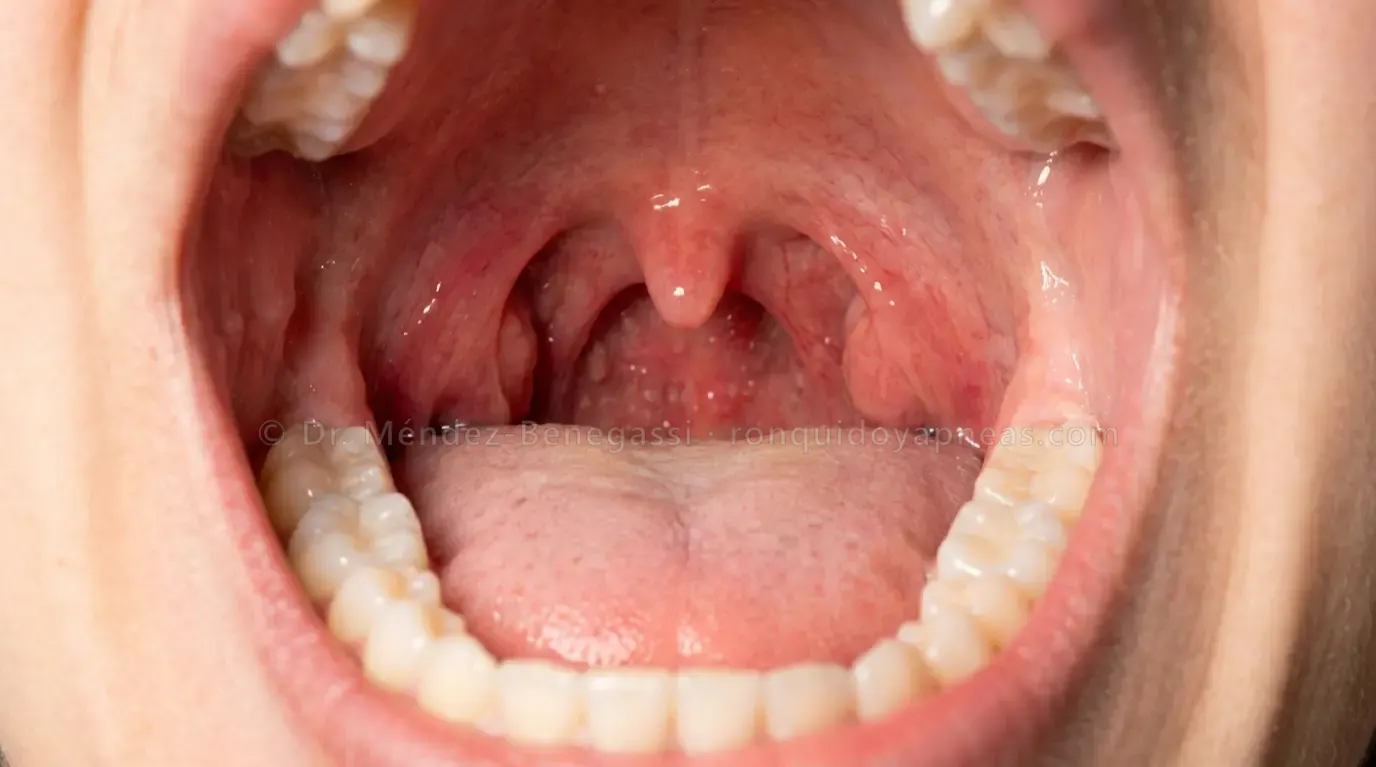
Pharyngoplasty is the operation that reshapes, from inside the mouth, the soft palate, the uvula and the walls of the throat so that they do not close or vibrate during sleep: it is what many people call "palate surgery" or "uvula surgery" for snoring and sleep apnea. Old techniques mainly removed tissue; current ones reposition and tighten the muscle to widen the airway. Dr. Méndez-Benegassi performs these procedures in Madrid (HM Hospitales).
What is pharyngoplasty?
The pharynx is the muscular tube that runs from the back of the nose down to the larynx. During sleep its muscles relax and, if the passage is narrow, the soft palate, the uvula and the side walls (where the tonsils sit) vibrate, which is snoring, or close, which is apnea. Pharyngoplasty works exactly there: it is done under general anaesthesia and through the mouth, so it leaves no scars on the skin.
It is not the same as classic uvulopalatopharyngoplasty (UPPP), the first sleep apnea operation, described in 1981, which removed the uvula, part of the palate and the tonsils. Current pharyngoplasties preserve more muscle. Removing tissue has a price: in a systematic review, about half of the people operated on with UPPP or uvulopalatoplasty had persistent side effects, especially difficulty swallowing, a feeling of something in the throat and voice changes.
It helps when the closure is at the palate or the side walls. If what closes is mainly the base of the tongue, pharyngoplasty alone is not enough and another technique is considered, such as transoral robotic surgery (TORS) of the tongue base, sometimes in the same operation. Where the airway closes is seen with a sleep endoscopy (DISE). And when what gives way is the bony support of the tongue, the operation is the genioglossus advancement.
Types of Pharyngoplasty
| Technique | What is done | What the studies say | Sources |
|---|---|---|---|
| Uvulopalatopharyngoplasty (UPPP): the classic "uvula operation" | Removes the uvula, part of the soft palate and the tonsils to enlarge the throat. | It was the first sleep apnea operation (1981). In a systematic review, about half of the people operated on with UPPP or uvulopalatoplasty had side effects that did not go away, above all when swallowing. | Fujita 1981 (PMID 6801592); Franklin 2009 (PMID 19189776) |
| Lateral pharyngoplasty | In the tonsil bed the superior constrictor muscle is divided and sutured forward; a palatal Z-plasty is added. | In the first trial, with 10 patients, the apnea-hypopnea index (AHI) fell from 41.2 to 9.5 (median). Swallowing discomfort lasted a median of 14.5 days. | Cahali 2003 (PMID 14603056) |
| Expansion sphincter pharyngoplasty (ESP) | The palatopharyngeus muscle is rotated to open the closure between the palate and the pharynx and the side walls. | In a randomised trial of 45 selected adults, the AHI fell from 44.2 to 12.0 and success was 82.6%, versus 68.1% with UPPP. A meta-analysis of 5 studies (155 patients) found 86.3% success. | Pang & Woodson 2007 (PMID 17599576); Pang 2016 (PMID 26541714) |
| Barbed reposition pharyngoplasty (BRP) | Sutures with tiny barbs, which need no knots, suspend and tighten the palate and lateral wall muscles. | Meta-analysis of 20 studies (762 patients): 85.2% success as single-level surgery and a mean AHI drop of 23.9 events per hour (69%). Compared with expansion pharyngoplasty, similar results and shorter operating time. | Vicini 2015 (PMID 25864183); Saenwandee 2022 (PMID 34906825); Neruntarat 2021 (PMID 33368308) |
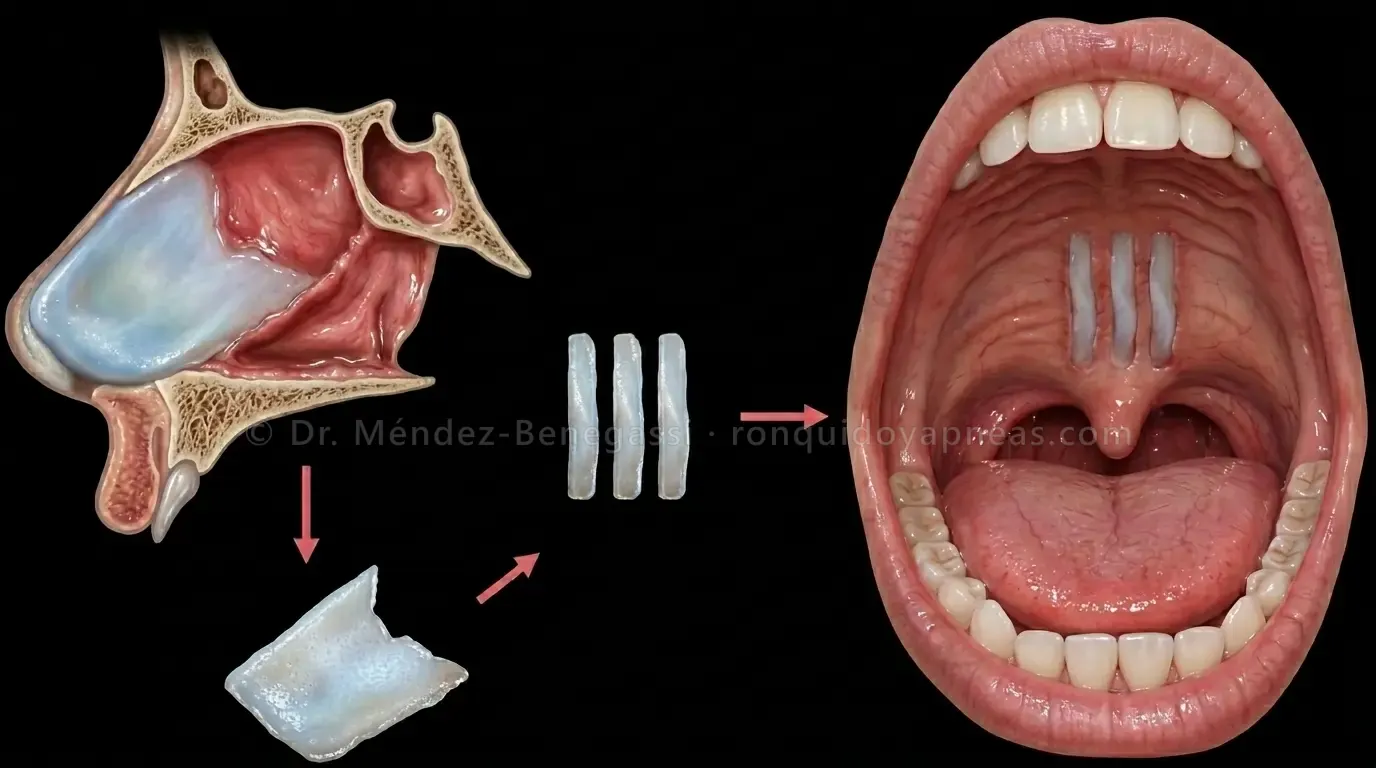
| Septal cartilage graft pharyngoplasty | The cartilage removed from the septum during a septoplasty is inserted in strips into the soft palate to stiffen it. | Preliminary study of 10 patients: no graft extrusion, infection or bleeding at one year, and quieter snoring (from 8 to 4.5 out of 10). There are few studies. | Lee 2018 (PMID 29706415) |
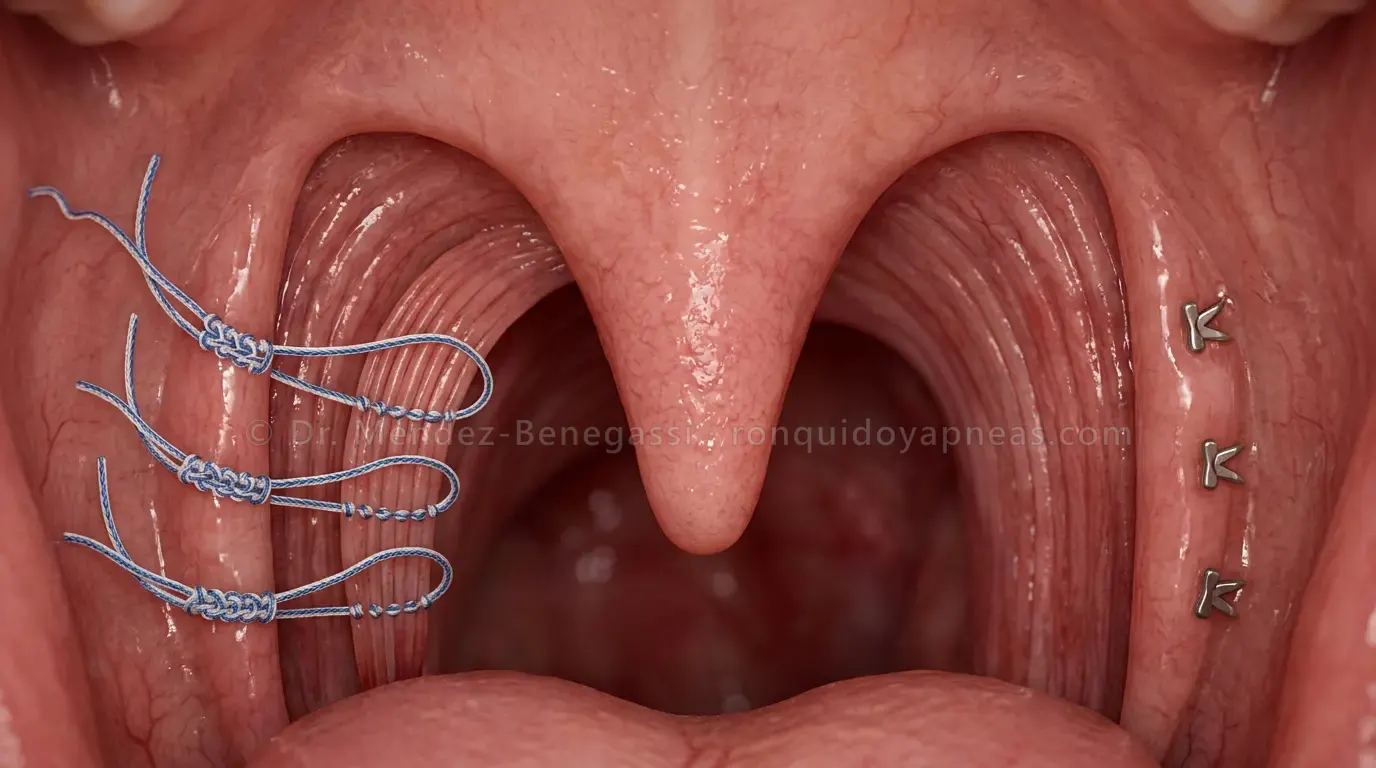
Barbed Repositioning Pharyngoplasty (BRP)
A reconstructive technique. Uses barbed sutures that tighten the palatal and lateral wall muscles without knots, creating a wide and stable opening.
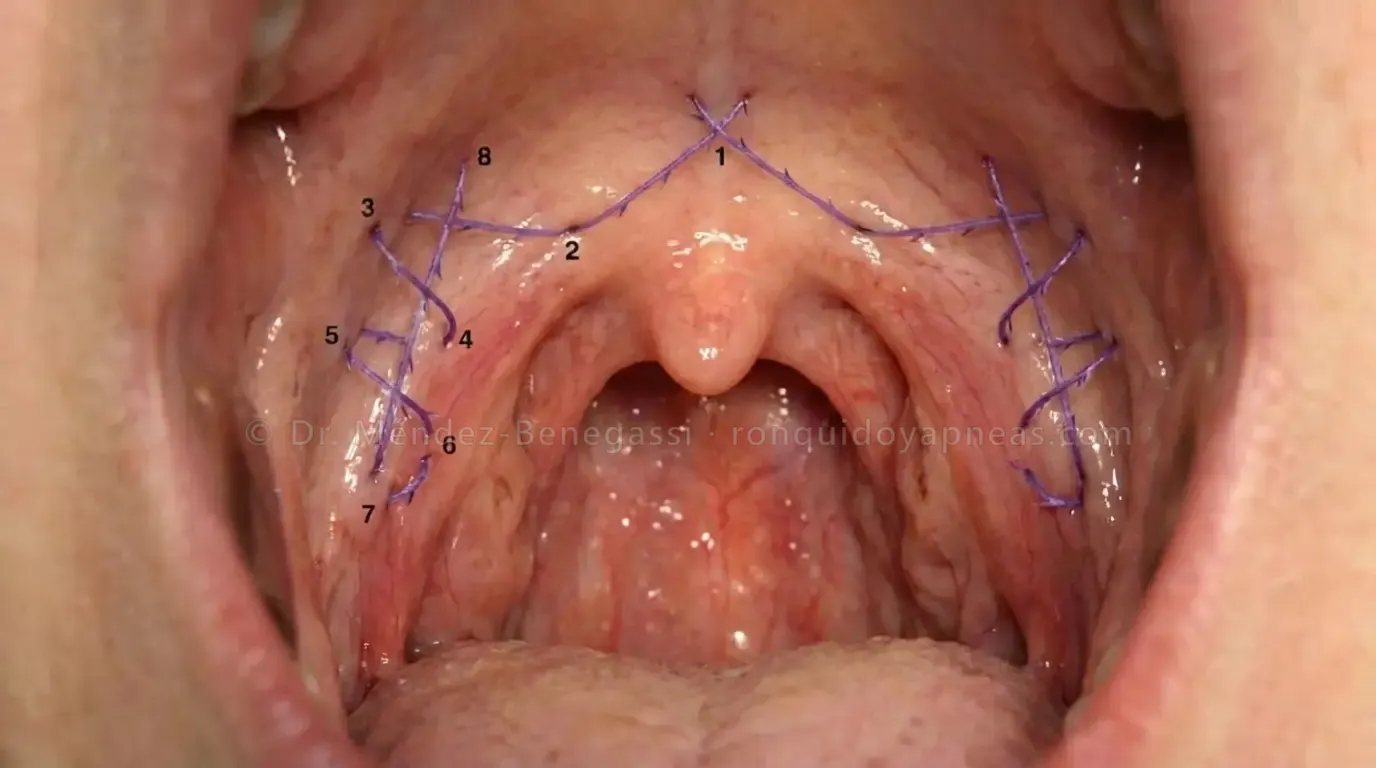
Barbed Snoring Pharyngoplasty (BRP + Anterior Palatoplasty)
A modular, non-resective technique that uses barbed sutures to transfer the rigidity of outer bony structures (posterior nasal spine, hamuli pterygoidei) to the collapsible soft inner tube of the airway, increasing wall tension precisely where drug-induced sleep endoscopy (DISE) confirms collapse—without sacrificing muscular integrity or complex functions like speech and swallowing.
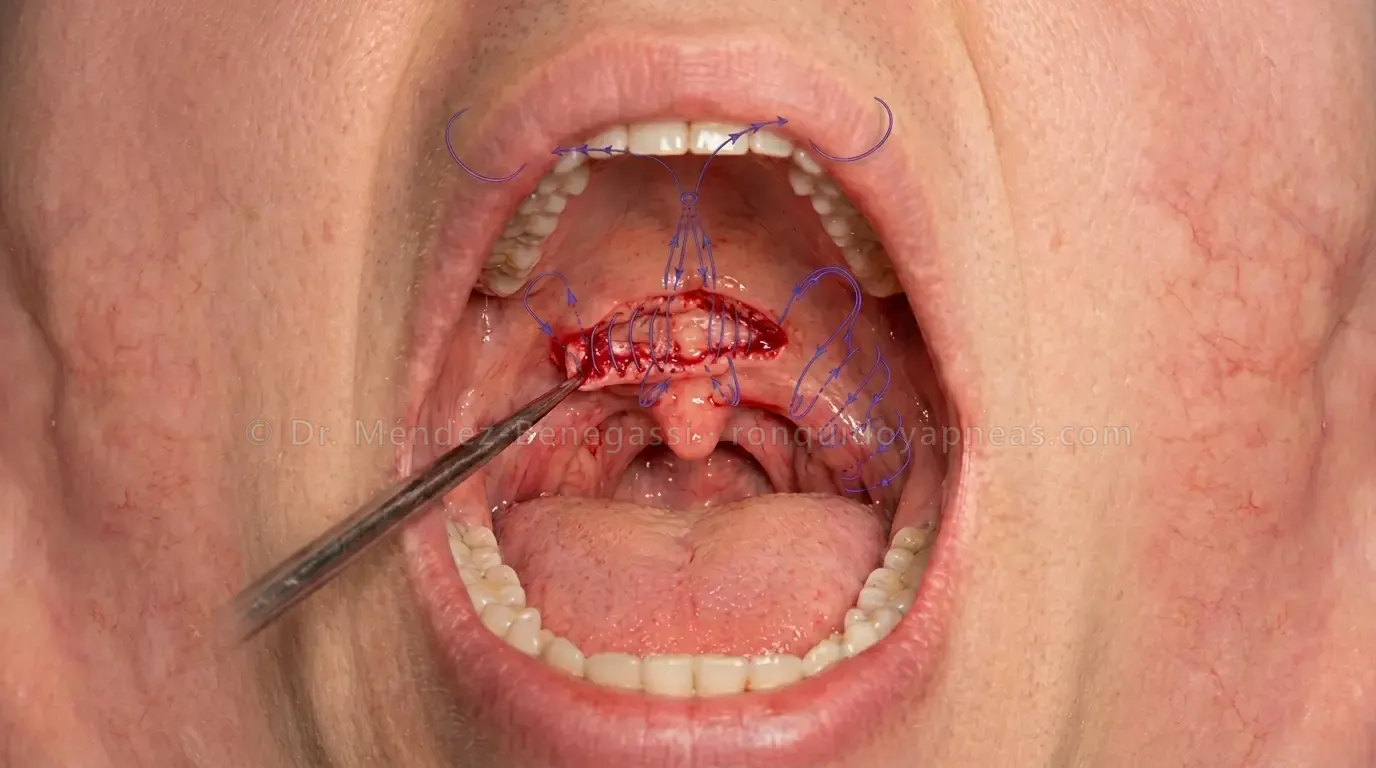
Expansion Pharyngoplasty
Based on rotation of the palatopharyngeal muscle to "open" the velopharyngeal sphincter, preventing closure during deep sleep.
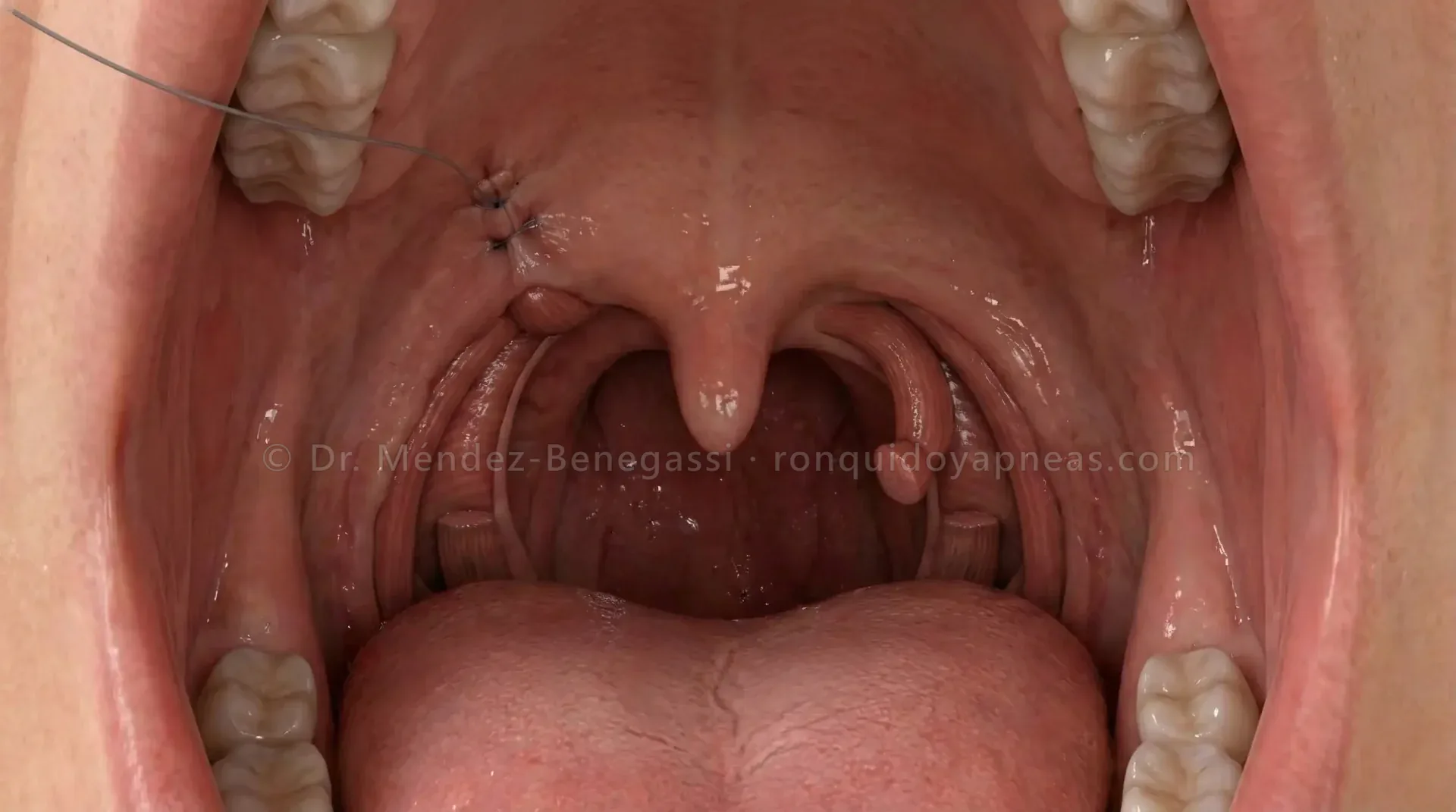
Lateral Pharyngoplasties
Pharyngeal remodeling surgeries that optimize the airway through lateral constrictor myotomy (Cahali) and anterolateral pillar repositioning (Li), stabilizing the throat walls to prevent their collapse during sleep.
⭐ Septal Cartilage Graft Pharyngoplasty
Dr. Méndez-Benegassi performs this technique. He uses the patient's own septal cartilage —harvested during the septoplasty— to graft 3-4 pieces into the soft palate, increasing its stiffness and reducing snoring. In a single, multilevel and outpatient procedure, both the nasal obstruction and the snoring are addressed at the same time. He uses his own modification of the technique that simplifies graft placement, reduces pain and bruising, takes about 30 minutes together with the septoplasty and requires no nasal packing. As it is autologous (the patient's own) tissue, there is no rejection; postoperative pain is minimal and the snoring improvement rate is very high. It is indicated in patients with a standard soft palate and without obesity — for example, women or young men.
The nose is part of the same plan: a deviated septum is corrected with a septoplasty, and enlarged turbinates are reduced with a turbinate reduction (coblation turbinoplasty).
What the operation is like
- Anaesthesia and access. It is done under general anaesthesia and through the mouth; there are no external scars.
- Tonsils. If you still have them, techniques on the side walls remove them in the same operation.
- What is done. Some muscles are divided or released and sutured in a different position to widen the side space of the throat; the position or size of the soft palate may also be changed.
- How long it takes. It depends on the technique and on what is added in the same session (nose, tongue base). As a reference, in the studies of barbed pharyngoplasty the mean operating time was 23 minutes, and compared with expansion pharyngoplasty the barbed technique took about 22 minutes less.
- Afterwards. Pain on swallowing, often intense and sometimes felt in the ears, for 10 to 15 days, treated with painkillers; liquid diet first and soft diet afterwards until healing is complete. In the first days a little liquid may come out through the nose when drinking, a whitish layer may be seen on the wound (normal healing) and snoring may increase for a while because of the swelling. Sleeping with the head raised about 30 degrees is advised for the first 48 to 72 hours. How long you stay in hospital depends on how you recover.
Sources: SEORL-CCC informed consent for pharyngoplasty; Saenwandee 2022 (PMID 34906825); Neruntarat 2021 (PMID 33368308).
Evidence and patient selection
Modern pharyngoplasties have solid recent evidence. A 2022 meta-analysis of barbed pharyngoplasty (20 studies, 762 patients) reported a single-level success rate of about 85% and an average drop in the apnea-hypopnea index (the number of breathing pauses per hour) of close to 24 events/h — roughly a 69% reduction — in selected patients, with few significant complications. These techniques were refined from their founding operations: lateral pharyngoplasty (Cahali, 2003, foundational), expansion sphincter pharyngoplasty (Pang & Woodson, 2007, foundational) — whose original randomised trial lowered the apnea-hypopnea index from about 44 to 12 in selected patients — and barbed reposition pharyngoplasty (Vicini et al., 2015, foundational).
The decisive factor is not the technique in the abstract but selecting the right patient: when the collapse is at the palate or the lateral pharyngeal walls (confirmed with a sleep endoscopy, DISE), results are good; outside that indication, they are not. Dr. Méndez-Benegassi uses specific signs during the DISE to predict this. For example, the tongue-palate (TP) sign: in his own teaching series, patients without that contact (TP-negative) responded to isolated lateral pharyngoplasty far better than those with it (TP-positive), which is why the surgery is only proposed when the airway pattern predicts a good response.
DISE TP-sign data from Dr. Méndez-Benegassi’s own teaching material. The published studies are listed in the references at the end of the page.
Frequently asked questions
Is it the same as uvulopalatopharyngoplasty (UPPP) or palate/uvula surgery?
They belong to the same family of palate operations, but they are not identical. Classic uvulopalatopharyngoplasty (UPPP) mainly removed tissue (uvula and part of the soft palate). Modern pharyngoplasties are reconstructive: instead of just cutting, they reposition and tighten muscle to widen the airway, which tends to mean less pain and better preservation of function.
Does the recovery hurt? How many days?
The most noticeable thing is a sore throat for several days, like a strong tonsillitis, that eases gradually over one to two weeks. A soft, cool diet is recommended during the first days. A transient nasal-sounding voice and some difficulty swallowing in the first days are also common and usually settle on their own.
Is it for snoring or also for apnea?
It can be used for both. In selected patients it reduces snoring, and when the obstruction is at the level of the palate and the pharyngeal walls it can also help treat obstructive sleep apnea, often as part of a wider plan. What it can achieve in each person depends on where and how the airway collapses, which is why an individual assessment is needed.
What are the risks?
As with any pharyngeal surgery, there can be bleeding, infection, a transient nasal-sounding voice, temporary difficulty swallowing and a feeling of something in the throat. Less commonly, some patients keep a degree of palatal discomfort or scarring. The specialist explains the risks for your specific case before deciding.
Is it dangerous?
It is major surgery under general anaesthesia, but serious complications are uncommon. In a register of 3,130 people who had uvulopalatopharyngoplasty in US veterans hospitals, 1.5% had a serious complication and 0.2% died within 30 days. The Spanish ENT society (SEORL-CCC) consent form lists bleeding after surgery as the most common complication (2%), liquids coming back through the nose in 25% and voice changes in 10%, both usually temporary; a temporary tracheotomy may be needed only very rarely, in high-risk patients such as those with morbid obesity and many apneas. In the meta-analysis of barbed pharyngoplasty (762 patients) no complication had serious consequences.
When is this surgery indicated and when is it not?
It is considered when the obstruction is at the palate or the lateral pharyngeal walls and other measures (such as CPAP or an oral appliance) are not tolerated or not enough. It is less suitable when the main collapse is elsewhere, in significant obesity or when the airway pattern predicts a poor response. A sleep endoscopy (DISE) helps confirm whether it is the right technique.
Does it need a hospital stay?
It is usually performed as day surgery or with a short admission, depending on the technique, the patient and whether it is combined with other procedures. The specialist confirms in each case whether you can go home the same day or whether an overnight stay is advised.
The recovery, week by week (pain, diet, warning signs and return to work), is explained in the guide recovery after snoring and sleep apnea surgery.
References
- Fujita S, Conway W, Zorick F, Roth T. Surgical correction of anatomic abnormalities in obstructive sleep apnea syndrome: uvulopalatopharyngoplasty. Otolaryngol Head Neck Surg. 1981;89(6):923-34. PMID 6801592 · DOI 10.1177/019459988108900609
- Franklin KA, Anttila H, Axelsson S, et al. Effects and side-effects of surgery for snoring and obstructive sleep apnea — a systematic review. Sleep. 2009;32(1):27-36. PMID 19189776
- Kezirian EJ, Weaver EM, Yueh B, et al. Incidence of serious complications after uvulopalatopharyngoplasty. Laryngoscope. 2004;114(3):450-3. PMID 15091217 · DOI 10.1097/00005537-200403000-00012
- Cahali MB. Lateral pharyngoplasty: a new treatment for obstructive sleep apnea hypopnea syndrome. Laryngoscope. 2003;113(11):1961-8. PMID 14603056 · DOI 10.1097/00005537-200311000-00020
- Pang KP, Woodson BT. Expansion sphincter pharyngoplasty: a new technique for the treatment of obstructive sleep apnea. Otolaryngol Head Neck Surg. 2007;137(1):110-4. PMID 17599576 · DOI 10.1016/j.otohns.2007.03.014
- Pang KP, Pang EB, Win MT, Pang KA, Woodson BT. Expansion sphincter pharyngoplasty for the treatment of OSA: a systemic review and meta-analysis. Eur Arch Otorhinolaryngol. 2016;273(9):2329-33. PMID 26541714 · DOI 10.1007/s00405-015-3831-2
- Vicini C, Hendawy E, Campanini A, et al. Barbed reposition pharyngoplasty (BRP) for OSAHS: a feasibility, safety, efficacy and teachability pilot study. Eur Arch Otorhinolaryngol. 2015;272(10):3065-70. PMID 25864183 · DOI 10.1007/s00405-015-3628-3
- Saenwandee P, Neruntarat C, Saengthong P, et al. Barbed pharyngoplasty for obstructive sleep apnea: a meta-analysis. Am J Otolaryngol. 2022;43(2):103306. PMID 34906825 · DOI 10.1016/j.amjoto.2021.103306
- Neruntarat C, Khuancharee K, Saengthong P. Barbed reposition pharyngoplasty versus expansion sphincter pharyngoplasty: a meta-analysis. Laryngoscope. 2021;131(6):1420-8. PMID 33368308 · DOI 10.1002/lary.29357
- Lee YC, Lee LA, Li HY. The palatal septal cartilage implantation for snoring and obstructive sleep apnea. Auris Nasus Larynx. 2018;45(6):1199-1205. PMID 29706415 · DOI 10.1016/j.anl.2018.04.002
- SEORL-CCC. Documento de información y autorización para la realización de una faringoplastia y/o reducción del tejido orofaríngeo redundante para el tratamiento de los trastornos respiratorios del sueño (consentimiento informado aprobado por la Sociedad Española de Otorrinolaringología y Cirugía de Cabeza y Cuello). Official document (PDF)
Take the next step in your evaluation
Dr. Méndez-Benegassi uses your data to answer your message. Email is not end-to-end encrypted: it can be read on the servers it passes through. Do not send medical reports or health data that way.
Data controller: Dr. Iván Méndez-Benegassi Silva, ENT physician.
Purpose: To read and answer your message. Tell us only what is essential; the rest is covered in the consultation.
Legal basis: The healthcare you are requesting (Art. 9.2.h GDPR).
Recipients: Your data is not shared with third parties; only the technical providers needed are involved, as data processors.
Your rights: Access, rectify or erase your data, object, restrict its processing and request its portability by writing to contacto@ronquidoyapneas.com. You may also lodge a complaint with the Spanish Data Protection Agency.
Full details in the Privacy policy.

Where I see patients in Madrid
I see patients in person at my HM Hospitales clinics (HM Madrid, HM Valdebebas and HM Tres Cantos), or by personalized video consultation if you prefer.
Private consultation, no waiting lists
Call the appointments line: you get your appointment during the same call, at any of my three clinics.
Call · 910 786 601- HM Madrid
Wednesdays 3:00 PM - 4:00 PM - HM Valdebebas
Tuesdays 3:00 PM - 4:00 PM - HM Tres Cantos
Tuesdays 1:30 PM - 2:30 PM
€150, paid at the reception desk of the clinic. It is not processed through insurance, except for reimbursement insurance.
Coming with your health insurance? Book with HM: 919 370 000.
HM Madrid
HM Madrid University Hospital
Pl. del Conde del Valle de Súchil, 16
28015 MadridWith insurance (book with HM): Wednesdays 4:00 PM - 7:00 PM
How to get thereHM Valdebebas
HM Valdebebas Polyclinic
Av. de Juan Antonio Samaranch, 51
28055 MadridWith insurance (book with HM): Tuesdays 4:00 PM - 7:00 PM
How to get thereHM Tres Cantos
HM Tres Cantos University Hospital
C. Santiago Ramón y Cajal, 23
28760 Tres CantosWith insurance (book with HM): Tuesdays and Wednesdays 9:30 AM - 1:30 PM
How to get there