
Ultrasonic (piezoelectric) rhinoplasty in Madrid: cosmetic and functional
Medically reviewed by Dr. Iván Méndez-Benegassi Silva · ENT & Sleep Medicine Specialist · HM Hospitales, Madrid · License No. 282855946
In ultrasonic (or piezoelectric) rhinoplasty, the bones of the nose are cut and reduced with an instrument that vibrates ultrasonically, instead of with osteotomes and a mallet [1][2]. It can be done for cosmetic or functional reasons, or both: to change the shape of the nose and, at the same time, to make sure it breathes well inside.
Dr. Méndez-Benegassi is an ENT (ear, nose and throat) surgeon who also works on snoring and sleep apnea. He performs ultrasonic rhinoplasty, both cosmetic and functional, as well as septum and turbinate surgery. This page explains what the studies say, including what ultrasound does not change.
What is ultrasonic rhinoplasty and how does it differ from the classic technique?
What changes is the tool used to cut the bone: in the classic technique, osteotomes and rasps; in the ultrasonic one, a piezoelectric instrument that vibrates. In clinical trials this meant less swelling, less bruising and less pain in the first week [1][2].
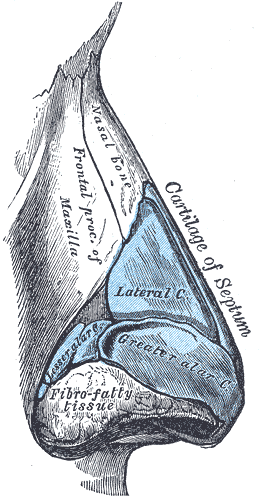
The instrument is designed for bone: in the trials it did not damage the lining inside the nose in any case [1]. The cartilage — the tip, the nostrils and the lower part of the bridge — is not worked with ultrasound. The plate shows where the bone ends and the cartilage begins.
What the studies compared: ultrasound versus the classic technique
| What was measured | What the studies found |
|---|---|
| Swelling | Less in the first week with ultrasound, with a clear difference on days 2 and 7 (not on days 1, 3 and 4). 19 trials, 905 patients [1]. |
| Bruising | Less with ultrasound on days 1, 2 and 7 [1]. |
| Pain | Less with ultrasound on day 2 [1]. |
| Lining inside the nose | No injuries in the people operated on with ultrasound; with the classic technique there were some [1]. |
| Compared with bone cut under direct vision | No clear difference in swelling or bruising [3]. |
| Length of the operation | No difference in some studies and somewhat longer in others [2][3]. |
| Breathing, sense of smell and quality of life at 8 weeks | The same with both techniques (72 patients) [4]. |
| Final appearance and further surgery | The trials focus on the first weeks: it has not been shown that ultrasound changes the final appearance or the number of revisions [1][2]. |
The authors of one of the meta-analyses describe this evidence as weak, because of the low quality of the studies [2]. Both techniques are valid; what is decided in each case is what that particular nose needs.
What can be changed in a cosmetic rhinoplasty?
The usual reasons are a hump, a drooping or wide tip and a crooked nose. The bony part of the hump and the width of the nasal bones are worked with ultrasound; the tip is cartilage and is shaped with other techniques. Before surgery, you agree what to change.
Hump on the bridge of the nose
The hump has a bony part at the top and a cartilage part below (see the plate above). There are two ways of dealing with it: reducing it (structural technique) or lowering the whole bridge while keeping its surface (preservation rhinoplasty). In a meta-analysis of 10 studies, preservation left fewer irregularities on the bridge, but the hump remained or came back more often; breathing was the same with both [5]. In another meta-analysis of 22 studies, the hump came back in about 4 out of 100 people after preservation [6]. The choice depends on each nose.
Drooping, wide or bulbous tip
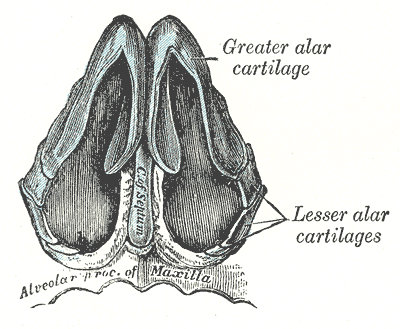
The tip is formed by the alar cartilages (plate below), not by bone, so ultrasound does not act on it. In a series of 369 cosmetic rhinoplasties, not addressing the tip in the first operation was associated with more dissatisfaction [7]. That is why the tip is planned together with the rest, even when what bothers you is the hump.
Crooked nose
A nose can be crooked on the outside (bones and cartilage), on the inside (the septum) or both. When the septum is straightened and the outer parts are also moved to make the nose more symmetrical, the operation is called a septorhinoplasty [24]; we explain it in functional septorhinoplasty (functional rhinoplasty). If only the septum is deviated, the operation is a septoplasty.
What if I also breathe badly through my nose?
Then the rhinoplasty is also planned for breathing: the septum, the turbinates and the nasal valve can be corrected in the same operation. In a meta-analysis of 16 studies, nasal valve surgery reduced obstruction by 43 to 50 points out of 100 on the NOSE questionnaire during the first year [8].
Breathing matters even when the reason for surgery is cosmetic: among 100 people having a second nose operation, 65 complained that they could not breathe well [9]. The inside of the nose is therefore examined before operating. What each operation does is explained in functional rhinoplasty (nasal valve), septoplasty (septum) and turbinate surgery.
To put a number on it, the NOSE questionnaire measures how blocked your nose feels [10], and the SCHNOS questionnaire measures breathing and appearance together [11]. Both are used to compare before and after surgery.
What does the nose have to do with snoring, sleep apnea and CPAP?
A blocked nose can make snoring worse [15] and CPAP harder to use [12]. In a meta-analysis, operating only on the nose lowered the CPAP pressure needed from 11.6 to 9.5 cm H₂O, and measured use rose from 3.0 to 5.5 hours per night [12].
Honestly: operating on the nose does not cure sleep apnea. In a meta-analysis, nasal surgery alone improved daytime sleepiness but did not significantly lower the apnea index [13], and in a trial against sham surgery only 14.8% of those who had septum surgery responded [14]. What it can improve is breathing and, in some people, snoring: after correction of the nasal valve, 3 out of 10 people who snored said they had stopped [15].
And a cosmetic rhinoplasty does not have to increase snoring or apnea: in 80 people studied with a sleep test (polysomnography) before and six months after rhinoplasty, neither increased significantly [16].
If you snore, use CPAP or suspect sleep apnea, mention it at your appointment: the nose is assessed together with the rest of the airway, and if needed the throat is examined during sleep with a DISE (sleep endoscopy). We explain it all in the guide blocked nose, snoring and sleep apnea, and if CPAP is the problem, in I can't tolerate CPAP.
ENT surgeon or plastic surgeon: who performs a rhinoplasty?
Both specialties are trained to operate on the nose, and both include surgeons with experience in rhinoplasty. What an ENT surgeon brings is knowledge of the inside of the nose and of the airway: the septum, the turbinates, the nasal valve and, in this case, snoring and sleep apnea.
Whoever you choose, it helps to ask the same questions: what can and cannot change in your nose, how your breathing will be checked before and after, and what recovery to expect.
What is recovery like, week by week?
Bruising around the eyes usually lasts a few days [24], and it is in that first week that ultrasound makes a difference [1]. The swelling you cannot see takes longer: about two-thirds goes in the first month and the rest, little by little, over the rest of the first year [18].
- First days
- The nose is a little sore; the discomfort is managed with simple painkillers [24]. A small splint is usually placed on the outside of the nose to hold the bones while they heal [24]. Bruising around the eyes is common; with ultrasound it was less on days 1, 2 and 7 [1].
- Two weeks
- In a study of 110 people operated on with ultrasound, by day 14 the swelling around the eyes had gone and bruising was minimal [17]. When to go back to work depends on your job and on what was done; your surgeon will tell you.
- First month
- About two-thirds of the swelling has gone [18].
- Six months
- Around 95% of the swelling has gone [18]: most of the change can already be seen.
- One year
- Around 97.5% [18]: this is when the final result is assessed. In 17 studies, satisfaction with the nose (ROE questionnaire, 0 to 100) averaged 33.5 before surgery, 69.6 in the first six months and 80.25 at one year [19].
This is what the studies and guidelines describe; your surgeon will give you the instructions for your case. For surgery in general, see recovering from sleep apnea surgery.
Is nasal packing used after a rhinoplasty?
In most cases, no. Dr. Méndez-Benegassi avoids the classic packing and uses biodegradable materials or stitches. In septum surgery, trials show that full nasal packing causes more discomfort and does not prevent bleeding [20]. There are fewer studies in septorhinoplasty: in one trial, devices that let air through were more comfortable than packing [21].
In a meta-analysis of 47 trials in septum surgery, packing caused more difficulty breathing, pain and poor sleep, without reducing bleeding; stitches through the septum were an alternative with fewer problems [20]. If packing or splints are needed in your case, your surgeon will tell you for how long.
What are the risks, and how often is a revision needed?
Serious complications are uncommon: in 4,978 cosmetic rhinoplasties, 0.7% needed emergency care, admission or another operation in the first month, mainly for a blood collection (haematoma) or infection [22]. Having another operation is more common: depending on the series, between 2 and 10 out of 100 people [7][23].
- Who has more risk: in that same series, complications were more frequent from the age of 40 and when the rhinoplasty was combined with other cosmetic operations [22].
- Hump: it can remain or come back, more often with preservation rhinoplasty [5][6].
- Breathing: in many second operations, one of the complaints is not being able to breathe well [9]; that is why breathing is assessed before the first one.
- Satisfaction: in a series of 369 cosmetic rhinoplasties, 15.4% were not satisfied [7]. Talking through expectations beforehand is part of the operation.
Frequently asked questions
Does ultrasonic rhinoplasty cause bruising?
It can, especially in the first days. In the trials there was less bruising and less swelling with ultrasound than with the classic technique during the first week, but they do not disappear completely. In one study with ultrasound, bruising was minimal by day 14.
How many days off work will I need?
It depends on your job and on what is done in the operation, so your surgeon will tell you. As a guide, bruising around the eyes usually lasts a few days and fades within about a week, and in one study with ultrasound they were minimal by day 14.
Will I have nasal packing?
In most cases, no: Dr. Méndez-Benegassi avoids the classic packing and uses biodegradable materials or stitches. In septum surgery, trials show that full packing causes more discomfort and does not prevent bleeding. If something is needed in your case, he will tell you what and for how long.
Will it look natural?
The aim is a nose in proportion with the rest of your face that also breathes well, but nobody can guarantee a result. That is why, before surgery, you talk about what you want to change and what is and is not possible with your nose. No study has shown that ultrasound on its own gives a more natural result.
Will I breathe better?
If you breathe badly today because of a deviated septum, large turbinates or a nasal valve that closes, these can be corrected in the same operation; in studies, nasal obstruction (NOSE questionnaire) fell by 43 to 50 points out of 100. If you breathe well, the aim is for it to stay that way.
Does it hurt?
It is normal for the nose to be a little sore in the first days; this is managed with simple painkillers. In the trials, there was less pain on the second day with ultrasound than with the classic technique.
When will I see the final result?
At around one year. About two-thirds of the swelling goes in the first month and about 95% by six months, but the last part takes up to a year. That is why the final result is assessed at 12 months.
Can the cosmetic part and the septum be operated on at the same time?
Yes. When, as well as changing the shape, the septum needs straightening or the turbinates need reducing, it is done in the same operation. When the septum is straightened and the outside of the nose is also changed, it is called a septorhinoplasty.
Is it covered by my health insurance?
It depends on your policy and on whether the operation is functional, cosmetic or both. Check with your insurer what it covers and whether prior authorisation is needed, and ask about the purely cosmetic part separately.
If you live far away: video consultation.
References
- Armanfar y cols., revisión sistemática y metaanálisis de 19 ensayos aleatorizados. Aesthet Surg J, 2026. PMID 42013314. doi.org/10.1093/asj/sjag082
- Khajuria y cols., revisión sistemática y metaanálisis (10 estudios). Plast Reconstr Surg Glob Open, 2022. PMID 36448013. doi.org/10.1097/GOX.0000000000004673
- Kim y cols., revisión sistemática y metaanálisis (6 ensayos). Clin Otolaryngol, 2019. PMID 31436019. doi.org/10.1111/coa.13415
- Aydoğdu y Bayram, ensayo aleatorizado (72 pacientes). J Craniofac Surg, 2020. PMID 32877155. doi.org/10.1097/SCS.0000000000006337
- Ribeiro y cols., revisión sistemática y metaanálisis (10 estudios). J Plast Reconstr Aesthet Surg, 2025. PMID 40580891. doi.org/10.1016/j.bjps.2025.05.044
- Tham y cols., metaanálisis (22 estudios). Facial Plast Surg Aesthet Med, 2022. PMID 35172105. doi.org/10.1089/fpsam.2021.0312
- Neaman y cols., serie de 369 rinoplastias estéticas. Aesthet Surg J, 2013. PMID 23277618. doi.org/10.1177/1090820X12469221
- Floyd y cols., revisión sistemática y metaanálisis (16 estudios). Otolaryngol Head Neck Surg, 2017. PMID 28168892. doi.org/10.1177/0194599817691272
- Lee, Zwiebel y Guyuron, 100 rinoplastias secundarias. Plast Reconstr Surg, 2013. PMID 23783064. doi.org/10.1097/PRS.0b013e3182a01457
- Stewart y cols., escala NOSE. Otolaryngol Head Neck Surg, 2004. PMID 14990910. doi.org/10.1016/j.otohns.2003.09.016
- Moubayed y cols., cuestionario SCHNOS. JAMA Facial Plast Surg, 2018. PMID 28880988. doi.org/10.1001/jamafacial.2017.1083
- Camacho y cols., revisión sistemática y metaanálisis (18 estudios). Sleep, 2015. PMID 25325439. doi.org/10.5665/sleep.4414
- Ishii y cols., metaanálisis (10 estudios). Otolaryngol Head Neck Surg, 2015. PMID 26183522. doi.org/10.1177/0194599815594374
- Koutsourelakis y cols., ensayo aleatorizado frente a cirugía simulada. Eur Respir J, 2008. PMID 17898015. doi.org/10.1183/09031936.00087607
- Lindsay, estudio prospectivo de rinoplastia funcional. Laryngoscope, 2012. PMID 22549339. doi.org/10.1002/lary.23345
- Neshat y cols., estudio prospectivo con polisomnografía (80 pacientes). Cranio, 2021. PMID 34511047. doi.org/10.1080/08869634.2021.1977900
- Uzunoğlu y cols., estudio prospectivo (110 pacientes). Facial Plast Surg Aesthet Med, 2025. PMID 41452163. doi.org/10.1177/26893614251393192
- Pavri, Zhu y Steinbacher, estudio con fotografía 3D (40 pacientes). Plast Reconstr Surg, 2016. PMID 27879585. doi.org/10.1097/PRS.0000000000002760
- Rot y cols., revisión sistemática y metaanálisis (17 estudios). J Clin Med, 2024. PMID 39200785. doi.org/10.3390/jcm13164642
- Titirungruang y cols., metaanálisis de 47 ensayos aleatorizados. Rhinology, 2021. PMID 34350430. doi.org/10.4193/Rhin21.057
- Erkmen y cols., ensayo aleatorizado (78 pacientes). Eur Arch Otorhinolaryngol, 2026. PMID 41786946. doi.org/10.1007/s00405-026-10089-z
- Layliev y cols., 4.978 rinoplastias estéticas. Aesthet Surg J, 2017. PMID 28472446. doi.org/10.1093/asj/sjx023
- Foppiani y cols., revisión sistemática y metaanálisis (25 estudios). Plast Reconstr Surg Glob Open, 2024. PMID 39185377. doi.org/10.1097/GOX.0000000000006103
- ENT UK. Septorhinoplasty. www.entuk.org/patients/conditions/61/septorhinoplasty/
Where I see patients in Madrid
ENT, snoring and sleep apnea clinic at three HM Hospitales centres. Appointments for all three on the same phone number.
HM Madrid
HM Madrid University Hospital
Pl. del Conde del Valle de Súchil, 16
28015 MadridWednesdays 4:00 PM - 7:00 PM
How to get thereHM Valdebebas
HM Valdebebas Polyclinic
Av. de Juan Antonio Samaranch, 51
28055 MadridTuesdays 4:00 PM - 7:00 PM
How to get thereHM Tres Cantos
HM Tres Cantos University Hospital
C. Santiago Ramón y Cajal, 23
28760 Tres CantosTuesdays and Wednesdays 9:30 AM - 1:30 PM
How to get there
Transoral robotic surgery (TORS) is performed by Dr. Méndez-Benegassi himself with the HM Hospitales Da Vinci Xi robot; the appointment is booked at any of these three clinics, where the case is assessed and you are told where the operation takes place.
Appointments: 919 370 000