
Da Vinci Robotic Surgery (TORS) for Sleep Apnea in Madrid
Medically reviewed by Dr. Iván Méndez-Benegassi Silva · Otorhinolaryngology (ENT) Specialist with over 25 years of experience in sleep surgery and advanced rhinology · European Board Certificate (ORL-HNS) · HM Hospitales, Madrid · License No. 282855946
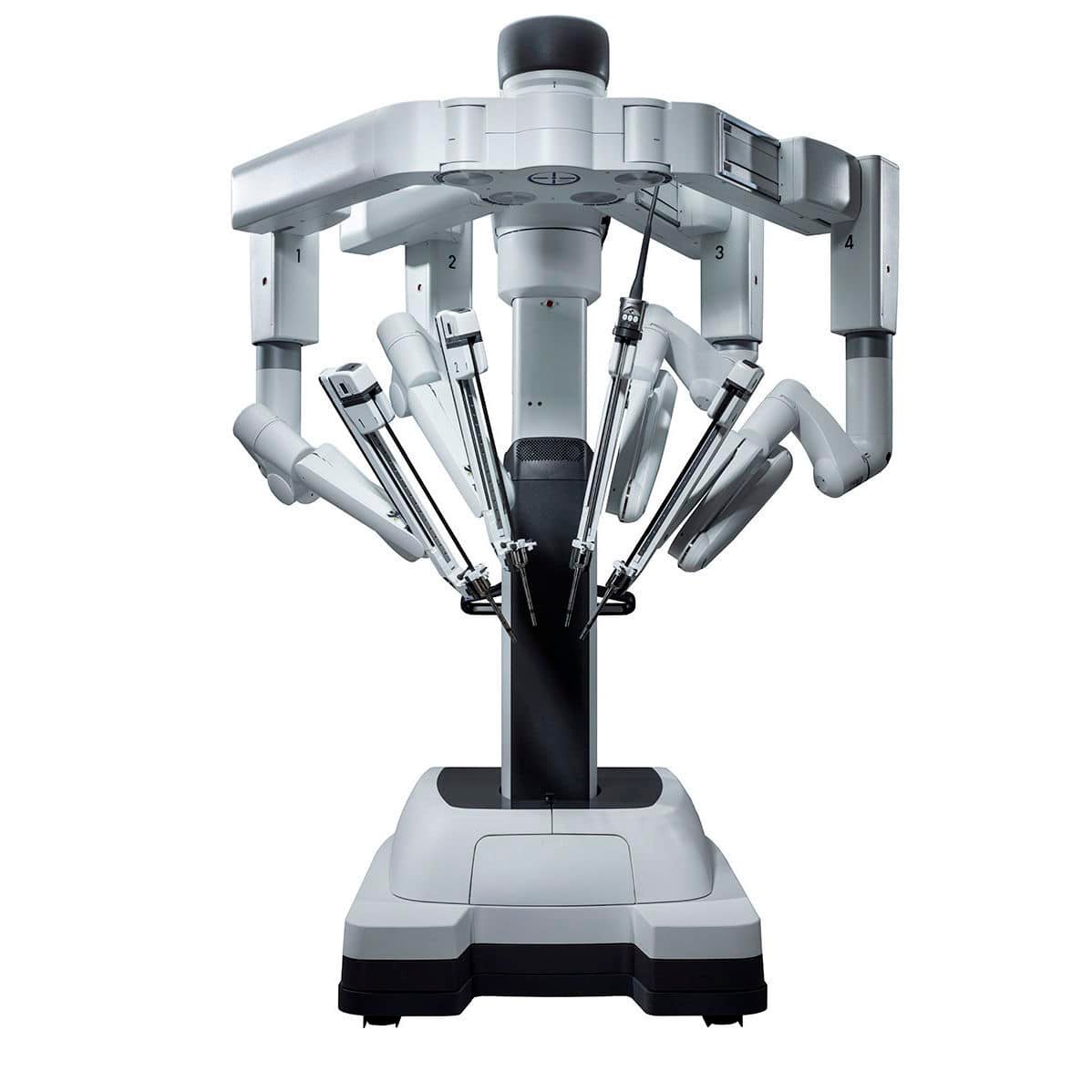
Transoral robotic surgery (TORS) is an operation done through the mouth, without cuts in the neck, with a robot that the surgeon controls from a console; in sleep apnea it is used to reduce the tissue that blocks the throat at the level of the tongue base (the lingual tonsil and, sometimes, part of the epiglottis).
The tongue base and the epiglottis are at the back of the throat, where it is hard to work through the mouth with straight instruments. The da Vinci Xi robot carries a camera and articulated arms that reproduce the surgeon’s movements there. The first TORS for sleep apnea was done in 2008.
How to book
I personally perform robotic surgery with the Da Vinci Xi robot at HM Hospitales. You can book an appointment at my clinics at HM Madrid, HM Valdebebas or HM Tres Cantos (or by video consultation), where we assess your case and plan the procedure.
Sleep apnea and robotic surgery, explained (video)
Who is it for, and who is it not for?
It may be indicated
- ·Sleep apnea or snoring in which the airway closes at the tongue base or the lingual tonsil, confirmed with a sleep endoscopy (DISE).
- ·People who do not tolerate or do not want CPAP: in the series of the group that developed the technique, about 70% of the operations were in this situation.
- ·Selected cases in which a floppy epiglottis falls over the larynx during sleep.
It is less suitable or not indicated
- ·When the DISE shows that the main closure is in the side walls of the throat: then TORS may not work.
- ·When the mouth opens little: the group that developed the technique requires at least 25 mm between the upper and lower front teeth to be able to operate.
- ·Obesity: that same group prefers patients with a body mass index below 30.
- ·Moderate or severe apnea in which a hypoglossal nerve stimulator is possible: in a 2026 comparison it obtained better objective results and shorter hospital stays than TORS.
Treatment options and guides to discuss in clinic
Patient Decision AidTongue base • Patient education material
Why these options?
When the narrowing is at the tongue base, or the lower jaw is small or set back, these are the options usually considered.
Drug-Induced Sleep Endoscopy (DISE)
It is indicated mainly for people considering surgery or an oral appliance: it shows where the throat closes during sleep before a technique is chosen.
Techniques usually considered
Mandibular Advancement Device (MAD)
Custom, adjustable oral appliance that moves the lower jaw forward during sleep to open the space behind the tongue.
Orofacial Myofunctional Therapy
Exercise programme for the tongue, soft palate and facial muscles, guided by a speech therapist, to improve muscle tone during sleep.
Genioglossus Advancement & Hyoid Suspension
Surgery that moves the genioglossus muscle insertion forward so the tongue does not fall back during sleep.
Patient guides
Would you like to know whether any of these options suits you?
Book an appointment for a fiberoptic examination and a personalised assessment with Dr. Méndez-Benegassi.
Educational decision aid. It is not a surgical indication or a medical prescription. Whether any technique is suitable must be decided individually by an ENT surgeon experienced in sleep surgery, after a clinical assessment and, when appropriate, sleep endoscopy (DISE).
Where the throat closes is seen with a sleep endoscopy (DISE); if the closure is at the palate, the operation is a pharyngoplasty, the hypoglossal nerve stimulator is explained on the hypoglossal implant page, and when the bony support of the tongue is what gives way, the operation is the genioglossus advancement.
What is done in the operation
- Anaesthesia. General anaesthesia; the breathing tube is preferably passed through the nose so it does not get in the way in the mouth.
- Access. A retractor keeps the mouth open and the robot’s camera and two instruments are introduced through it. There are no cuts on the skin.
- Tongue base. If what blocks is mainly lymphoid tissue (the lingual tonsil), removing it may be enough; if there is also more muscle, part of the tongue base is reduced, taking care of the vessels and nerves that run inside it.
- Epiglottis. If it also falls back and closes the airway, it can be trimmed or fixed in the same operation.
- Other levels. It can be combined with palate and nose surgery, at the same time or in stages. When several levels are operated on at once, the group that developed the technique recommends a planned tracheotomy.
Specific Procedures
Lingual Tonsil Surgery
Removal of hypertrophic lymphoid tissue at the tongue base that blocks airflow. Robotics allows preservation of lingual vessels and nerves.
Partial Epiglottectomy
For patients with a "floppy" or redundant epiglottis that falls over the larynx during sleep. The upper part of the epiglottis is trimmed to stabilize it.
Robotic Barbed Repositioning Pharyngoplasty (BRP)
Integration of the robot to optimize muscular tension in the lateral pharyngeal walls.
Da Vinci Xi Robot vs. Coblation: Tailored Technique Selection
Treating obstruction at the tongue base and supraglottic airway cannot be generic or one-size-fits-all. The indication to use the Da Vinci Xi robot or Coblation (low-temperature plasma ablation) is tailored to the exact anatomical site and dynamic mechanism of obstruction identified during a sleep endoscopy (DISE), applying the criteria of the Spanish National DISE Consensus (SEORL-CCC) of which Dr. Méndez-Benegassi is an official co-author (PMID 31174844).
Da Vinci Xi Robot
Precise Anatomical Resection- ✓Indications: Marked lingual tonsil hypertrophy (exuberant lymphoid tissue) and floppy epiglottis falling over the laryngeal inlet.
- ✓Surgical Advantage: 3D-HD stereoscopic vision magnified x10 and articulated EndoWrist instruments (540° movement) allowing millimeter resection while preserving lingual neurovascular bundles transorally without neck incisions.
- ✓Postoperative: Average hospital stay of 3–4 days with pain management and progressive transition from liquid to soft diet.
Coblation (Cold Plasma)
Submucosal Volume Reduction- ✓Indications: Obstruction due to intrinsic muscular bulk of the tongue base without massive lymphoid tissue.
- ✓Surgical Advantage: Operates at low temperature (40–70 °C vs. 300–400 °C of conventional electrocautery/laser), dissolving molecular bonds via ionized saline to channel and shrink tissue with minimal thermal spread.
- ✓Postoperative: Less swallowing discomfort, lower bleeding risk, and typically short stay (24h or outpatient regimen).
Private Health Insurance Notice
Transoral robotic surgery (TORS) with the Da Vinci Xi system is a high-technology private hospital procedure that private health insurance companies do not cover under standard policies. Assessment is carried out privately at my consultations in HM Madrid, HM Valdebebas, or HM Tres Cantos (or via video consultation), where clinical suitability is evaluated and a clear, transparent, and comprehensive surgical estimate is provided.
Robotic surgery for apnea is not robotic surgery of the glands
The same kind of robot is used in the head and neck for other operations, such as removing tumours or stones from the salivary glands; that is explained on the Dr.’s other website, in Da Vinci robotic surgery of the salivary glands (sialoendoscopia.com). This page is only about sleep apnea: here the aim is not to remove a tumour or a stone, but to make room for air at the tongue base.
Recovery
As there are no external incisions, the wound stays inside the mouth. What is felt most in the first days is pain on swallowing, treated with painkillers. In a meta-analysis that pooled 18 TORS studies, the average hospital stay was 3.9 days. A liquid diet starts the day after surgery and food returns to normal as the wound heals. Difficulty swallowing is usually temporary: in a quality-of-life meta-analysis, swallowing was back to its previous level at 3 months. The follow-up sleep study is done once the wound has healed, usually within 6 months. Each recovery is individual and is followed up by the specialist.
Scientific Evidence & Clinical Results
Breathing and daytime sleepiness
In a meta-analysis of tongue base TORS (6 studies, 353 patients), the apnea-hypopnea index fell from 44.3 to 17.8 events per hour and the Epworth sleepiness score from 12.9 to 5.8. When TORS was part of a multilevel surgery (16 studies), the index fell by 24.0 events per hour and the Epworth score by 7.2 points. A 2025 meta-analysis also found better quality of life and an Epworth score 5.2 points lower.
References: Miller 2017 (PMID 27346300); Justin 2016 (PMID 26932967); Gupta 2025 (PMID 40171866).
How many improve
By the usual criterion (index halved and below 20), success was 68.4% in the tongue base meta-analysis and 48.2% when TORS was part of multilevel surgery; only 23.8% were cured (index below 5). The group that developed the technique reports success in 53.8% to 83.3% of its series. Apnea is not always fully resolved.
References: Miller 2017 (PMID 27346300); Justin 2016 (PMID 26932967); Vicini 2017 (PMID 29204586).
Complications
In a meta-analysis of 820 patients, 21.3% had a complication, most of them minor: temporary difficulty swallowing in 7.2% and bleeding in 4.2%. Three large series gave an average of 22.3%. Compared with the same tongue base surgery done without the robot, success was similar (64% and 57%) but bleeding and swelling were more frequent with the robot.
References: Meccariello 2017 (PMID 27221389); Justin 2016 (PMID 26932967); Alhedaithy 2026 (PMID 41801520).
Compared with other options
Against plasma ablation (coblation) of the tongue base, success was similar (57.6% and 60.3%), with less bleeding (3.3% and 7.5%) and longer surgery with TORS (78 and 44 minutes). In moderate or severe apnea, the hypoglossal nerve stimulator obtained better objective results and shorter hospital stays than TORS in a 2026 network meta-analysis.
References: Lee 2020 (PMID 32204654); Kim 2026 (PMID 42509349).
Frequently asked questions
What is TORS robotic surgery and what does the da Vinci robot do?
TORS (Trans-Oral Robotic Surgery) is a technique that operates through the mouth, without external incisions in the neck. The da Vinci robot does not act on its own: the surgeon controls it from a console and the robotic arms reproduce their movements in areas that are hard to reach by hand, such as the tongue base and the epiglottis.
Which patients is it indicated for?
It is aimed at patients with sleep apnea or snoring whose obstruction is at the tongue base or the lingual tonsil (the lymphoid tissue at the back of the tongue), and in selected cases with a redundant epiglottis. The exact level and pattern of collapse should be confirmed beforehand with a sleep endoscopy (DISE) to make sure that operating on this area makes sense.
What is the recovery like? Does it hurt?
As there are no external incisions, the wound is inside the mouth, so the main discomfort is throat pain on swallowing during the first days, treated with painkillers. In the studies, the average hospital stay was about 4 days. The diet starts with liquids the day after surgery and returns to normal as the wound heals; the swallowing discomfort passes, and in a meta-analysis swallowing was back to its usual level at 3 months.
What risks does it have?
In a meta-analysis of 820 patients, 21.3% had a complication, most of them minor: the most frequent were temporary difficulty swallowing (7.2%) and bleeding (4.2%). Compared with the same tongue base surgery done without the robot, bleeding and swelling were more frequent with the robot in another meta-analysis. Any procedure should be assessed individually, weighing its risks against the expected benefit in each case.
What results can be expected?
In a meta-analysis of 353 patients, the apnea-hypopnea index fell on average from 44.3 to 17.8 events per hour and daytime sleepiness on the Epworth scale from 12.9 to 5.8 points; 68.4% met the success criterion (index halved and below 20) and 23.8% were cured (below 5). It does not work for everyone: in patients with moderate or severe apnea, the hypoglossal nerve stimulator obtained better objective results in a 2026 comparison.
Is it the same as tongue base surgery?
It is one way of doing it. "Tongue base surgery" refers to the goal — reducing the tissue that obstructs at the back of the tongue — while TORS is the robotic route used to reach it through the mouth without external incisions. The same area can also be treated with other techniques, such as plasma ablation (coblation), with similar success in a meta-analysis; the robot is a tool, not a different diagnosis.
Is it the same as robotic surgery of the salivary glands?
No. The same kind of robot is used in the head and neck for other operations, such as removing tumours or stones from the salivary glands. In sleep apnea the aim is different: it is not to remove a tumour or a stone but to make room for air at the tongue base.
Do private health insurance companies cover TORS robotic surgery?
No. Transoral robotic surgery (TORS) with the Da Vinci Xi system is a high-technology surgical procedure in private hospitals that health insurance companies do not cover under standard policies. In the clinical consultation, we evaluate whether robotic surgery or alternative techniques like Coblation are indicated, and provide a clear, transparent, and comprehensive surgical estimate.
What is the difference between operating on the tongue base with the Da Vinci Xi Robot versus Coblation?
It depends on the anatomy of the airway collapse: the Da Vinci Xi robot is indicated for direct tissue resection when there is marked hypertrophy of the lingual tonsil or a floppy epiglottis, taking advantage of magnified 3D visualization and 540° articulating arms to protect lingual vessels. Coblation (low-temperature plasma at 40–70 °C) is chosen to reduce internal muscle volume in the tongue base without extensive resection, resulting in less inflammation and post-operative pain. Drug-induced sleep endoscopy (DISE) accurately determines which technique is best suited for each patient.
Who operates and where?
I personally perform the surgery as an ENT and head & neck surgeon. Robotic surgery is performed using the Da Vinci Xi robot at HM Hospitales; appointments are made at my clinics at HM Madrid, HM Valdebebas or HM Tres Cantos (or by video consultation), where we evaluate your case and determine where the operation takes place.
References
- Vicini C, Dallan I, Canzi P, et al. Transoral robotic tongue base resection in obstructive sleep apnoea-hypopnoea syndrome: a preliminary report. ORL J Otorhinolaryngol Relat Spec. 2010;72(1):22-7. PMID 20173358 · DOI 10.1159/000284352
- Vicini C, Montevecchi F, Gobbi R, De Vito A, Meccariello G. Transoral robotic surgery for obstructive sleep apnea syndrome: principles and technique. World J Otorhinolaryngol Head Neck Surg. 2017;3(2):97-100. PMID 29204586 · DOI 10.1016/j.wjorl.2017.05.003
- Justin GA, Chang ET, Camacho M, Brietzke SE. Transoral robotic surgery for obstructive sleep apnea: a systematic review and meta-analysis. Otolaryngol Head Neck Surg. 2016;154(5):835-46. PMID 26932967 · DOI 10.1177/0194599816630962
- Meccariello G, Cammaroto G, Montevecchi F, et al. Transoral robotic surgery for the management of obstructive sleep apnea: a systematic review and meta-analysis. Eur Arch Otorhinolaryngol. 2017;274(2):647-653. PMID 27221389 · DOI 10.1007/s00405-016-4113-3
- Miller SC, Nguyen SA, Ong AA, Gillespie MB. Transoral robotic base of tongue reduction for obstructive sleep apnea: a systematic review and meta-analysis. Laryngoscope. 2017;127(1):258-265. PMID 27346300 · DOI 10.1002/lary.26060
- Lee JA, Byun YJ, Nguyen SA, Lentsch EJ, Gillespie MB. Transoral robotic surgery versus plasma ablation for tongue base reduction in obstructive sleep apnea: meta-analysis. Otolaryngol Head Neck Surg. 2020;162(6):839-852. PMID 32204654 · DOI 10.1177/0194599820913533
- Gupta KK, De M, Athanasiou T, Georgalas C, Garas G. Quality of life and sleep outcomes in obstructive sleep apnoea following transoral robotic surgery: a meta-analysis. Clin Otolaryngol. 2025;50(4):644-653. PMID 40171866 · DOI 10.1111/coa.14311
- Alhedaithy AA, Alghamdi FA, AlOtaibi S, et al. Robotic versus non-robotic posterior midline glossectomy for obstructive sleep apnea: a systematic review and meta-analysis. Sleep Breath. 2026;30(1). PMID 41801520 · DOI 10.1007/s11325-026-03637-8
- Kim DH, Jang DW, Hwang SH. Comparison of upper airway stimulation, tongue base surgeries, and continuous positive airway pressure for moderate-to-severe obstructive sleep apnea: a systematic review and network meta-analysis. Sleep Breath. 2026;30(4). PMID 42509349 · DOI 10.1007/s11325-026-03772-2
Take the next step in your evaluation
Dr. Méndez-Benegassi uses your data to answer your message. Email is not end-to-end encrypted: it can be read on the servers it passes through. Do not send medical reports or health data that way.
Data controller: Dr. Iván Méndez-Benegassi Silva, ENT physician.
Purpose: To read and answer your message. Tell us only what is essential; the rest is covered in the consultation.
Legal basis: The healthcare you are requesting (Art. 9.2.h GDPR).
Recipients: Your data is not shared with third parties; only the technical providers needed are involved, as data processors.
Your rights: Access, rectify or erase your data, object, restrict its processing and request its portability by writing to contacto@ronquidoyapneas.com. You may also lodge a complaint with the Spanish Data Protection Agency.
Full details in the Privacy policy.

Where I see patients in Madrid
I see patients in person at my HM Hospitales clinics (HM Madrid, HM Valdebebas and HM Tres Cantos), or by personalized video consultation if you prefer.
Private consultation, no waiting lists
Call the appointments line: you get your appointment during the same call, at any of my three clinics.
Call · 910 786 601- HM Madrid
Wednesdays 3:00 PM - 4:00 PM - HM Valdebebas
Tuesdays 3:00 PM - 4:00 PM - HM Tres Cantos
Tuesdays 1:30 PM - 2:30 PM
€150, paid at the reception desk of the clinic. It is not processed through insurance, except for reimbursement insurance.
Coming with your health insurance? Book with HM: 919 370 000.
HM Madrid
HM Madrid University Hospital
Pl. del Conde del Valle de Súchil, 16
28015 MadridWith insurance (book with HM): Wednesdays 4:00 PM - 7:00 PM
How to get thereHM Valdebebas
HM Valdebebas Polyclinic
Av. de Juan Antonio Samaranch, 51
28055 MadridWith insurance (book with HM): Tuesdays 4:00 PM - 7:00 PM
How to get thereHM Tres Cantos
HM Tres Cantos University Hospital
C. Santiago Ramón y Cajal, 23
28760 Tres CantosWith insurance (book with HM): Tuesdays and Wednesdays 9:30 AM - 1:30 PM
How to get there