
Sleep apnea and your driving licence
Medically reviewed by Dr. Iván Méndez-Benegassi Silva · Otorhinolaryngology (ENT) Specialist with over 25 years of experience in sleep surgery and advanced rhinology · European Board Certificate (ORL-HNS) · HM Hospitales, Madrid · License No. 282855946
You can drive with sleep apnea in Spain if it is treated and your daytime sleepiness is controlled. The law only restricts the licence for apnea with an AHI of 15 or more plus moderate-to-severe sleepiness, and even then allows driving with a favourable Sleep Unit report. With that report the licence lasts up to 3 years (ordinary drivers) or 1 year (professionals). The key is treatment, good compliance and your report.
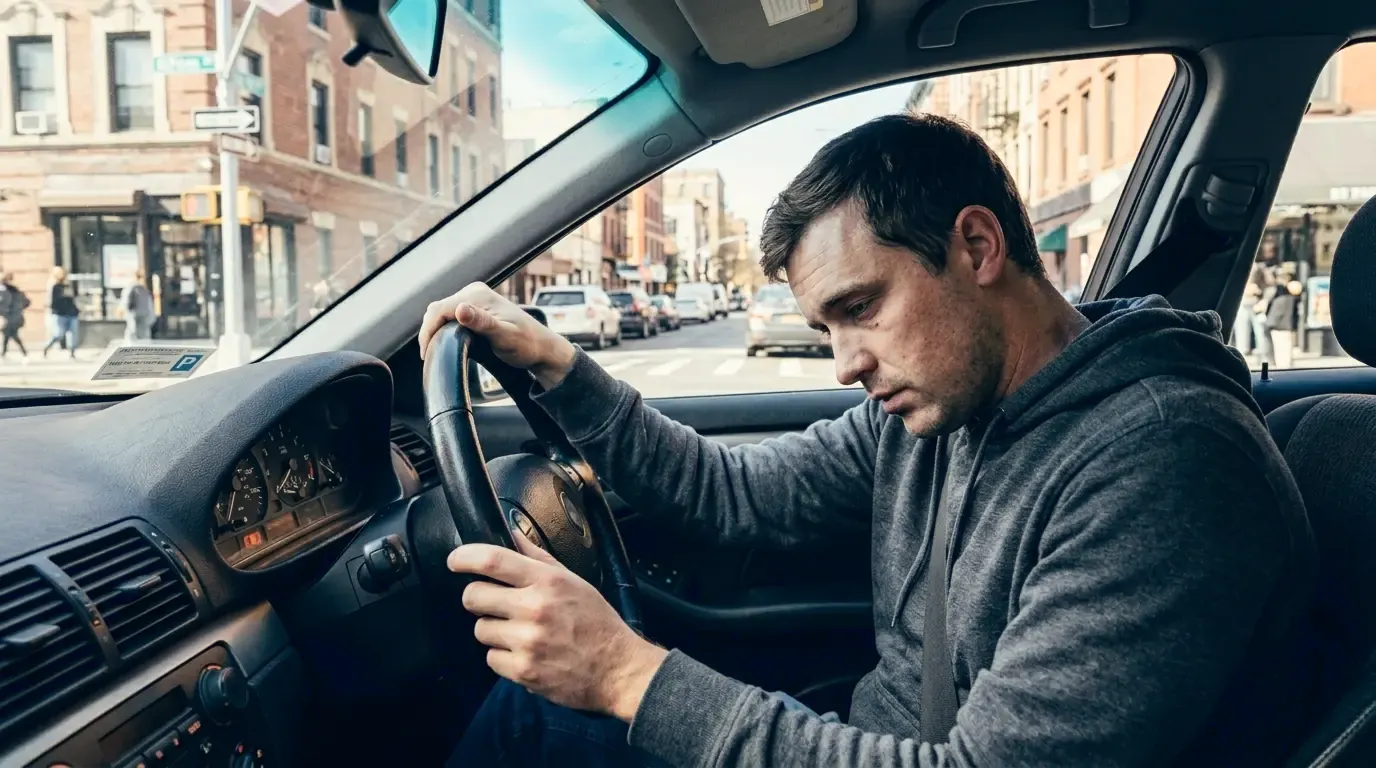
What the law says (General Drivers Regulation)
In Spain, fitness to drive is regulated by the General Drivers Regulation (Royal Decree 818/2009), whose Annex IV lists the medical conditions that affect the licence. The criteria for sleep apnea were added by Royal Decree 1055/2015, which brought Spanish law in line with EU Directive 2014/85.
The regulation defines moderate apnea as an apnea-hypopnea index (AHI) between 15 and 29, and severe apnea as an AHI of 30 or more. It refuses or restricts the licence when there is apnea with an AHI of 15 or more associated with moderate or severe daytime sleepiness — but it expressly allows driving when a favourable report from a Sleep Unit confirms adequate treatment compliance and satisfactory control of the disease, especially of the sleepiness.
When that report is required, the licence is granted for a shorter period than usual: a maximum of 3 years for group 1 drivers (car, motorcycle) and 1 year for group 2 drivers (lorries, buses and other professionals).
What the Sleep Unit report must contain
This is the document that lets the Driver Assessment Centre (CRC) certify you. Based on the regulation and the expert recommendations published in Archivos de Bronconeumología, a favourable report should state:
- The apnea-hypopnea index (AHI) at the time of diagnosis.
- Whether there was daytime sleepiness, and its severity.
- The treatment prescribed (CPAP, oral appliance, surgery, etc.).
- Adequate compliance — for CPAP, at least 4 hours per night on more than 70% of nights.
- That the disease, and especially the daytime sleepiness, is satisfactorily controlled.
- A favourable conclusion, issued by a Sleep Unit or sleep specialist.
So that a holiday or a work trip does not break that CPAP compliance, read CPAP for travel and summer.
Ordinary vs professional drivers
Group 1 (car, motorcycle)
Ordinary, non-professional licences (AM, A1, A2, A, B…). With a favourable Sleep Unit report, the licence is valid for a maximum of 3 years.
Group 2 (lorries, buses, professionals)
Professional licences (C, D and similar). Assessed more strictly because of the hours at the wheel: with a favourable report, the licence is valid for a maximum of 1 year.
Your duties — and what happens if you ignore them
There is no specific crime of "driving with apnea". What the law requires is that you meet the fitness criteria when you obtain or renew your licence. If you are diagnosed and do not bring the favourable report, the Driver Assessment Centre will not certify you and your licence is not renewed; driving without a valid licence is itself a traffic offence. And if you cause a crash while knowingly driving untreated and unfit, you can face civil or criminal liability for negligence, and your insurer may refuse to cover you. None of this is meant to scare you: treated and controlled apnea lets you drive normally. The risk lies in ignoring a known, treatable problem.
Why the law is strict: the accident risk
Untreated obstructive sleep apnea fragments your sleep and lowers your oxygen, which impairs attention and reaction time the next day — and that translates into crashes. A systematic review and meta-analysis found that drivers with sleep apnea have a higher crash rate than people without it (a crash-rate ratio of roughly 1.2 to 4.9). The good news is symmetrical: a meta-analysis of treated drivers found CPAP cut the crash rate by about 70%, and more recent studies continue to confirm that effectively treating the apnea lowers the risk. This is exactly why the regulation centres on being treated and on controlling daytime sleepiness, rather than on the diagnosis alone.
The same risk exists at work, especially with machinery or long shifts: see sleep apnea and workplace accidents. If you are not sure whether your sleepiness comes from apnea, read excessive daytime sleepiness: sleep apnea or another cause?; and to know which sleep study you need for the report, home sleep test vs in-lab polysomnography.
Treated apnea, normal driving
Diagnosing and treating sleep apnea controls daytime sleepiness and lets you keep your licence. Learn how the specialist assesses and treats it.
See the specialistFrequently asked questions
Can I drive if I have sleep apnea?
Yes, in most cases — provided you are under treatment and your symptoms, especially daytime sleepiness, are controlled. Spanish law only refuses or restricts the licence for sleep apnea with an apnea-hypopnea index (AHI) of 15 or more associated with moderate or severe daytime sleepiness, and even then it allows driving with a favourable report from a Sleep Unit confirming you follow the treatment and the disease is well controlled.
Will they take my licence away because of apnea?
Not if it is treated and controlled. Under the General Drivers Regulation (Annex IV), only untreated or uncontrolled moderate-to-severe apnea with daytime sleepiness blocks the licence. With a favourable Sleep Unit report the licence is granted or renewed, although for a shorter period: a maximum of 3 years for ordinary (group 1) drivers and 1 year for professional (group 2) drivers.
What medical report do I need to renew my licence?
A report from a Sleep Unit (or sleep specialist) stating the AHI at diagnosis, whether there was daytime sleepiness, the treatment prescribed, and that the disease — and especially the sleepiness — is adequately controlled. For CPAP, "adequate compliance" is usually defined as using it at least 4 hours per night on more than 70% of nights. You present this report at the Driver Assessment Centre (CRC).
How long will my renewed licence last?
When apnea requires a favourable Sleep Unit report, the maximum validity is shorter than usual: up to 3 years for group 1 (car and motorcycle) and up to 1 year for group 2 (lorries, buses, professional drivers). After each period you renew the report to confirm the treatment is still working.
I am a professional driver — is it stricter?
Yes. Group 2 drivers (lorries, buses, taxis, and similar) are assessed more strictly because they spend many hours at the wheel: the maximum licence validity is 1 year instead of 3, and the requirement for treatment and a favourable report is the same. Untreated apnea with sleepiness is especially relevant here.
Do I have to declare my apnea, and can I be fined or face prison?
There is no specific crime called "driving with apnea". What the law requires is meeting the psychophysical fitness criteria when you obtain or renew the licence: if you are diagnosed and do not provide the favourable report, the Driver Assessment Centre will not certify you and the licence is not renewed, and driving without a valid licence is itself an offence. Beyond that, if you cause a crash while knowingly driving untreated and unfit, you can face civil or criminal liability for negligence and problems with your insurer. The safe and simple path is to get treated and carry your report.
Does treating apnea reduce the risk of an accident?
Yes. Untreated obstructive sleep apnea increases the risk of a motor-vehicle crash (a meta-analysis found a crash-rate ratio of roughly 1.2 to 4.9 versus people without apnea), because it impairs alertness and reaction time. Treatment with CPAP has been shown to reduce that crash risk substantially. That is exactly why the regulation focuses on treatment and on controlling daytime sleepiness.
Sources and references
- General Drivers Regulation, approved by Royal Decree 818/2009, Annex IV (psychophysical fitness). Sleep apnea criteria introduced by Royal Decree 1055/2015 (transposing EU Directive 2014/85). Boletín Oficial del Estado (BOE), consolidated version. BOE-A-2009-9481 · BOE-A-2015-12572
- Terán-Santos J, Egea Santaolalla C, Montserrat JM, et al. Apnea del sueño y conducción de vehículos. Recomendaciones para la interpretación del nuevo Reglamento General de Conductores en España. Arch Bronconeumol. 2017;53(6). doi:10.1016/j.arbres.2016.11.007
- Tregear S, Reston J, Schoelles K, Phillips B. Obstructive Sleep Apnea and Risk of Motor Vehicle Crash: Systematic Review and Meta-Analysis. J Clin Sleep Med. 2009;5(6):573-581. doi:10.5664/jcsm.27662
- Tregear S, Reston J, Schoelles K, Phillips B. Continuous Positive Airway Pressure Reduces Risk of Motor Vehicle Crash among Drivers with Obstructive Sleep Apnea: Systematic Review and Meta-analysis. Sleep. 2010;33(10):1373-1380. PMID: 21061860
- Sina H, Shankar A, Boon M, Huntley C. Risk of Motor Vehicle Accidents in Obstructive Sleep Apnea: Comparative Analysis of CPAP Versus Surgery. Otolaryngol Head Neck Surg. 2025;172(4):1459-1467. doi:10.1002/ohn.1131
This guide is educational and is not legal advice or a medical diagnosis. The regulation may be updated and each case is assessed individually at the Driver Assessment Centre; confirm the current requirements with your Sleep Unit and the DGT. If you have witnessed breathing pauses or daytime sleepiness, consult a specialist.
Reviewed by Dr. Iván Méndez-Benegassi Silva · Otorhinolaryngology (ENT) Specialist with over 25 years of experience in sleep surgery and advanced rhinology · European Board Certificate (ORL-HNS) · HM Hospitales · Last reviewed: 24 Jun 2026
Take the next step in your evaluation
Dr. Méndez-Benegassi uses your data to answer your message. Email is not end-to-end encrypted: it can be read on the servers it passes through. Do not send medical reports or health data that way.
Data controller: Dr. Iván Méndez-Benegassi Silva, ENT physician.
Purpose: To read and answer your message. Tell us only what is essential; the rest is covered in the consultation.
Legal basis: The healthcare you are requesting (Art. 9.2.h GDPR).
Recipients: Your data is not shared with third parties; only the technical providers needed are involved, as data processors.
Your rights: Access, rectify or erase your data, object, restrict its processing and request its portability by writing to contacto@ronquidoyapneas.com. You may also lodge a complaint with the Spanish Data Protection Agency.
Full details in the Privacy policy.