
Sleep apnea symptoms and their consequences
Medically reviewed by Dr. Iván Méndez-Benegassi Silva · Otorhinolaryngology (ENT) Specialist with over 25 years of experience in sleep surgery and advanced rhinology · European Board Certificate (ORL-HNS) · HM Hospitales, Madrid · License No. 282855946
Sleep apnea causes night-time symptoms such as loud snoring, witnessed breathing pauses, choking and fragmented sleep, and daytime symptoms such as excessive sleepiness, morning headache, poor concentration and low mood. Left untreated it raises blood pressure and the risk of cardiovascular disease, stroke, arrhythmias, metabolic problems and accidents — so suspicious symptoms should be evaluated.
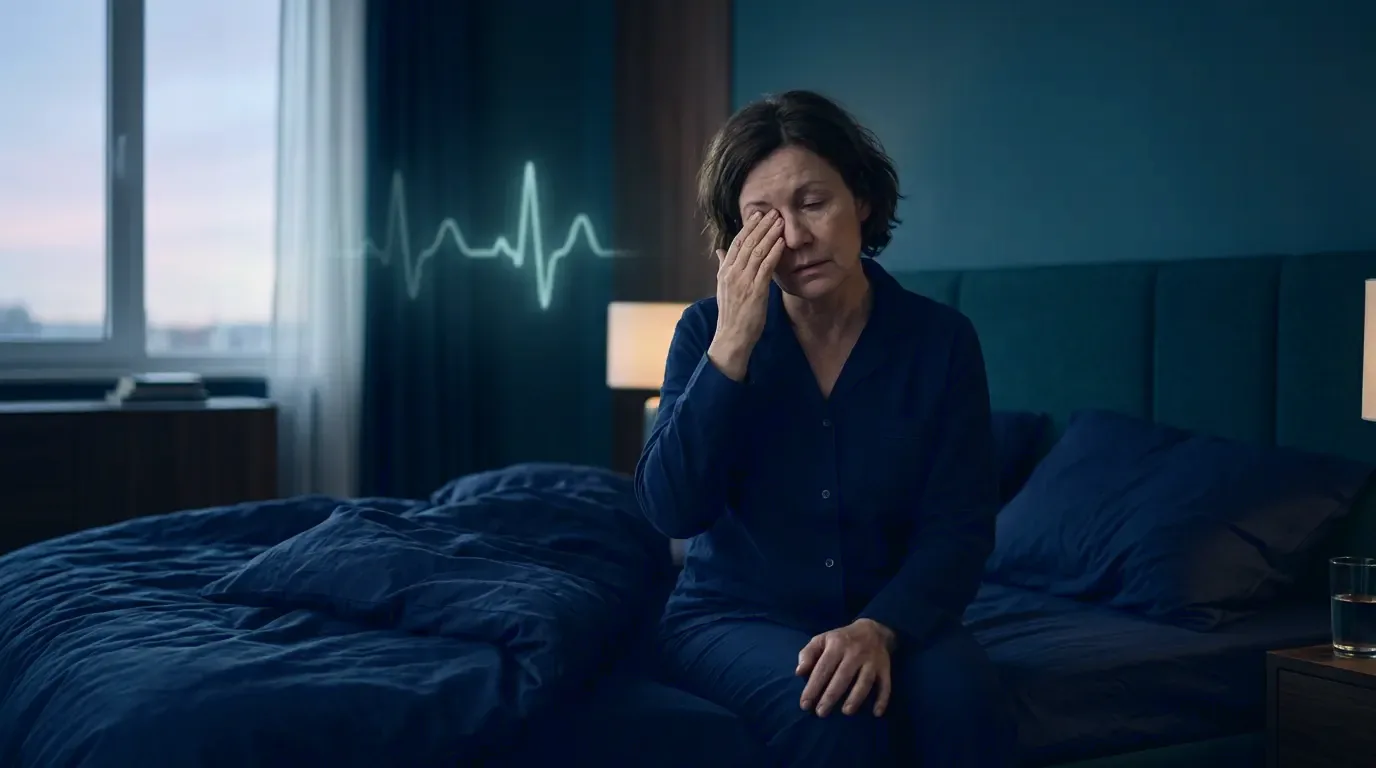
Symptoms at night and during the day
Night-time symptoms
- •Loud, irregular snoring
- •Witnessed breathing pauses
- •Sudden choking or gasping
- •Restless, fragmented sleep
- •Frequent night-time urination (nocturia)
Daytime symptoms
- •Excessive daytime sleepiness
- •Persistent tiredness and fatigue
- •Morning headache
- •Difficulty concentrating
- •Irritability and low mood
- •Reduced sexual desire
If snoring is what stands out, read snoring vs sleep apnea: how to tell them apart; if it is daytime tiredness, excessive daytime sleepiness: sleep apnea or another cause? In women, apnea often shows up as insomnia or tiredness rather than loud snoring (sleep apnea in women, and especially after the menopause), and when insomnia and apnea occur together it is called COMISA.
Consequences if it is not treated
Cardiovascular and stroke risk
Repeated drops in oxygen and surges in blood pressure during the night place strain on the heart and blood vessels. Untreated sleep apnea is associated with hypertension and an increased risk of cardiovascular disease and stroke. Treating the apnea is part of protecting long-term heart health.
If your blood pressure stays high despite medication, read sleep apnea and resistant hypertension.
Arrhythmias and heart strain
The cycles of obstruction and arousal can trigger irregular heart rhythms (arrhythmias) in susceptible people. Controlling sleep apnea may help stabilise the heart rhythm and is often considered when arrhythmias are difficult to manage.
Metabolic disturbances
Fragmented sleep and intermittent low oxygen are linked to poorer blood sugar control and metabolic changes. Sleep apnea frequently coexists with overweight and metabolic problems, and each tends to worsen the other.
Accidents from daytime sleepiness
The excessive sleepiness caused by fragmented sleep impairs attention and reaction time, raising the risk of traffic and workplace accidents. Falling asleep at the wheel is a particularly dangerous warning sign that calls for prompt evaluation.
We cover it in more detail in sleep apnea and driving and in sleep apnea and workplace accidents.
Warning signs that should prompt a consultation
Seek a specialist evaluation if a bed partner has witnessed breathing pauses or choking at night, if you feel persistently and excessively sleepy during the day, or if you have fallen asleep while driving or working. Loud, irregular snoring together with high blood pressure or a thick neck also warrants assessment. These signs do not confirm apnea, but they make a proper evaluation important.
If you are the one who hears the pauses, my partner snores explains what to do.
Check your risk in a few minutes
Answer validated questionnaires (STOP-BANG, Epworth) to estimate your sleep apnea risk and decide whether to consult a specialist.
Start the assessmentFrequently asked questions
What are the main symptoms of sleep apnea?
The most typical symptoms are loud, irregular snoring, breathing pauses witnessed by a bed partner, sudden choking or gasping during sleep, and waking up unrefreshed. During the day this often shows up as excessive sleepiness, fatigue, morning headache, difficulty concentrating, irritability and low mood. Not everyone has every symptom, and snoring can be absent.
Can you have sleep apnea without snoring?
Yes. Although loud snoring is common in sleep apnea, some people — especially women — have apnea with little or no snoring, and present mainly with insomnia, fatigue, headaches or low mood. That is why the diagnosis should never be ruled out just because snoring is mild or absent.
Why do I wake up tired even after sleeping enough hours?
In sleep apnea the airway repeatedly collapses, causing brief arousals that fragment sleep without you remembering them. You may spend enough hours in bed but never reach deep, restorative sleep, so you wake up unrefreshed and feel sleepy during the day. This non-restorative sleep is one of the most common reasons people seek evaluation.
What happens if sleep apnea is left untreated?
Untreated obstructive sleep apnea is associated with higher blood pressure, increased cardiovascular and stroke risk, cardiac arrhythmias and metabolic disturbances such as poor blood sugar control. The daytime sleepiness it causes also raises the risk of traffic and workplace accidents. Effective treatment reduces these risks, which is why evaluation matters.
When should I see a specialist about possible apnea?
You should seek evaluation if you snore loudly and irregularly, if someone has witnessed breathing pauses or choking at night, or if you feel persistently sleepy, foggy or low in mood during the day. Falling asleep while driving or at work is a clear warning sign that needs prompt assessment.
Does sleep apnea affect driving and your driving licence?
Daytime sleepiness caused by apnea increases the risk of microsleeps at the wheel and of road accidents. In Spain, sleep apnea may affect fitness to drive under traffic regulations (DGT), particularly when sleepiness is significant or poorly controlled. Effective treatment usually reverses the sleepiness, so a proper evaluation is worthwhile if you feel drowsy while driving.
This guide is an orientative screening aid and does not replace a medical diagnosis or a sleep study. If you have witnessed breathing pauses, marked daytime sleepiness or fall asleep while driving, seek evaluation by a specialist.
Reviewed by Dr. Iván Méndez-Benegassi Silva · Otorhinolaryngology (ENT) Specialist with over 25 years of experience in sleep surgery and advanced rhinology · European Board Certificate (ORL-HNS) · HM Hospitales · Last reviewed: 20 Jun 2026
Take the next step in your evaluation
Dr. Méndez-Benegassi uses your data to answer your message. Email is not end-to-end encrypted: it can be read on the servers it passes through. Do not send medical reports or health data that way.
Data controller: Dr. Iván Méndez-Benegassi Silva, ENT physician.
Purpose: To read and answer your message. Tell us only what is essential; the rest is covered in the consultation.
Legal basis: The healthcare you are requesting (Art. 9.2.h GDPR).
Recipients: Your data is not shared with third parties; only the technical providers needed are involved, as data processors.
Your rights: Access, rectify or erase your data, object, restrict its processing and request its portability by writing to contacto@ronquidoyapneas.com. You may also lodge a complaint with the Spanish Data Protection Agency.
Full details in the Privacy policy.