
Sleep apnea in women and menopause
Medically reviewed by Dr. Iván Méndez-Benegassi Silva · Otorhinolaryngology (ENT) Specialist with over 25 years of experience in sleep surgery and advanced rhinology · European Board Certificate (ORL-HNS) · HM Hospitales, Madrid · License No. 282855946
Sleep apnea is underdiagnosed in women because the symptoms are more atypical: more insomnia, fatigue, headache and low mood, and less of the classic loud snoring. The risk rises after menopause as protective hormones fall, and apnea is often confused with depression, anxiety or simply ageing. Being a woman is not a reason to dismiss it — suspicious symptoms deserve evaluation.
What makes it different in women
An underdiagnosed condition in women
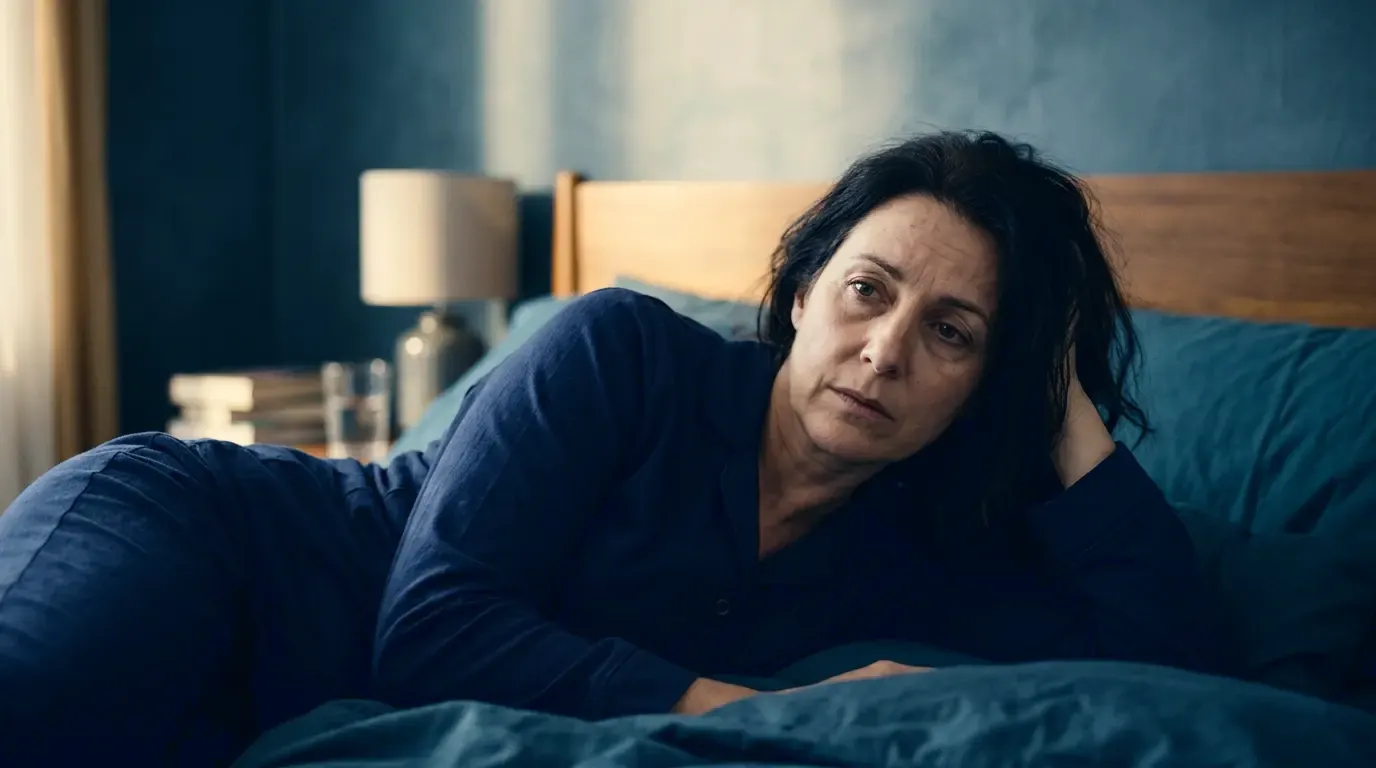
Sleep apnea is diagnosed far less often in women than in men, but a large part of that difference comes from how it presents. Women tend to report more insomnia, fatigue, morning headaches and low mood, and less of the loud snoring and witnessed pauses that classically prompt a referral. As a result, the condition is frequently missed.
More atypical symptoms
In women the picture is often subtler: difficulty falling or staying asleep, daytime tiredness, headaches, anxiety and low mood, rather than the textbook loud snorer. Because these symptoms are less specific, they are easily attributed to stress or other causes, which delays the diagnosis of an underlying sleep apnea.
Why the risk rises after menopause
Before menopause, hormones such as progesterone and oestrogen seem to help keep the upper airway stable and protected. As their levels decline around and after menopause, that protective effect weakens and the risk of obstructive sleep apnea increases, narrowing the gap with men. New sleep symptoms at this stage of life deserve attention.
Often confused with other conditions
The fatigue, poor concentration and low mood of sleep apnea overlap with depression, anxiety and what is sometimes dismissed as "symptoms of getting older". When the real cause is undiagnosed apnea, treating only the mood or stress will not resolve the unrefreshing sleep. Considering apnea helps avoid missing a treatable problem.
Do not rule it out for being a woman
Being a woman is not a reason to dismiss sleep apnea, and snoring does not have to be present. If you have persistent fatigue, unrefreshing sleep, frequent insomnia or headaches — especially around or after menopause — it is worth getting evaluated. A validated questionnaire can help decide whether a sleep study is needed.
Could it be apnea? Check your risk
Answer a few validated questions to estimate your sleep apnea risk and decide whether to consult a specialist.
Start the assessmentFrequently asked questions
Is sleep apnea less common in women?
It is less often diagnosed in women, but that is not the same as being rare. Women frequently have more atypical symptoms — insomnia, fatigue, headaches and low mood rather than loud snoring and witnessed pauses — so apnea is missed or attributed to something else. The gap between women and men also narrows considerably after menopause.
Why is sleep apnea underdiagnosed in women?
Because the classic picture (a loud-snoring man with witnessed pauses) does not always fit women. Female symptoms are often subtler and more atypical, and may be put down to stress, depression, anxiety or simply "getting older". As a result many women are not referred for a sleep study, and the apnea goes undetected.
Does menopause increase the risk of sleep apnea?
Yes. Before menopause, hormones such as progesterone and oestrogen appear to help protect the upper airway. As their levels fall around and after menopause, that protection decreases and the risk of obstructive sleep apnea rises. New or worsening sleep symptoms around menopause therefore deserve attention rather than being dismissed.
Could my tiredness or low mood be sleep apnea instead of depression?
Sometimes, yes. Persistent fatigue, poor concentration, low mood and unrefreshing sleep can be caused by undiagnosed sleep apnea, and they overlap with the symptoms of depression and anxiety. This does not mean every case is apnea, but it is worth considering and ruling out, especially around or after menopause.
When should a woman get evaluated for sleep apnea?
Consider an evaluation if you have persistent daytime sleepiness or fatigue, unrefreshing sleep, frequent insomnia, morning headaches or new sleep problems around menopause — with or without snoring. Being a woman is not a reason to rule out apnea. A simple validated questionnaire can help decide whether a sleep study is warranted.
My partner says I snore or that I stop breathing at night — should I be worried?
A partner who notices loud snoring, pauses in breathing or gasping while you sleep is one of the most common and most useful reasons to get checked, because you cannot observe these things yourself. It is especially relevant in women, whose own symptoms (tiredness, insomnia, low mood) are often blamed on other causes. If your partner is telling you that you snore or stop breathing while you sleep, those witnessed breathing pauses are worth evaluating.
Why does sleep apnea go more unnoticed in women?
Because the warning signs are easier to overlook. Women tend to snore less loudly than the textbook picture, and their main complaints — fatigue, insomnia, headaches and low mood — are readily attributed to stress, hormones or "getting older". Often it is a partner noticing snoring or pauses in breathing, rather than the woman herself, that finally points towards apnea.
This guide is an orientative screening aid and does not replace a medical diagnosis or a sleep study. If you have persistent fatigue, unrefreshing sleep or new sleep problems around menopause, consult a specialist.
Reviewed by Dr. Iván Méndez-Benegassi Silva · Otorhinolaryngology (ENT) Specialist with over 25 years of experience in sleep surgery and advanced rhinology · European Board Certificate (ORL-HNS) · HM Hospitales · Last reviewed: 20 Jun 2026
Take the next step in your evaluation
Dr. Méndez-Benegassi uses your data to answer your message. Email is not end-to-end encrypted: it can be read on the servers it passes through. Do not send medical reports or health data that way.
Data controller: Dr. Iván Méndez-Benegassi Silva, ENT physician.
Purpose: To read and answer your message. Tell us only what is essential; the rest is covered in the consultation.
Legal basis: The healthcare you are requesting (Art. 9.2.h GDPR).
Recipients: Your data is not shared with third parties; only the technical providers needed are involved, as data processors.
Your rights: Access, rectify or erase your data, object, restrict its processing and request its portability by writing to contacto@ronquidoyapneas.com. You may also lodge a complaint with the Spanish Data Protection Agency.
Full details in the Privacy policy.