
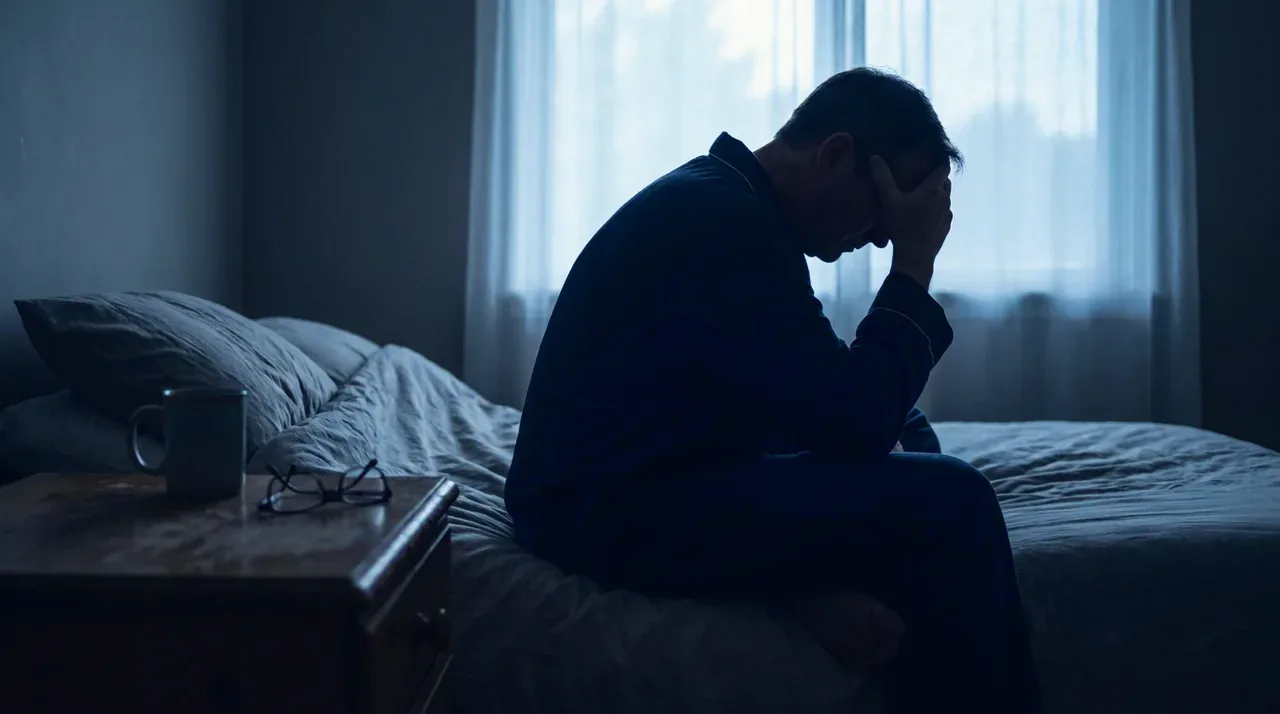
It is a question many men ask quietly: can my snoring or my sleep apnea have anything to do with my erections, my desire, or my testosterone? The honest answer is yes, more often than you would think — and, importantly, part of it can improve when the apnea is treated. There is also one warning that matters: taking testosterone before sorting out the apnea can backfire.
The short answer
- ·Obstructive sleep apnea is linked to erectile dysfunction (about 1.8 times the risk) and to lower testosterone and libido.
- ·The cause is biological: night-time drops in oxygen, broken sleep and damage to the blood vessels that fill the penis.
- ·Treating the apnea (CPAP) improves erections in part of patients — not all — and combines well with urology treatment.
- ·Key and honest: testosterone therapy can WORSEN apnea, so rule out and treat the apnea first.
Why apnea reaches the bedroom
A problem of vessels, oxygen and hormones
An erection is, above all, good blood flow. The same lining of the blood vessels (the endothelium) that has to relax and fill the penis is harmed by apnea: every pause in breathing drops the oxygen, raises the stress hormones and, night after night, damages those vessels — what doctors call endothelial dysfunction. That is why apnea and erectile dysfunction so often travel together. A meta-analysis pooling several studies found that men with obstructive sleep apnea had roughly 1.8 times the risk of erectile dysfunction (Liu et al., 2015), and across sleep-clinic populations erectile dysfunction is reported in about 41% to 80% of men with apnea (Gu et al., 2022).
There is also a hormonal piece. Most testosterone is made during deep sleep, so when apnea fragments the night and lowers oxygen, testosterone tends to fall — and with it, libido (sex drive) and energy. The good news is that part of this is a consequence of untreated apnea, not a fixed sentence.
In women the hormonal piece is different: after the menopause the risk of apnea rises and it often shows up differently; we explain it in sleep apnea in women and sleep apnea and menopause.
Does treating the apnea help the erection?
In part of patients, yes — and that is worth saying plainly so nobody over-promises. A systematic review found that CPAP (the night-time mask that keeps the airway open) improved erectile function in around 30% of men, with a wide range across studies, from about 6% to 76%, depending on how severe the apnea was and how well the CPAP was used (Campos-Juanatey et al., 2017). A later meta-analysis confirmed that CPAP significantly improves erectile-function scores and night-time erections — though it was less powerful on its own than PDE5 inhibitors (the drugs of the sildenafil/Viagra family), and combining CPAP with a PDE5 inhibitor worked better than either alone (Li et al., 2019).
The honest reading: treating the apnea is a sensible first move, but it does not fix every erection on its own. Some men still need urology/andrology, and the two approaches add up.
The testosterone warning (read this before you ask for it)
It feels logical: if my testosterone is low and my desire is down, just give me testosterone. But there is a catch that matters for anyone who snores or has apnea: testosterone therapy can worsen obstructive sleep apnea. For that reason the Endocrine Society clinical practice guideline recommends against starting testosterone in men with untreated severe obstructive sleep apnea (Bhasin et al., 2018).
So the order matters. The sensible sequence is: first find out whether you have apnea and treat it, then reassess your testosterone with a specialist. Recent reviews agree that, in a man with untreated or severe apnea, it is reasonable to delay testosterone and to handle it carefully and case by case rather than rushing in (Graziani et al., 2023). Starting testosterone with the apnea untreated can push your night-time breathing the wrong way — exactly what you do not want.
Who handles what — and in what order
Step 1 — the airway
- The ENT and sleep surgeon (Dr. Méndez-Benegassi) assesses and treats the apnea: CPAP, oral appliance or surgery.
- The result is confirmed with a sleep study, not assumed.
- Treating the apnea first protects your heart and your sleep too.
Step 2 — the rest
- The erection itself is handled by urology/andrology (lifestyle, PDE5 inhibitors, etc.).
- If testosterone is being considered, endocrinology decides — once the apnea is under control.
- It is a team decision; the two halves add up.
Honest note: most of this evidence shows a strong association and an improvement in part of patients, not a guaranteed cure of erectile dysfunction by treating apnea. Erectile dysfunction has many causes (vascular, diabetes, medication, psychological), so apnea is one piece to address, not always the whole answer. And if you are sleepy, snore loudly or someone has seen you stop breathing, that deserves attention on its own — for your heart, not only your sex life.
References: Liu L et al., Sexual Dysfunction in Patients with Obstructive Sleep Apnea: a systematic review and meta-analysis (The Journal of Sexual Medicine, 2015; pooled relative risk of erectile dysfunction 1.82, 95% CI 1.12–2.97); Gu Y, Wu C, Qin F, Yuan J., Erectile Dysfunction and Obstructive Sleep Apnea: a review (Frontiers in Psychiatry, 2022); Campos-Juanatey F et al., Effects of obstructive sleep apnea and its treatment over the erectile function: a systematic review (Asian Journal of Andrology, 2017); Li Z et al., The effect of CPAP and PDE5i on erectile function in men with obstructive sleep apnea and erectile dysfunction: a systematic review and meta-analysis (Sleep Medicine Reviews, 2019); Bhasin S et al., Testosterone Therapy in Men With Hypogonadism: an Endocrine Society clinical practice guideline (The Journal of Clinical Endocrinology & Metabolism, 2018); Graziani A, Grande G, Ferlin A., The complex relation between obstructive sleep apnoea syndrome, hypogonadism and testosterone replacement therapy (Frontiers in Reproductive Health, 2023).
If you snore or feel unrefreshed and your sexual health has changed, the first step is to find out whether apnea is part of it.
Frequently asked questions
Can sleep apnea cause erectile dysfunction?
It does not "cause" it like a single switch, but obstructive sleep apnea is clearly linked to erectile dysfunction. A meta-analysis found that men with apnea had roughly 1.8 times the risk of erectile dysfunction (Liu et al., 2015), and across sleep-clinic studies erectile dysfunction appears in about 41% to 80% of men with apnea (Gu et al., 2022). The mechanisms are biological: repeated drops in oxygen at night, broken sleep, lower testosterone and damage to the lining of the blood vessels (the same vessels that fill the penis). So in a man with both, the apnea is often part of the problem.
Does treating sleep apnea with CPAP improve erections?
It can, in part of patients — it is not a guarantee. A systematic review found that CPAP improved erectile function in roughly 30% of men, with a wide range across studies from about 6% to 76% (Campos-Juanatey et al., 2017). A later meta-analysis confirmed that CPAP significantly improves erectile-function scores and nocturnal erections, though it was less powerful than PDE5 inhibitors (drugs of the sildenafil/Viagra family), and combining CPAP with a PDE5 inhibitor worked better than either alone (Li et al., 2019). So treating the apnea is a sensible first step, but some men also need urology/andrology.
Does sleep apnea lower testosterone and libido?
Often, yes. Apnea fragments sleep and lowers night-time oxygen, and most testosterone is produced during deep sleep — so men with apnea tend to have lower testosterone than men without it, independently of weight and age, and that can drag down libido (sex drive) and energy. The encouraging part is that this is partly a consequence of untreated apnea, so treating the apnea and improving sleep can help the hormones and desire recover in some men.
I have low testosterone and apnea — should I just take testosterone?
This is the important warning of this page: not without sorting out the apnea first. Testosterone therapy can worsen obstructive sleep apnea, and the Endocrine Society guideline recommends against starting testosterone in men with untreated severe apnea (Bhasin et al., 2018). The sensible order is to diagnose and treat the apnea first, then reassess the testosterone with your doctor. Taking testosterone while the apnea is untreated can make the breathing at night worse.
Which doctor should I see for apnea and sexual problems?
Both, and in the right order. The ENT and sleep surgeon (Dr. Méndez-Benegassi) assesses and treats the airway and the apnea (CPAP, oral appliance or surgery) and confirms the result with a sleep study. The erection and the hormones are then handled by urology/andrology and, if testosterone is being considered, endocrinology. Treating the apnea first is not only good for your sleep and heart — it also makes any later decision about testosterone safer.
Related: is snoring dangerous? · symptoms of sleep apnea · CPAP alternatives
Take the next step in your evaluation
Dr. Méndez-Benegassi uses your data to answer your message. Email is not end-to-end encrypted: it can be read on the servers it passes through. Do not send medical reports or health data that way.
Data controller: Dr. Iván Méndez-Benegassi Silva, ENT physician.
Purpose: To read and answer your message. Tell us only what is essential; the rest is covered in the consultation.
Legal basis: The healthcare you are requesting (Art. 9.2.h GDPR).
Recipients: Your data is not shared with third parties; only the technical providers needed are involved, as data processors.
Your rights: Access, rectify or erase your data, object, restrict its processing and request its portability by writing to contacto@ronquidoyapneas.com. You may also lodge a complaint with the Spanish Data Protection Agency.
Full details in the Privacy policy.