
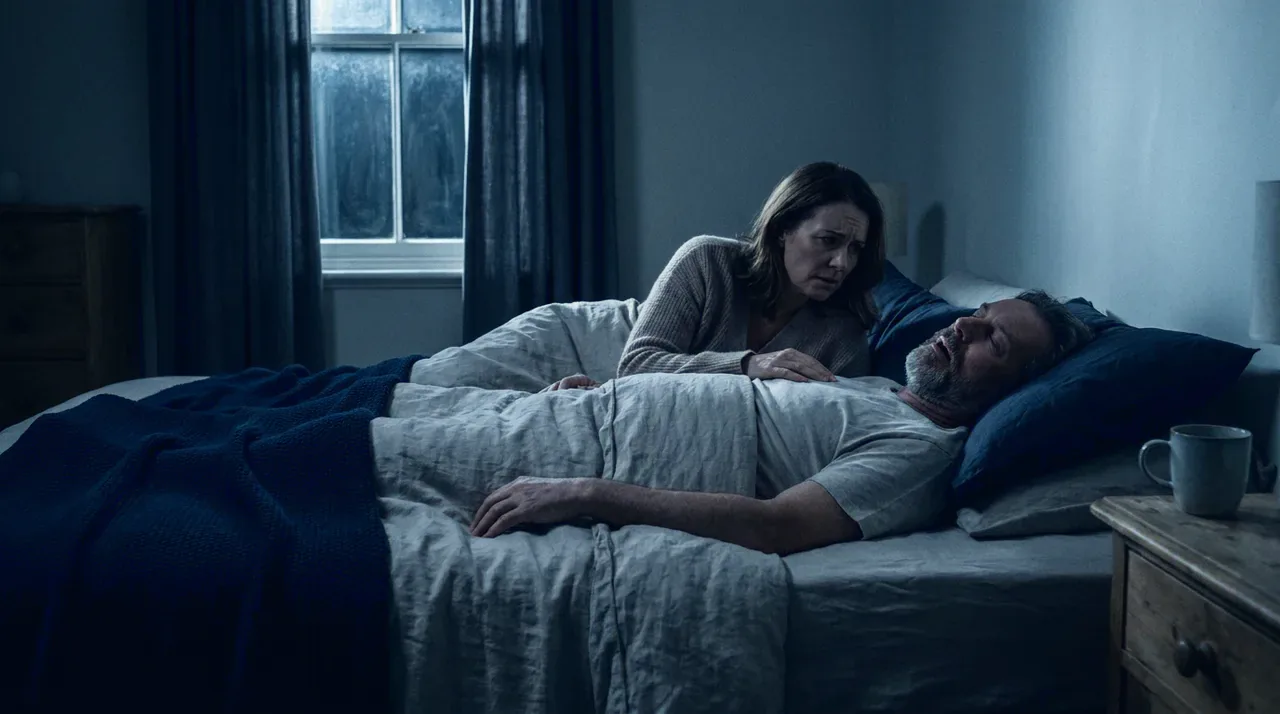
Snoring is extremely common and, on its own, is often just a noise problem. But sometimes it is the sign of something more serious: obstructive sleep apnea. So the useful question is not "do I snore?" but "what is behind my snoring?".
The short answer
- ·Occasional, soft snoring is usually not dangerous in itself.
- ·The risk is that snoring can be the tip of the iceberg of obstructive sleep apnea, which does carry real cardiovascular risk.
- ·You cannot tell by ear whether your snoring hides apnea — it has to be assessed.
When snoring DOES deserve attention
Snoring turns from a nuisance into a warning sign when it comes with any of these:
- Loud, choppy snoring interrupted by silences.
- A partner who has witnessed you stop breathing or gasp for air.
- Waking with a dry mouth, a feeling of choking or morning headaches.
- Unrefreshing sleep and daytime sleepiness or fatigue.
- High blood pressure, especially if it is hard to control.
The real danger: the apnea it can hide
Untreated apnea and the heart
When snoring is the surface of obstructive sleep apnea, the repeated drops in oxygen and the effort to breathe put a strain on the cardiovascular system night after night. Untreated apnea is linked to high blood pressure, atrial fibrillation, heart attack, stroke and type 2 diabetes. A 2025 meta-analysis of prospective cohort studies (Craciun et al., over 25,000 people) found that obstructive sleep apnea was associated with roughly double the long-term cardiovascular risk (pooled hazard ratio 1.82), with the risk highest in severe apnea. And apnea is far from rare in these patients: it is present in 40% to 80% of people with hypertension, heart failure, coronary artery disease, atrial fibrillation or stroke, yet it remains under-recognised and undertreated (AHA, 2021).
It is not only severe apnea: in a study of more than 12,000 people tracked at home over about six months, those who spent more of the night snoring were nearly twice as likely to have uncontrolled high blood pressure — and this held even after accounting for sleep apnea (Lechat et al., 2024). That is the difference between snoring as a noise and snoring as a message.
And the noise itself — does it harm you?
Here honesty matters: primary snoring (snoring without apnea) is not classed as a disease, and for most people the main harm is to the bed partner’s sleep. That said, snoring on its own is not entirely innocent. A foundational study found that heavy snoring was associated with early thickening of the carotid artery wall — a marker of early atherosclerosis — even independently of apnea severity, possibly because the mechanical vibration affects the nearby vessel (Lee et al., 2008). And a more recent systematic review and meta-analysis pooling over 150,000 people found that snorers had about a 28% higher risk of coronary artery disease, an association only partly explained by apnea (Liu et al., 2021). This is observational evidence and does not prove direct cause and effect, but it is one more reason not to dismiss loud, persistent snoring.
Snoring is not always apnea (and apnea is not always snoring)
Many people snore and never have apnea; others have significant apnea and barely snore — this is common, for example, in women. So neither the presence nor the loudness of snoring is enough to confirm or rule out apnea on its own. To understand the difference, see our snoring vs sleep apnea guide.
What to do about it
Since you cannot tell by ear, the sensible step is to assess it. Screening questionnaires (STOP-BANG, Epworth) help estimate the risk, but the diagnosis is made with a sleep study. You can start by checking your symptoms of sleep apnea or the types of snoring.
References: Craciun et al., Association Between Obstructive Sleep Apnea and Cardiovascular Risk: a systematic review and meta-analysis of prospective cohort studies (Medicina, 2025); Yeghiazarians et al., AHA Scientific Statement on Obstructive Sleep Apnea and Cardiovascular Disease (Circulation, 2021); Lechat et al., Regular snoring is associated with uncontrolled hypertension (npj Digital Medicine, 2024); Liu et al., Snoring increases the development of coronary artery disease: a systematic review with meta-analysis of observational studies (Sleep and Breathing, 2021); Lee et al., Heavy Snoring as a Cause of Carotid Artery Atherosclerosis (Sleep, 2008, foundational).
Worried about your snoring? The smart move is to find out what is behind it.
Frequently asked questions
Is snoring bad for your health?
Occasional, soft snoring is usually just noise and not a health problem in itself. The concern is that loud, habitual snoring can be the visible sign of obstructive sleep apnea — repeated pauses in breathing during sleep — which does carry real health risks. You cannot tell by ear alone whether your snoring hides apnea, so persistent loud snoring deserves to be assessed.
Does snoring mean I have sleep apnea?
Not necessarily. Many people snore without having apnea, and — less intuitively — some people with apnea barely snore. Snoring becomes a warning sign when it is loud and interrupted by pauses, when a partner witnesses you stop breathing or gasp, or when you wake unrefreshed and feel sleepy during the day.
Can snoring cause a heart attack or a stroke?
The cardiovascular risk comes mainly from untreated sleep apnea, not from the noise itself. A 2025 meta-analysis of prospective studies found that obstructive sleep apnea roughly doubles cardiovascular risk over time (pooled hazard ratio 1.82), and apnea is present in 40% to 80% of patients with hypertension, heart failure, coronary artery disease, atrial fibrillation or stroke (AHA, 2021). Snoring on its own carries a smaller but real signal too: a meta-analysis found snorers have about a 28% higher risk of coronary artery disease, even though most snorers do not have apnea (Liu et al., 2021). So loud, chronic snoring should not simply be ignored.
When should I worry about my snoring?
Worry — and get assessed — if your snoring is loud and choppy, if someone has seen you stop breathing or gasp for air, if you wake with a dry mouth, headaches or a feeling of choking, if your sleep is unrefreshing, or if you are sleepy or have high blood pressure during the day. Those point towards apnea rather than simple snoring.
How do I know if my snoring is dangerous?
Questionnaires such as STOP-BANG (a score of 3 or more) or the Epworth Sleepiness Scale (over 10 points) can flag risk, but they do not diagnose. The only way to know whether your snoring hides apnea is a sleep study (a sleep test at home or in a unit). If in doubt, it is worth getting checked.
Take the next step in your evaluation
Dr. Méndez-Benegassi uses your data to answer your message. Email is not end-to-end encrypted: it can be read on the servers it passes through. Do not send medical reports or health data that way.
Data controller: Dr. Iván Méndez-Benegassi Silva, ENT physician.
Purpose: To read and answer your message. Tell us only what is essential; the rest is covered in the consultation.
Legal basis: The healthcare you are requesting (Art. 9.2.h GDPR).
Recipients: Your data is not shared with third parties; only the technical providers needed are involved, as data processors.
Your rights: Access, rectify or erase your data, object, restrict its processing and request its portability by writing to contacto@ronquidoyapneas.com. You may also lodge a complaint with the Spanish Data Protection Agency.
Full details in the Privacy policy.