
How to stop snoring
Medically reviewed by Dr. Iván Méndez-Benegassi Silva · Otorhinolaryngology (ENT) Specialist with over 25 years of experience in sleep surgery and advanced rhinology · European Board Certificate (ORL-HNS) · HM Hospitales, Madrid · License No. 282855946
To stop snoring, work on its cause: lose weight if you are overweight, sleep on your side if it is worse face-up, avoid alcohol and sedatives before bed, clear your nose, and strengthen the airway with myofunctional exercises. Over-the-counter strips, pillows and sprays may help mild snoring but do not treat sleep apnea. If there are witnessed breathing pauses, choking or daytime sleepiness, see a specialist.
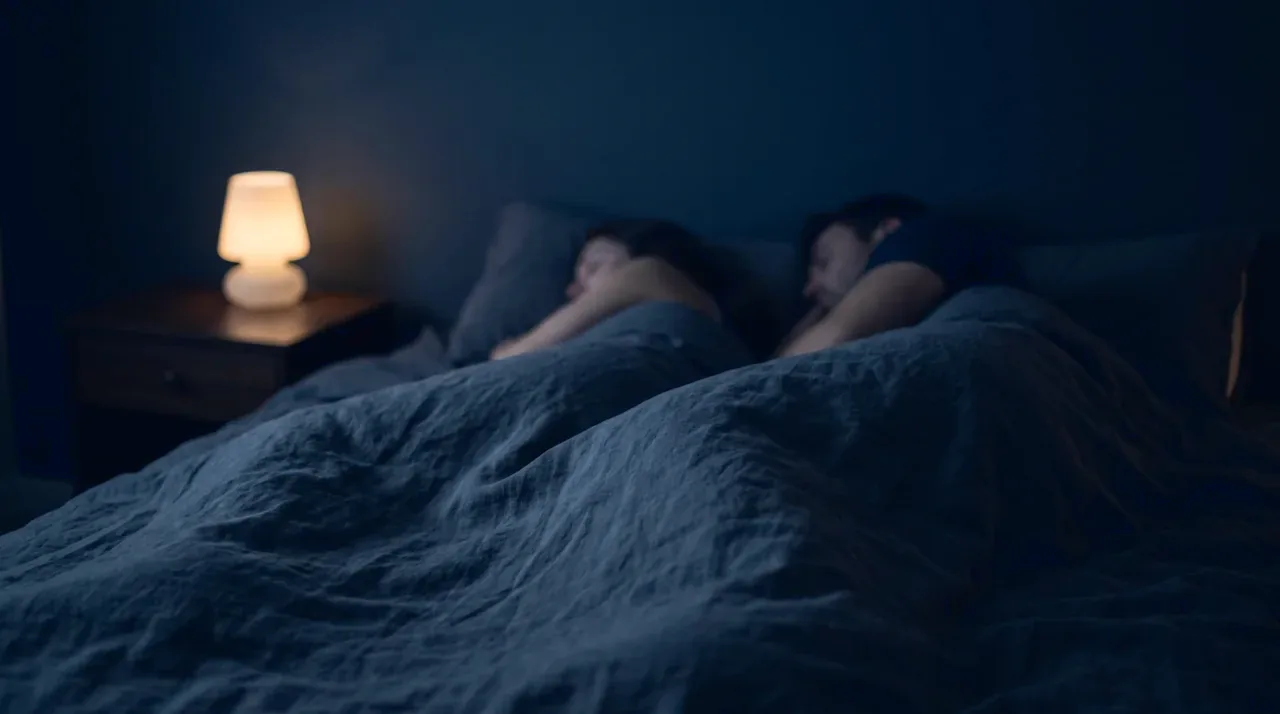
First, find your cause
Snoring is the vibration of the soft tissues of the throat as the airway narrows during sleep. There is no single trick that silences everyone, because the narrowing can come from the nose, the soft palate, the tongue base, extra weight or sleeping position — often several at once. The measures below have the best evidence; the more they match where your snoring comes from, the better they work. Our acoustic analyzer measures on your phone how long your snoring sounds, its relative loudness and prolonged sound pauses; where it comes from is seen at the examination and, when indicated, with a sleep endoscopy (DISE).
Measures that work
1. Lose weight if you are overweight
Excess weight is the single most important — and most modifiable — risk factor for snoring and sleep apnea, because fat around and inside the throat narrows the airway. The good news is that you do not need to reach an ideal weight to notice a change: in the Wisconsin cohort, published in JAMA, a 10% weight loss predicted about a 26% reduction in the number of breathing events, and a 10% gain a 32% increase. Losing weight will not help much if you are slim, but if you carry extra kilos it is often the measure with the biggest impact.
2. Sleep on your side
Lying on your back lets gravity pull the tongue and soft palate backward, narrowing the airway; sleeping on your back makes things worse in more than half of people who snore. If your snoring is clearly worse face-up (positional snoring), training yourself to sleep on your side — with a body pillow, a wedge or a positional device — can reduce it noticeably. This is the basis of positional therapy, recognised in the Spanish/international consensus on sleep apnea.
3. Avoid alcohol and sedatives before bed
Alcohol, sleeping pills and other sedatives relax the throat muscles more than normal sleep does, so the airway collapses and vibrates more easily — snoring gets louder and pauses become more frequent. Avoiding alcohol in the hours before going to sleep is one of the simplest and most immediate measures. If you take sedatives, never stop them on your own: talk to the doctor who prescribed them.
4. Clear your nose
A blocked nose — from a deviated septum, enlarged turbinates, rhinitis or polyps — forces turbulent breathing and often mouth-breathing, which favours vibration further down the throat. Treating nasal obstruction can reduce snoring on its own and improves the use of CPAP when it is needed. Nasal strips and nasal dilators widen the nostrils and may ease snoring of nasal origin, but they do nothing when the noise comes from the palate or tongue base.
5. Strengthen the airway with exercises
Myofunctional therapy is a set of tongue, lip and throat exercises, guided by a trained therapist, that strengthen the muscles that keep the airway open. A systematic review and meta-analysis in the journal Sleep found that it reduces the apnea-hypopnea index by roughly 50% in adults (and even more in children), with no side effects, and that snoring decreased; a more recent meta-analysis of randomized trials (Laryngoscope, 2024) confirmed a significant improvement in the apnea-hypopnea index and in snoring in adults. It works best as a complement to the other measures, and it requires doing the exercises regularly.
6. Tobacco, sleep hygiene and other measures
Tobacco inflames and swells the lining of the airway, so quitting smoking helps. Keeping regular sleep hours and sleeping enough (around 7–9 hours) avoids the deep, "rebound" sleep that worsens snoring after bad nights. Some people improve by slightly raising the head of the bed. None of these replaces treating the underlying cause, but together they tip the balance toward quieter nights.
What does not cure snoring
Be wary of any product that promises to "cure" snoring overnight. Nasal strips and dilators only help snoring of nasal origin; anti-snoring pillows help mainly when snoring is positional; sprays and "anti-snoring" wristbands have little solid evidence. None of them treats obstructive sleep apnea. Using them to silence loud, irregular snoring with breathing pauses can give a false sense of security and delay the diagnosis of a condition that affects your heart and your daytime alertness.
When snoring hides sleep apnea
Simple snoring is only noise: the airway vibrates but does not close. In obstructive sleep apnea the airway collapses repeatedly, breathing pauses and oxygen drops. Loud, irregular snoring with witnessed pauses, choking, unrefreshing sleep, daytime sleepiness or high blood pressure should be evaluated, because the lifestyle measures help but may not be enough on their own. Only a sleep study can confirm whether apnea is present.
Measure the sound of YOUR snoring
Our acoustic analyzer measures on your own device how long your snoring sounds, its relative loudness and prolonged sound pauses (free, and the audio is not uploaded). To know where it comes from and which measures suit you, mention it at the consultation.
Open the AI snore analyzerKeep reading
Why do I snore?
The causes behind the noise, one by one.
Snoring vs sleep apnea
How to tell simple snoring from apnea.
Types of snoring
Where the airway vibrates and what it means.
Positional therapy
Useful when snoring is worse on your back.
Myofunctional therapy
Airway exercises that reduce snoring.
I can’t tolerate CPAP
Real alternatives when measures are not enough.
Frequently asked questions
Can I really stop snoring completely?
Sometimes, yes, and often it can at least be reduced a lot. It depends on where the snoring comes from and why. Simple snoring linked to weight, alcohol, nasal obstruction or sleeping on your back tends to respond well to the measures below. Snoring caused by the anatomy of the palate or the tongue base may need a specific treatment. There is no single trick that works for everyone: the key is to find your cause.
What is the most effective way to stop snoring?
There is no universal "best" measure, but the ones with the strongest evidence are losing weight if you are overweight, sleeping on your side when snoring is worse face-up, and avoiding alcohol and sedatives before bed. Treating a blocked nose and doing airway (myofunctional) exercises can add to that. The most effective approach is the one aimed at your particular cause.
Does losing weight stop snoring?
In people who are overweight it helps a great deal. Extra fat around the throat narrows the airway, and even a modest reduction lowers snoring and the number of breathing events: a study in JAMA found that a 10% weight loss predicted about a 26% fall in the apnea-hypopnea index. It does not work the same way in slim people, whose snoring usually has another origin.
Do nasal strips and nasal dilators work?
They can help with mild snoring of nasal origin: strips and dilators widen the nostrils and make breathing through the nose easier, which may reduce the noise. However, they do nothing when the snoring comes from the soft palate or the tongue base, and they do not treat sleep apnea. They are a reasonable thing to try for a blocked nose, not a cure.
What about anti-snoring pillows, sprays and wristbands?
Anti-snoring pillows and side-sleeping devices can help when your snoring is clearly worse on your back (positional snoring). Sprays and "anti-snoring" wristbands have little solid evidence behind them. None of these treat sleep apnea, so if there are breathing pauses, choking or daytime sleepiness they are not a substitute for a medical assessment.
When should I worry and see a specialist?
See a specialist if your snoring is loud and persistent, if your partner has witnessed breathing pauses or choking, or if you wake up tired, fall asleep during the day or have high blood pressure. These can be signs of obstructive sleep apnea, which is more than just noise and needs a sleep study to confirm. Snoring is a useful clue, not a diagnosis.
References
- Peppard PE, Young T, Palta M, Dempsey J, Skatrud J. Longitudinal Study of Moderate Weight Change and Sleep-Disordered Breathing. JAMA. 2000;284(23):3015-3021. doi:10.1001/jama.284.23.3015
- Saba ES, Kim H, Huynh P, Jiang N. Orofacial Myofunctional Therapy for Obstructive Sleep Apnea: A Systematic Review and Meta-Analysis. Laryngoscope. 2024;134(1):480-495. doi:10.1002/lary.30974
- Camacho M, Certal V, Abdullatif J, et al. Myofunctional Therapy to Treat Obstructive Sleep Apnea: A Systematic Review and Meta-analysis. Sleep. 2015;38(5):669-675. doi:10.5665/sleep.4652
- Mediano O, González Mangado N, Montserrat JM, et al. Documento internacional de consenso sobre apnea obstructiva del sueño. Arch Bronconeumol. 2022;58(1):52-68. doi:10.1016/j.arbres.2021.03.017
This guide is educational and does not replace a medical diagnosis or a sleep study. Do not stop any prescribed medication on your own. If you snore loudly, wake up tired or have witnessed breathing pauses, consult a specialist.
Reviewed by Dr. Iván Méndez-Benegassi Silva · Otorhinolaryngology (ENT) Specialist with over 25 years of experience in sleep surgery and advanced rhinology · European Board Certificate (ORL-HNS) · HM Hospitales · Last reviewed: 23 Jun 2026
Take the next step in your evaluation
Dr. Méndez-Benegassi uses your data to answer your message. Email is not end-to-end encrypted: it can be read on the servers it passes through. Do not send medical reports or health data that way.
Data controller: Dr. Iván Méndez-Benegassi Silva, ENT physician.
Purpose: To read and answer your message. Tell us only what is essential; the rest is covered in the consultation.
Legal basis: The healthcare you are requesting (Art. 9.2.h GDPR).
Recipients: Your data is not shared with third parties; only the technical providers needed are involved, as data processors.
Your rights: Access, rectify or erase your data, object, restrict its processing and request its portability by writing to contacto@ronquidoyapneas.com. You may also lodge a complaint with the Spanish Data Protection Agency.
Full details in the Privacy policy.