
Myofunctional Therapy: Your Airway "Gym"
Medically reviewed by Dr. Iván Méndez-Benegassi Silva · Otorhinolaryngology (ENT) Specialist with over 25 years of experience in sleep surgery and advanced rhinology · European Board Certificate (ORL-HNS) · HM Hospitales, Madrid · License No. 282855946
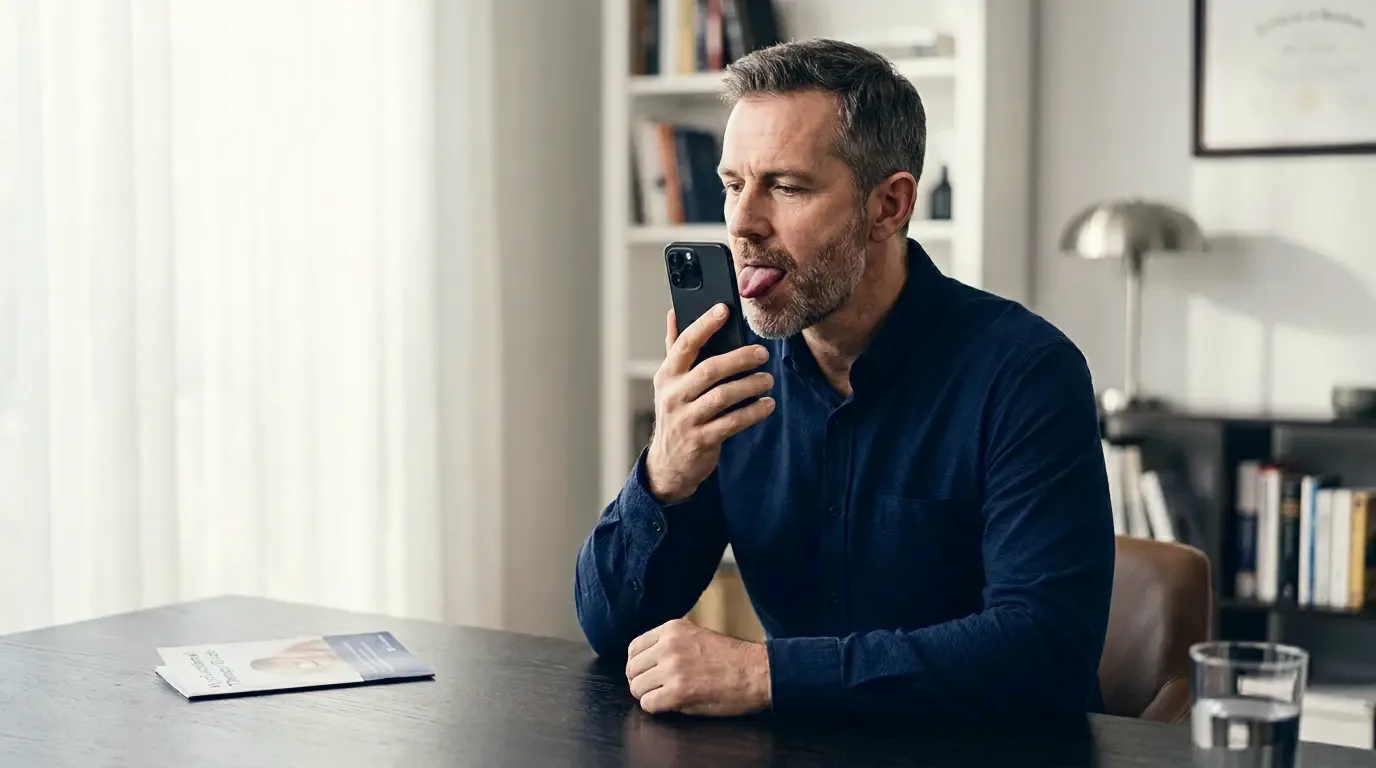
Myofunctional Therapy (MFT) is a complementary treatment for snoring and obstructive sleep apnea (OSA), with evidence mainly in mild cases and as support to other treatments. It is based on neurofunctional rehabilitation of the face and throat muscles. Just as we train the body at the gym, we can train the airway to prevent it from collapsing at night.
What does the treatment consist of?
The program uses isotonic and isometric exercises specifically designed to strengthen:
- The Tongue: Preventing it from falling back and blocking the throat.
- The Soft Palate: Reducing its vibration (main cause of snoring).
- The Pharyngeal Walls: Increasing their resistance to collapse.
Traditionally, the biggest challenge of this therapy was patient compliance: it only works if you actually do the exercises every day. In our clinic we digitize the process with precision technology (app-based feedback and objective measurement) so progress is measurable and daily practice is far easier to sustain.
Digital Training with AirwayGym® App
Your guided and monitored therapy from your smartphone.
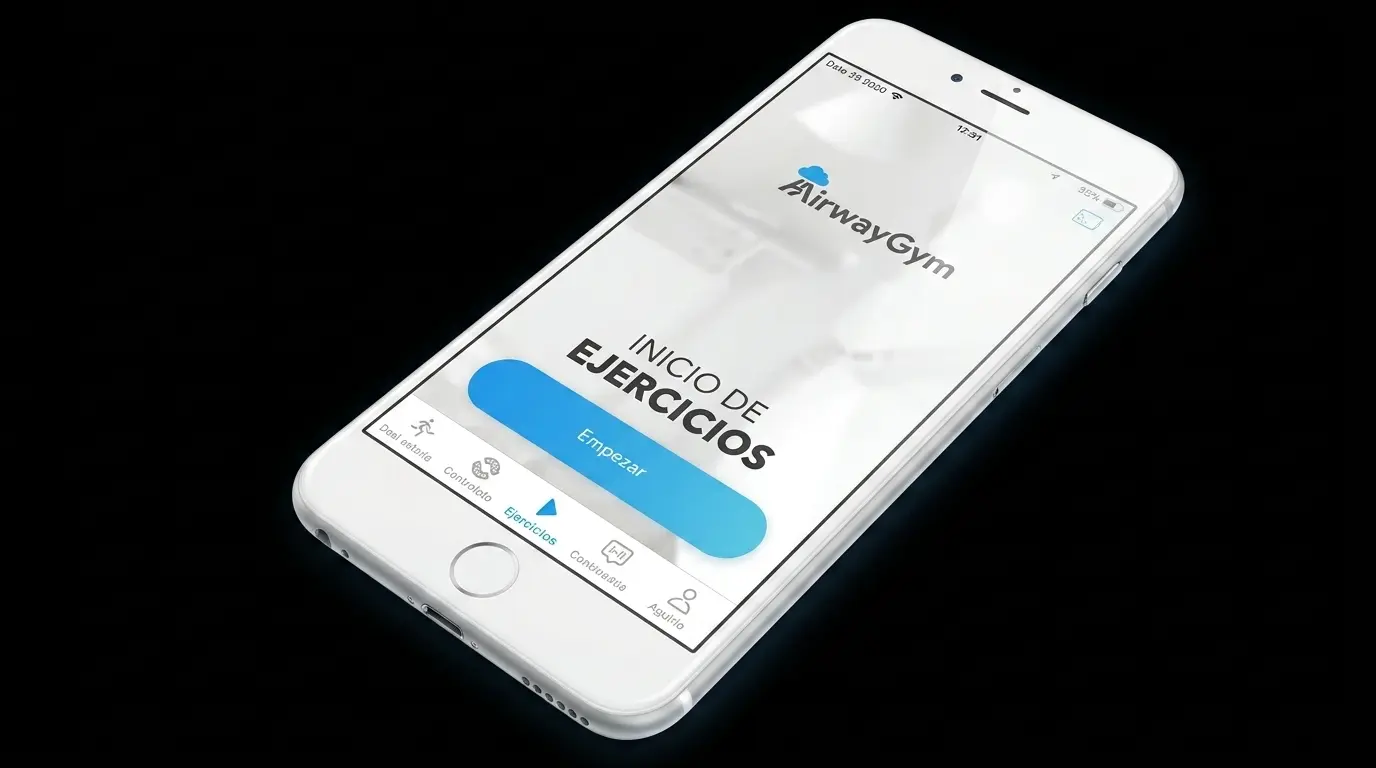
AirwayGym® is a mobile app scientifically validated for upper airway toning: in a pilot randomized controlled trial in severe sleep apnea, three months of app-guided exercises reduced the apnea–hypopnea index by about 53% and significantly increased tongue and lip strength (O'Connor-Reina et al., 2020). It turns your phone into an interactive "pocket gym".
Personalized Routine
The system proposes a series of daily exercises based on proprioceptive training.
Real-Time Feedback
The app uses smartphone sensors to give you visual and acoustic feedback. The device indicates through sounds whether you are performing the pressure or movement correctly or incorrectly.
Remote Clinical Monitoring
Results are stored in the cloud, allowing our medical team to monitor your progress, precision and plan compliance from the clinic, adjusting the routine according to your evolution.
Objective Measurement & Biofeedback with IOPI®
The gold standard in tongue strength measurement.
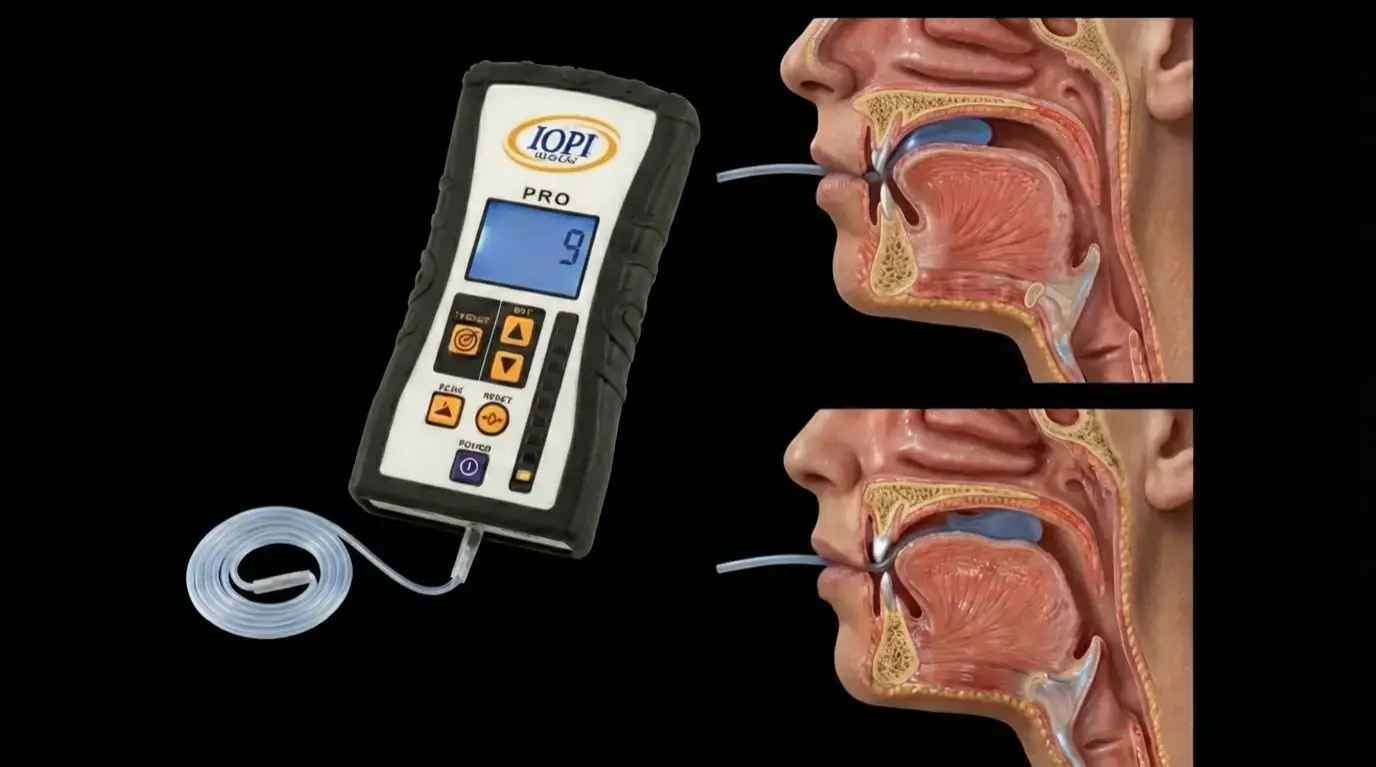
For a therapy to be effective, it must be measurable. The IOPI (Iowa Oral Performance Instrument) is a high-precision device that allows us to quantify the health of your orofacial muscles.
Precision Diagnosis
Using a small air bulb, the IOPI measures the maximum pressure generated by your tongue against the palate in kilopascals (kPa). This allows us to objectively identify hypotonia (muscular weakness).
Visual Training (LED Lights)
The device has a row of lights that illuminate based on the pressure exerted. The patient has a visual "target" (green light), turning exercise into a rewarding and motivating challenge.
Data-Driven Evolution
Thanks to the IOPI, the patient sees concrete evidence of how their tongue strengthens week by week, ensuring the airway remains open during deep sleep.
Technical note: As a complementary tool for home monitoring, our research also supports the use of the "Tongue Digital Spoon", a low-cost alternative for the patient to monitor their own tongue strength evolution.
Why Choose Our Myofunctional Protocol?
Unlike classic manual exercises, our technological approach offers:
- Measurable Results: You will know exactly how much your muscle strength has improved.
- Greater Motivation: The use of apps and LED lights eliminates the boredom of traditional therapy.
- After Surgery: It can help maintain muscle tone after BRP pharyngoplasty or TORS.
Mild Apnea or Snoring
As a standalone initial treatment.
CPAP or MAD Users
To improve device efficacy and reduce required pressures.
Post-Surgical Patients
After pharyngoplasty or robotic surgery, muscle rehabilitation with IOPI and AirwayGym® can help maintain surgical results over time.
Children with Mouth Breathing
Helping to retrain tongue position and prevent facial development problems.
Combined with MAD Devices
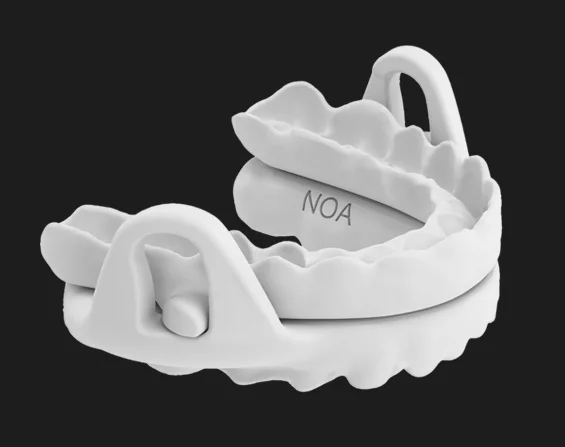
Myofunctional therapy significantly enhances the results of mandibular advancement devices (MAD) like the NOA, strengthening the muscles that support the airway while the device repositions the jaw.
Learn about MAD devicesWhat the Evidence Shows (and Its Limits)
Myofunctional therapy is supported by randomized trials and several systematic reviews. In adults it reduces the apnea–hypopnea index (AHI, the number of breathing pauses per hour) by roughly 9 to 13 events/hour on average, lowers daytime sleepiness on the Epworth scale and slightly improves the lowest oxygen level during sleep. It also reduces snoring. The effect is real but moderate, and the quality of the underlying studies is still limited, so results should be read with that caution.
Honest framing: it is best understood as a complement, not a replacement. The CPAP machine, when tolerated, lowers the AHI more than exercises in absolute terms; in fact, head-to-head data suggest myofunctional therapy alone does not match CPAP. Its strengths are a very good safety profile and usefulness in mild apnea, in snoring, in children, and as an add-on that improves tolerance of CPAP or a mandibular advancement device and helps maintain surgical results.
Key references
- • Pisoni E, et al. Myofunctional Therapy in Adults and Children With Obstructive Sleep Apnea: An Overview and Re-Analysis of Systematic Reviews. Journal of Sleep Research, 2026 (most recent overview; 21 studies, 716 participants; AHI mean difference −9.5 events/h, Epworth −3.6). PMID 41045206. DOI 10.1111/jsr.70219.
- • Saba ES, et al. Orofacial Myofunctional Therapy for Obstructive Sleep Apnea: A Systematic Review and Meta-Analysis. The Laryngoscope, 2024;134(1):480-495 (7 RCTs, 310 patients; AHI −10.2, Epworth −5.7, lowest SpO₂ +2.7). PMID 37606313. DOI 10.1002/lary.30974.
- • Rueda JR, et al. Myofunctional therapy (oropharyngeal exercises) for obstructive sleep apnoea. Cochrane Database of Systematic Reviews, 2020 (vs. sham: Epworth −4.5, AHI −13.2; vs. CPAP it does not outperform CPAP). DOI 10.1002/14651858.CD013449.pub2.
- • Camacho M, et al. Myofunctional Therapy to Treat Obstructive Sleep Apnea: A Systematic Review and Meta-analysis. Sleep, 2015 (foundational; AHI ~50% lower, 24.5→12.3/h; Epworth 14.8→8.2). PMID 25348130. DOI 10.5665/sleep.4652.
- • O'Connor-Reina C, et al. Myofunctional Therapy App (AirwayGym) for Severe Obstructive Sleep Apnea: Pilot Randomized Controlled Trial. JMIR mHealth and uHealth, 2020 (AHI −53%, tongue strength measured with IOPI). PMID 33093013. DOI 10.2196/23123.
- • Rodríguez-Alcalá L, O'Connor-Reina C, et al. Evaluation of the Muscle Strength of the Tongue with the Tongue Digital Spoon (TDS) in Obstructive Sleep Apnea. Life (Basel), 2022;12(11):1841 (low-cost home alternative to IOPI; correlation r = 0.74). PMID 36362996. DOI 10.3390/life12111841.
Frequently asked questions
What exercises does myofunctional therapy include and can I do them at home?
It combines isotonic and isometric exercises for the tongue, soft palate and pharyngeal walls: pressing the tongue against the palate, controlled swallowing, lip and cheek work, and breathing patterns. Most are designed to be done at home as a short daily routine, guided by the AirwayGym® app and an initial in-clinic assessment so you learn to perform them correctly.
Who runs the therapy (speech therapist / physiotherapist)?
It is a multidisciplinary treatment. The ENT specialist indicates it and monitors progress, and the exercise programme is led and supervised by professionals trained in orofacial myofunctional rehabilitation, such as a speech and language therapist or physiotherapist. Your routine is reviewed and adjusted according to your evolution.
How long does it take to notice results?
It is a gradual process: like any muscle training, it requires consistency over several weeks of daily practice before changes consolidate. Adherence is the key factor, which is why progress is measured objectively (for example with IOPI) so you can see your own improvement instead of relying on impressions.
Who is it NOT suitable for, or when is it not enough on its own?
On its own it tends to fall short in severe apnea, in marked anatomical obstructions or when there is no consistent daily practice. In those cases it works as a complement to other treatments (CPAP, mandibular advancement device or surgery) rather than a replacement. A prior assessment determines whether it is appropriate for your case and how to combine it.
At ronquidoyapneas.com, we transform manual exercise into precision neurofunctional rehabilitation. Tone your airway, reduce apnea events and recover the quality of your rest.
Take the next step in your evaluation
Dr. Méndez-Benegassi uses your data to answer your message. Email is not end-to-end encrypted: it can be read on the servers it passes through. Do not send medical reports or health data that way.
Data controller: Dr. Iván Méndez-Benegassi Silva, ENT physician.
Purpose: To read and answer your message. Tell us only what is essential; the rest is covered in the consultation.
Legal basis: The healthcare you are requesting (Art. 9.2.h GDPR).
Recipients: Your data is not shared with third parties; only the technical providers needed are involved, as data processors.
Your rights: Access, rectify or erase your data, object, restrict its processing and request its portability by writing to contacto@ronquidoyapneas.com. You may also lodge a complaint with the Spanish Data Protection Agency.
Full details in the Privacy policy.