
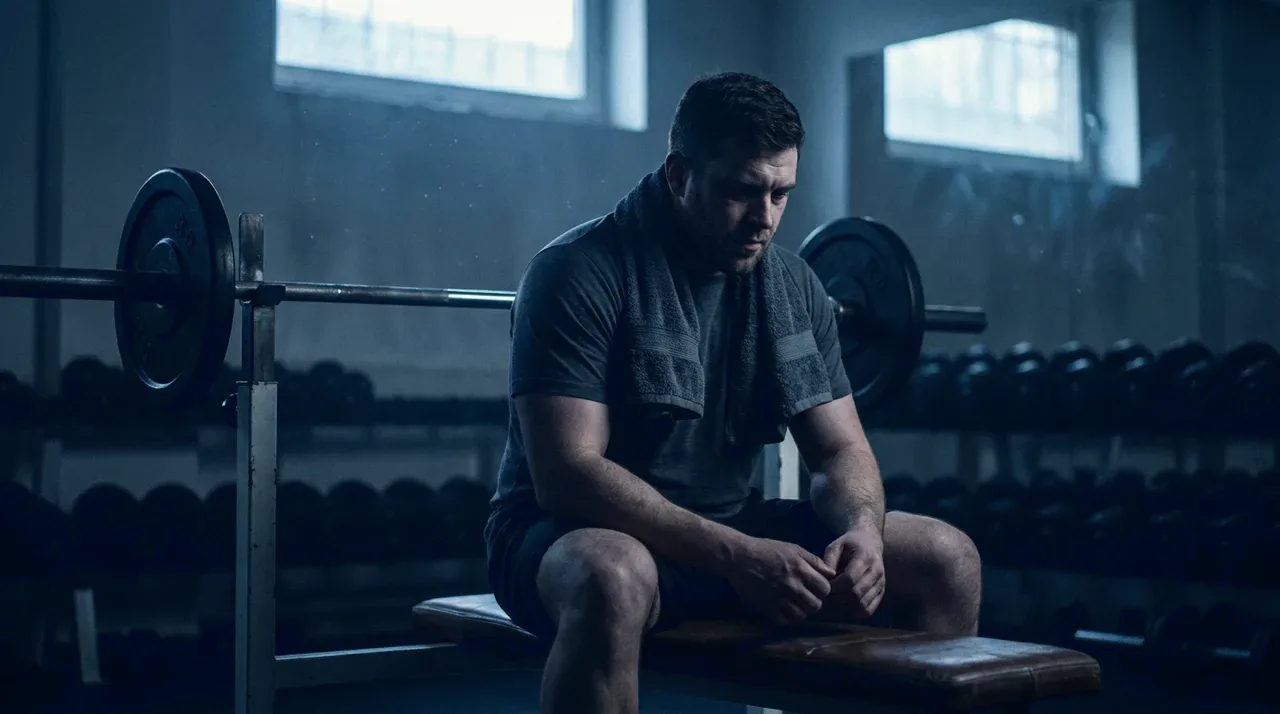
There is a stubborn myth that sleep apnea only happens to overweight people. It is not true. Apnea is also underdiagnosed in athletes — especially in strength and contact sports — and it quietly steals recovery, energy and performance from people who, on paper, are in great shape. If you train hard, snore and still wake up tired, this guide is for you.
The short answer
- ·Sleep apnea is not only about being overweight: it is underdiagnosed in athletes, especially strength and contact sports.
- ·A wide neck and high muscle mass can narrow the airway during sleep, even with a normal body fat.
- ·It causes non-refreshing sleep, worse recovery, daytime fatigue, lower performance and cardiovascular risk — even in fit people.
- ·Exercise helps, but on its own it does not cure an anatomical apnea: an athlete who snores and wakes up tired should be studied.
What the evidence shows
A 2025 systematic review in the journal Sleep Medicine pooled the studies on sleep-disordered breathing in athletes. The prevalence varied enormously by sport: from 24% up to 86.5% in rugby players and from 8% up to 62.5% in active footballers. The risk factors it identified were not what most people expect: high body mass index, heavy weight, a large neck circumference, male sex, a prior concussion and playing as a lineman or forward — the build of a strength and contact athlete, not necessarily an "out of shape" person.
Why does it matter beyond a bad night? Because apnea is "clinically silent" and rarely screened in athletes, so it stays hidden. The same review listed its consequences: impaired cardiac function, excessive daytime sleepiness, cognitive impairment and depression. A 2026 systematic review on apnea and recovery in athletes adds reduced sleep quality, hormonal disruption, slower reaction times and a higher injury risk — all of which blunt the recovery an athlete depends on.
If you train with a watch or ring that measures heart-rate variability (HRV) and oxygen, advanced pulse oximetry: PPG, PI and HRV explains what those numbers mean and what they cannot tell you.
And there is a second, independent problem: even without apnea, poor or short sleep itself drags down performance. A 2025 meta-analysis (Frontiers in Physiology) found that sleep deprivation lowers explosive power, maximum force, speed, aerobic endurance and skill control, while making the same effort feel harder. Apnea is a machine for producing exactly that kind of broken sleep, night after night.
Should you get checked? — yes if…
Warning signs in an athlete
- You snore and wake up tired or unrefreshed despite enough hours in bed.
- Daytime sleepiness, foggy focus or slower reaction time in training.
- A wide neck, strength or contact sport, or recent weight/muscle gain.
- Recovery stalling or unexplained drops in performance.
The honest part
- Sport and a healthy weight are genuinely protective — keep them up.
- But exercise alone does not cure an apnea caused by the anatomy.
- Being fit does not cancel the cardiovascular risk of untreated apnea.
- A sleep study tells you what is really happening — guessing does not.
What treating it can give back
When the apnea is found and treated, the sleep can finally do its job again: deeper, less fragmented nights, steadier oxygen, better hormonal balance overnight. In practice that tends to mean more morning energy, recovery that keeps up with your training load and a clearer head. Treatment is not one-size-fits-all — depending on the cause it can be CPAP, an oral appliance or surgery — and the goal is to confirm the result with a follow-up sleep study, not to assume it. The honest framing: exercise and losing weight are part of the plan and should continue, but they are the partner of the airway treatment, not a substitute for it.
Honest note: most numbers come from contact-sport players (rugby, American football), so the high prevalence figures do not apply equally to every sport; central (non-obstructive) apnea is a different problem; and treating apnea improves sleep and risk, but it is not a performance-enhancing shortcut. The point is simply this — a fit athlete who snores deserves a real diagnosis, not the reassurance of looking healthy.
References: Gomes AM, Aibe M, Boulos MI, Furlan JC. A systematic review on sleep-related breathing disorders in athletes and para-athletes. Sleep Medicine, 2025;136:106882 (PMID 41160949); Sikora M, Panek M, Łakomy O, Siatkowski S, Głowacka E, Żebrowska A. Obstructive Sleep Apnea and Recovery in Athletes: BMI and Neck Circumference and Their Impact on Recovery Capacity and Injury Risk. Life (Basel), 2026 (systematic review); Kong Y, Yu B, Guan G, Wang Y, He H. Effects of sleep deprivation on sports performance and perceived exertion in athletes and non-athletes: a systematic review and meta-analysis. Frontiers in Physiology, 2025.
Train hard, snore and wake up tired? The starting point is a proper assessment of your sleep and your airway — not a guess based on how fit you look.
Frequently asked questions
Can an athlete have sleep apnea if they are fit and not overweight?
Yes. Sleep apnea is not only a condition of overweight people. It is underdiagnosed in athletes, especially in strength and contact sports (rugby, American football, judo, weightlifting) where a wide neck and high muscle mass narrow the airway during sleep. A systematic review (Sleep Medicine, 2025) found sleep-disordered breathing in 24% to 86.5% of rugby players, with high body mass index, heavy weight and a large neck circumference as the main risk factors.
I train hard but wake up tired and unrefreshed. Why?
If you snore, train well and still wake up tired, untreated apnea is a real possibility. During an apnea the airway collapses, oxygen drops and the brain has micro-awakenings, so sleep stops being restorative even if you spend eight hours in bed. The result is non-refreshing sleep, daytime fatigue and slower reaction times — exactly what blunts recovery and performance. A "fit but fatigued" athlete who snores should be studied.
How does sleep apnea affect recovery and performance?
Through the sleep it ruins. The deep and REM sleep where the body repairs muscle and consolidates skills gets fragmented, and the repeated drops in oxygen add stress. Reviews report reduced sleep quality, hormonal disruption, excessive daytime sleepiness and slower reaction times in athletes with apnea, plus a higher injury risk. And, separately, poor sleep itself lowers explosive power, speed, maximum force and skill control — so the gym work converts worse into results.
If I exercise and lose weight, will my apnea go away?
Sport and weight loss help a lot — they reduce the fat around the airway and improve general health — but on their own they do not cure an apnea that comes from the anatomy (palate, tongue base, jaw or nose). Many strength athletes are not "fat", their obstruction is structural. So exercise is part of the solution, never a guarantee: if you snore and wake up tired, the airway still has to be assessed and, if needed, treated with CPAP, an oral appliance or surgery.
Does being an athlete protect my heart from the apnea?
No. Being fit does not cancel out the cardiovascular risk of untreated apnea. The same systematic review reported impaired cardiac function among the consequences of sleep-disordered breathing in athletes. The repeated oxygen drops and sleep fragmentation strain the heart and blood pressure regardless of how good your numbers look in training. That is why an athlete who snores should be diagnosed, not reassured by their fitness.
Related: is snoring dangerous? · apnea and the heart · CPAP, oral appliance or surgery
Take the next step in your evaluation
Dr. Méndez-Benegassi uses your data to answer your message. Email is not end-to-end encrypted: it can be read on the servers it passes through. Do not send medical reports or health data that way.
Data controller: Dr. Iván Méndez-Benegassi Silva, ENT physician.
Purpose: To read and answer your message. Tell us only what is essential; the rest is covered in the consultation.
Legal basis: The healthcare you are requesting (Art. 9.2.h GDPR).
Recipients: Your data is not shared with third parties; only the technical providers needed are involved, as data processors.
Your rights: Access, rectify or erase your data, object, restrict its processing and request its portability by writing to contacto@ronquidoyapneas.com. You may also lodge a complaint with the Spanish Data Protection Agency.
Full details in the Privacy policy.