
Advanced pulse oximetry: what PPG, PI, HRV, LF, HF and VLF mean
Medically reviewed by Dr. Iván Méndez-Benegassi Silva · Otorhinolaryngology (ENT) Specialist with over 25 years of experience in sleep surgery and advanced rhinology · European Board Certificate (ORL-HNS) · HM Hospitales, Madrid · License No. 282855946
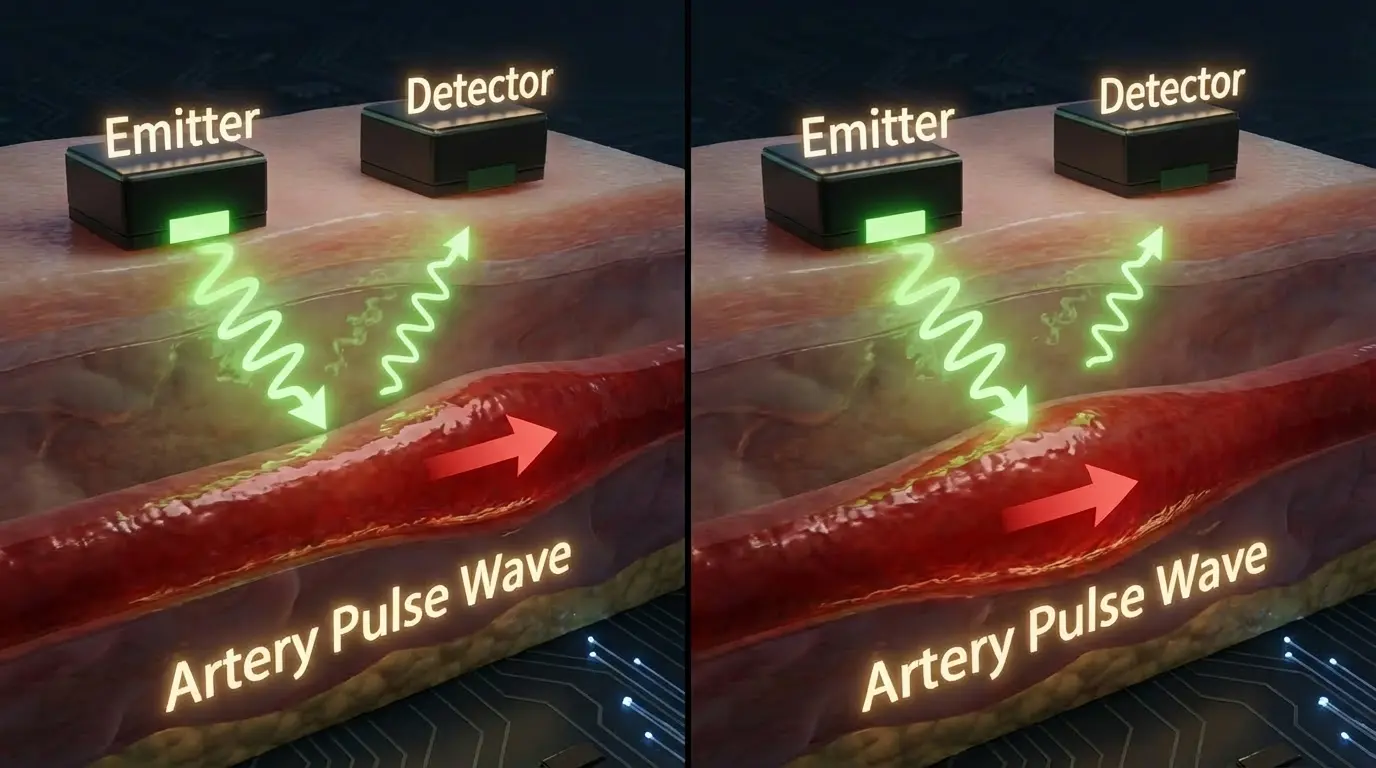
PPG is the light signal the oximeter uses to "see" your blood; PI measures the blood flow reaching your fingertip; HRV is the variation between heartbeats. From the heartbeat the device derives the autonomic signals LF (the "accelerator"), HF (the "brake"), their LF/HF ratio and VLF. Together they reveal how much stress your sleep apnea puts on your heart each night.
The Trendy Acronyms: PPG, PI, HRV
To understand why you wake up tired, modern advanced pulse oximetry systems analyze key indicators. Here's what they mean and why they matter:
Pulse Oximetry Signals
1. PPG (Photoplethysmography)
The Wave of Life
What is it? The light signal the sensor uses to "see" your blood. Each heartbeat causes blood to absorb light.
Imagine a flashlight shining through your finger. With each heartbeat, the light flickers. That "wave" tells us exactly how blood travels through your body. It's the base sensor from which everything else is derived.
2. PI (Perfusion Index)
Perfusion Index — The Blood "Faucet"
What is it? Measures how much blood reaches your fingertip with each heartbeat.
Think of it as a faucet. When you stop breathing (apnea), your body panics and "shuts the faucet" to your hands, redirecting all blood to the brain and heart. A sudden PI drop signals your body is in survival mode.
3. HRV (Heart Rate Variability)
Heart Rate Variability — Heart Flexibility
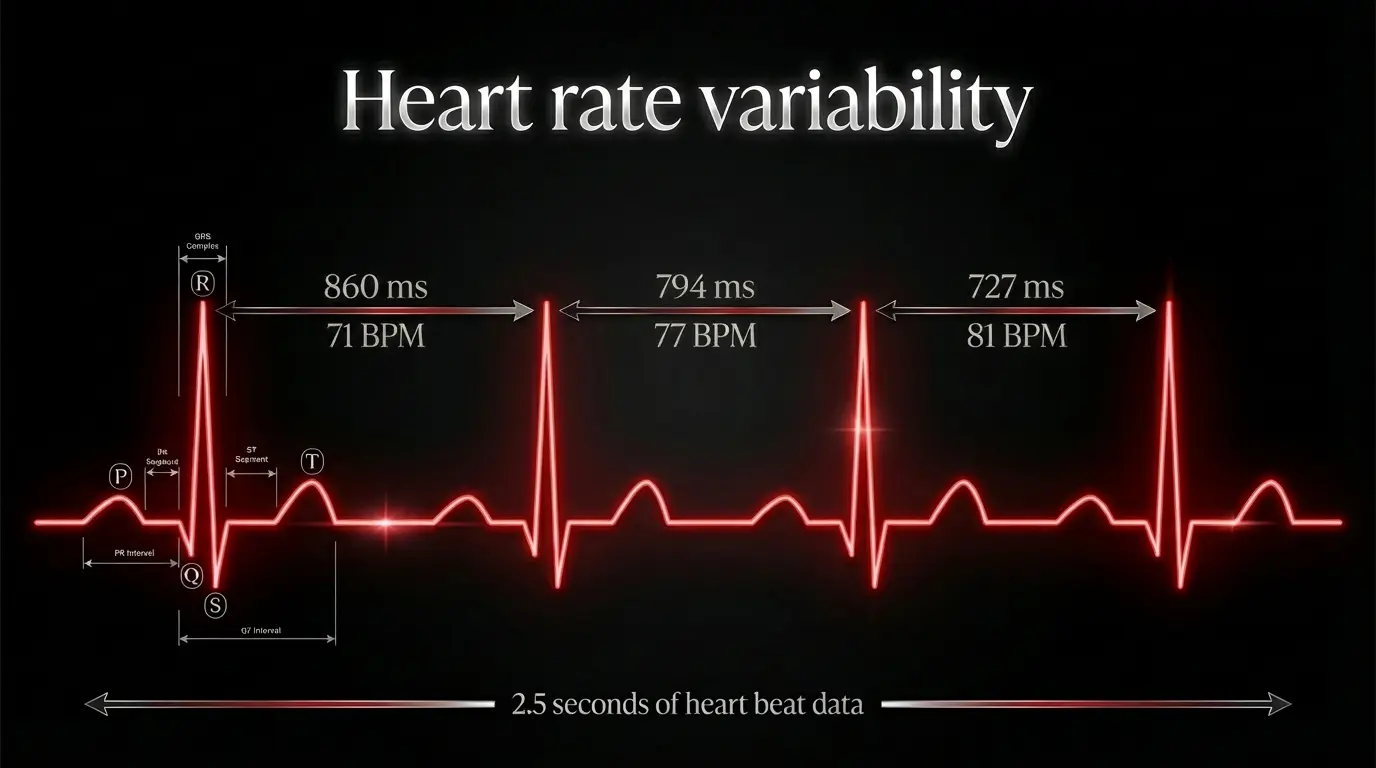
What is it? The time difference (in milliseconds) between one heartbeat and the next.
A healthy heart isn't a perfect metronome; it's flexible. If the time between beats is always identical (low HRV), your heart is "tense" and stressed. If it varies (high HRV), your body is relaxed and recovering.
Autonomic Nervous System
Your heart rate is analyzed to determine which part of your nervous system is in control while you sleep:
4. LF
Low Frequency — The Accelerator
Sympathetic system — action & stress
It's the "accelerator" of your car. During apnea, your body senses suffocation and slams the accelerator to wake you up. If LF is very high at night, your heart is racing while you think you're sleeping.
5. HF
High Frequency — The Brake
Parasympathetic system — rest & repair
It's the "brake" and maintenance system. It only activates when you're truly calm. If HF is low, your body isn't repairing itself, isn't clearing toxins, and you'll wake up as if you never slept.
6. Ratio LF/HF
The Stress Balance
It's the ratio between the accelerator and the brake — the balance of your health.
Low Ratio
You're in "neutral," truly resting.
High Ratio
Engine redlining. This generates vascular stress and long-term heart attack risk.
7. VLF
Very Low Frequency — The Background Rhythm
Slow rhythms related to metabolism and hormones
Think of it as your home thermostat. If VLF is altered, your apnea is no longer just a sleep problem — it's affecting how your body manages energy, temperature, and hormones long-term.
The Chain Reaction
If your oxygen drops, your Accelerator (LF) fires up and your blood Faucet (PI) shuts off. Many wearables measure this chain reaction to tell you how much real Hypoxic Burden your heart endures each night — though most are paid subscription systems or have limited, closed apps.
🚀 Coming soon: our own platform so you can try it for free.
This guide is educational. Consumer wearables and pulse oximeters are screening aids, not diagnostic tools: they do not replace a sleep study or a medical diagnosis.
Reviewed by Dr. Iván Méndez-Benegassi Silva · Otorhinolaryngology (ENT) Specialist with over 25 years of experience in sleep surgery and advanced rhinology · European Board Certificate (ORL-HNS) · HM Hospitales · Last reviewed: 21 Jun 2026
Take the next step in your evaluation
Dr. Méndez-Benegassi uses your data to answer your message. Email is not end-to-end encrypted: it can be read on the servers it passes through. Do not send medical reports or health data that way.
Data controller: Dr. Iván Méndez-Benegassi Silva, ENT physician.
Purpose: To read and answer your message. Tell us only what is essential; the rest is covered in the consultation.
Legal basis: The healthcare you are requesting (Art. 9.2.h GDPR).
Recipients: Your data is not shared with third parties; only the technical providers needed are involved, as data processors.
Your rights: Access, rectify or erase your data, object, restrict its processing and request its portability by writing to contacto@ronquidoyapneas.com. You may also lodge a complaint with the Spanish Data Protection Agency.
Full details in the Privacy policy.