
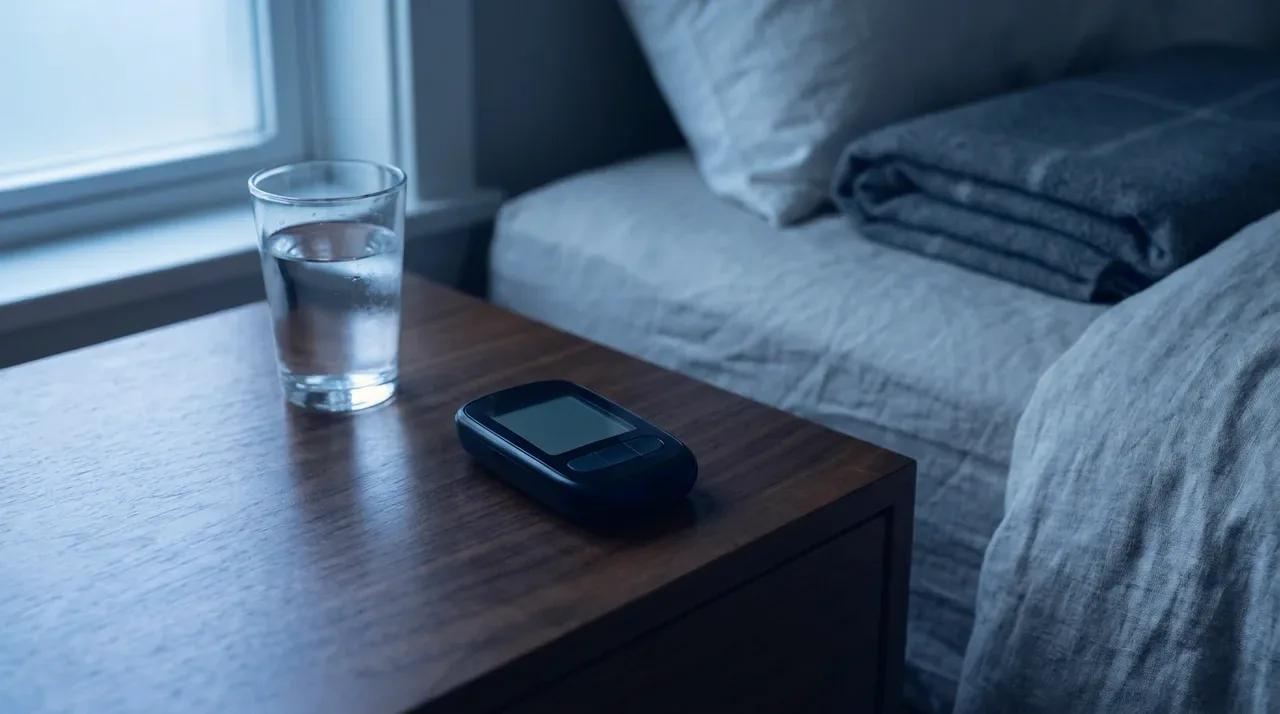
Sleep apnea and type 2 diabetes are not two separate problems that happen to coincide — they feed each other. The repeated drops in oxygen and the broken sleep of apnea push blood sugar up, while the weight and the metabolism behind diabetes make apnea more likely. Understanding that two-way link is the first step to treating both well.
The short answer
- ·The link runs both ways: apnea raises the risk of diabetes, and diabetes raises the risk of apnea.
- ·People with obstructive sleep apnea have roughly twice the odds of type 2 diabetes, and the risk grows with apnea severity.
- ·Treating apnea with CPAP can lower blood sugar a little, but the evidence is mixed — it does NOT cure diabetes.
- ·Obesity is the shared root, so losing weight helps both — but apnea harms glucose even beyond weight.
How apnea pushes blood sugar up
In obstructive sleep apnea the airway collapses dozens or hundreds of times a night. Each collapse drops the oxygen in your blood and jolts your brain just enough to break the sleep. That nightly stress — falling oxygen plus fragmented sleep — releases stress hormones (like cortisol and adrenaline) and inflammation, and these make your cells more resistant to insulin. The result is higher blood sugar and harder-to-control diabetes. This is why the harm tracks with the severity of the apnea, not just with weight.
The numbers back this up. A 2025 systematic review and meta-analysis found that diabetes (mostly type 2) was about twice as common in people with OSA as in those without (odds ratio 2.29), and a dose-response meta-analysis showed the risk climbing step by step from mild apnea to severe apnea. "Resistance to insulin" simply means your body needs more insulin to keep sugar normal — and poor sleep is one of the things that worsens it.
And the other direction: diabetes makes apnea more likely
The loop runs the other way too. People with diabetes (mostly type 2) have about twice the odds of having sleep apnea (odds ratio 2.12 in the same 2025 meta-analysis), and apnea is strikingly common among them: reviews report anywhere from roughly one in five people with diabetes in primary care up to the great majority in those who also have obesity. Yet much of it stays undiagnosed, because the snoring and daytime sleepiness get blamed on a busy life. If you have diabetes, apnea is one of the conditions most worth ruling out.
Does treating the apnea improve diabetes?
This is where honesty matters. Treating apnea with CPAP can nudge blood sugar in the right direction, but the effect is modest and the studies disagree. A 2023 meta-analysis of 11 randomized trials (964 patients with OSA and type 2 diabetes) found CPAP lowered HbA1c — the three-month average of blood sugar — by about 0.24% on average, and the more hours the mask was worn each night, the bigger the drop. Some studies show a clear improvement in insulin sensitivity, others show little change. The benefit is real but smaller than what weight loss or glucose-lowering medication delivers.
The honest takeaway: CPAP is a treatment for apnea, not a treatment for diabetes. It can help your blood sugar a little — especially if you use it well and you have prediabetes or poorly controlled diabetes — but it does not replace your diabetes plan, and stopping it lets both the apnea and any benefit return.
Obesity: the link both conditions share
Excess weight is the single thread that runs through both diseases. Fat around the neck and tongue narrows the airway and triggers apnea; fat around the abdomen drives insulin resistance and diabetes. That is why losing weight is one of the few moves that genuinely helps both at the same time — and why, when obesity is in the picture, the conversation often includes diet, activity and, increasingly, weight-loss medicines. It also means weight alone never explains everything: a slim person can still have apnea from the anatomy of their airway.
Should you get checked?
Worth a sleep study if…
- You have type 2 diabetes and snore or wake unrefreshed.
- Your blood sugar is hard to control despite good treatment.
- You feel sleepy during the day, or your partner notices pauses in breathing.
Keep in mind
- Treating apnea helps your sleep and risk, but is not a substitute for diabetes treatment.
- Apnea and diabetes both raise cardiovascular risk — together, even more. If your blood pressure also stays high despite medication, read sleep apnea and resistant hypertension.
- A diagnosis needs a sleep study, not a guess from symptoms alone.
A team decision: who handles what
Because apnea and diabetes pull on each other, they are best managed together. The diabetes, the weight and any glucose-lowering or weight-loss medicines belong to endocrinology / obesity medicine: at HM Hospitales, Dr. Blanca Martínez Barbeito. The ENT and sleep surgeon, Dr. Méndez-Benegassi, diagnoses and treats the airway itself — CPAP, an oral appliance or surgery — and confirms the result with a sleep study. Treating both at once is what gives the steadiest blood sugar and the best night of sleep.
References: Huang & Chen — Association between obstructive sleep apnea syndrome and type 1/type 2 diabetes mellitus: a systematic review and meta-analysis (Journal of Diabetes Investigation, 2025; DOI 10.1111/jdi.14354): diabetes about twice as common with OSA (OR 2.29) and OSA about twice as common with diabetes (OR 2.12). Yu et al. — Association between Obstructive Sleep Apnea and Type 2 Diabetes Mellitus: a Dose-Response Meta-Analysis (Evidence-based Complementary and Alternative Medicine, 2021; PMID 34630603): diabetes risk rises step by step with apnea severity. Herth, Sievi, Schmidt & Kohler — Effects of CPAP therapy on glucose metabolism in patients with OSA and type 2 diabetes: a systematic review and meta-analysis (European Respiratory Review, 2023; DOI 10.1183/16000617.0083-2023): 11 randomized trials, 964 patients, HbA1c reduced by 0.24% (95% CI −0.43 to −0.06; p=0.001), greater with more nightly CPAP use. Gentile et al. — Obstructive Sleep Apnea and Type 2 Diabetes: An Update (Journal of Clinical Medicine, 2025): bidirectional relationship; OSA prevalence in type 2 diabetes ranges from ~18% in primary care to most patients with obesity; CPAP effect on glucose modest and smaller than weight loss.
Have diabetes and suspect you might also have apnea? The starting point is a proper look at your sleep and your airway.
Frequently asked questions
Does sleep apnea raise blood sugar?
It can contribute. During apnea the oxygen drops again and again, and the sleep is fragmented; both trigger stress hormones and inflammation that make the body more resistant to insulin. In studies, people with obstructive sleep apnea have roughly twice the odds of type 2 diabetes, and the risk rises with the severity of the apnea. It is an association — apnea is rarely the only cause of high blood sugar, but it can be one piece that makes control harder.
If I treat my apnea, will my diabetes get better?
It may improve a little, but do not expect a cure. A 2023 meta-analysis of randomized trials found that CPAP lowered long-term blood sugar (HbA1c) by about 0.24% on average, and more when the mask was used for more hours per night. That is a modest, real effect — not a replacement for your diabetes treatment. The evidence is mixed and the benefit is smaller than what weight loss or glucose-lowering medicines achieve.
I have diabetes and snore. Should I be checked for apnea?
Yes, it is worth checking. Sleep apnea is very common in type 2 diabetes — reported in anywhere from about one in five people in primary care up to most patients in obese groups, and it often goes undiagnosed. If you snore, wake unrefreshed, are sleepy by day or your blood sugar is hard to control, a sleep study is reasonable. Treating an unrecognised apnea can improve your sleep, your daytime energy and your cardiovascular risk.
What links apnea and diabetes — is it just weight?
Weight is the main shared thread: excess fat narrows the airway (causing apnea) and drives insulin resistance (causing diabetes), so losing weight helps both. But it is not only weight. The intermittent low oxygen and disrupted sleep of apnea worsen glucose handling even independently of weight, which is why the two conditions reinforce each other in a two-way loop.
Who should manage this — the ENT or the endocrinologist?
Both, working together. The diabetes, the weight and any glucose-lowering or weight-loss medicines are managed by endocrinology; at HM Hospitales, Dr. Blanca Martínez Barbeito. The ENT and sleep surgeon (Dr. Méndez-Benegassi) diagnoses and treats the apnea itself — CPAP, an oral appliance or surgery — and confirms with a sleep study. Tackling both at once gives the best result for your sleep and your blood sugar.
Related: Ozempic / Mounjaro for apnea · sleep apnea symptoms · is snoring dangerous?
Take the next step in your evaluation
Dr. Méndez-Benegassi uses your data to answer your message. Email is not end-to-end encrypted: it can be read on the servers it passes through. Do not send medical reports or health data that way.
Data controller: Dr. Iván Méndez-Benegassi Silva, ENT physician.
Purpose: To read and answer your message. Tell us only what is essential; the rest is covered in the consultation.
Legal basis: The healthcare you are requesting (Art. 9.2.h GDPR).
Recipients: Your data is not shared with third parties; only the technical providers needed are involved, as data processors.
Your rights: Access, rectify or erase your data, object, restrict its processing and request its portability by writing to contacto@ronquidoyapneas.com. You may also lodge a complaint with the Spanish Data Protection Agency.
Full details in the Privacy policy.