
How to stop snoring: measures that work
Reviewed by Dr. Iván Méndez-Benegassi Silva
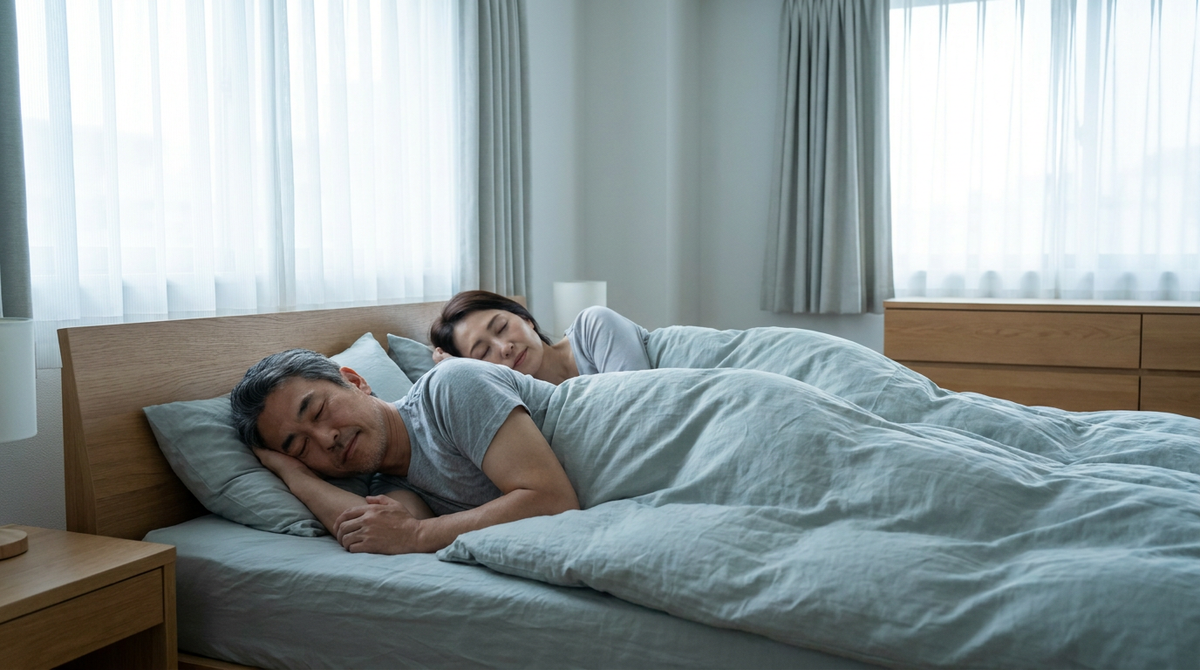
To stop snoring, treat its cause: weight, sleeping position, alcohol or nose. If there are pauses or sleepiness, a sleep study is advisable.
Snoring is the noise made by the soft tissues of the throat vibrating as air passes through a narrow airway during sleep. There is no single trick: what works depends on why each person snores. This guide reviews the best-supported measures and points out when it is worth going further.
- What it is
- vibration of the soft tissues of the throat when breathing during sleep
- First step
- identify the cause of the snoring
- Usual measures
- weight, sleeping position, alcohol, nose and throat exercises
- Other options
- mandibular advancement splint after an ENT assessment with DISE
- Last resort
- surgery, combining techniques according to each case
- When to seek advice
- pauses in breathing, choking or daytime sleepiness
First, look for the cause
Snoring can come from excess weight, sleeping on your back, alcohol or sedatives, a blocked nose, or the anatomy of the palate and the base of the tongue. Often several causes add up at the same time.
Think of a flag in the wind: the narrower the passage for the air and the looser the fabric, the more it flutters. Each measure tries to widen that passage or to give those tissues firmness. That is why what works for one person may not work for another, and the key is to identify your cause.
Measures that usually help
These are the simplest and the first ones to be tried:
- Losing weight if you are overweight. Fat around the throat narrows the airway, and a moderate loss can already make a difference. If you are slim, the effect is usually small because the origin is something else.
- Sleeping on your side if you snore more on your back. When you lie on your back, gravity pushes the tongue and the soft palate backwards. Positional therapy is based on avoiding that position.
- Avoiding alcohol and sedatives before bed. They relax the throat muscles more than normal, and the airway collapses and vibrates more easily. If you take a sedative, do not stop it on your own: talk to whoever prescribed it.
- Clearing the nose. A deviated septum, enlarged turbinates, rhinitis or polyps cause turbulent breathing, often through the mouth, which encourages vibration.
- Giving up smoking and looking after your sleep schedule. Smoking inflames the lining of the airway.
Exercises for the throat muscles
Myofunctional therapy consists of exercises for the tongue, palate and throat, guided by a therapist, to tone the muscles that keep the airway open. A review with meta-analysis that pooled nine studies and 211 adults found that the subjective intensity of snoring fell by about 51% in 80 patients and that the time spent snoring during sleep was reduced by about 31% in 60 patients [3].
It is wise to be cautious: those studies compared patients before and after, without a control group. An earlier review, from 2008, had concluded that there was not enough evidence to recommend these methods, with very few good-quality trials [1]. It is a reasonable option as a complement, and it requires consistency, but not a guaranteed solution.

Comparison: what helps depending on the origin
| Measure | Who it is for | Main limitation |
|---|---|---|
| Losing weight | People who are overweight | Little effect if you are slim |
| Sleeping on your side | Snoring worse on the back | Does not work if you snore just as much on your side |
| Myofunctional exercises | Adults with snoring | Require consistency |
| Advancement splint | Primary snoring or apnoea when CPAP is not tolerated | ENT assessment with DISE and a qualified dentist |
Strips, sprays and pillows
Nasal strips and dilators widen the nostrils and can help with mild snoring of nasal origin. They are no use if the noise starts in the soft palate or the base of the tongue, and they do not treat sleep apnoea. The same goes for sprays and pillows: they may relieve mild snoring, but they do not replace a diagnosis.
Mandibular advancement splint
The mandibular advancement splint moves the jaw slightly forward during the night to open up space behind the tongue. The guidelines of the American societies of sleep medicine and dental sleep medicine recommend that the sleep physician prescribe a splint, rather than no treatment, for adults who request treatment for snoring without apnoea [2].
In people with apnoea, those same guidelines suggest a custom-made, adjustable splint, with follow-up by a qualified dentist, rather than non-customised devices [2].
Who should prescribe it
Prescribing the splint requires an ear, nose and throat (ENT) specialist who assesses the airway. It is not enough to take measurements of the mouth and make the device: first you need to know at what point each person's throat narrows.
For this we carry out a sleep videoendoscopy, also called DISE (drug-induced sleep endoscopy), to show that the splint is likely to work.
Why DISE is necessary
Awake, the throat behaves differently from when asleep: the muscles are active and the airway does not close in the same way. In DISE, a sleep similar to natural sleep is induced with medication and, with a thin, flexible camera passed through the nose, we observe how the airway collapses.
Think of a kinked hose: to fix it, you need to know where the kink is. The splint moves the jaw forward and pulls the tongue and the walls of the throat with it, but if the closure is caused mainly by another area, it may not open the airway enough. DISE lets us see where and how the airway closes before deciding, instead of trying blindly.
This prior assessment helps avoid spending €1,000 or more on a splint of the right brand and design that may then not work.
Splints sold online
The splints sold on Amazon and similar channels are dangerous for dental health. They are not made from your bite nor adjusted under professional supervision, and the guidelines specifically call for monitoring dental side effects and bite changes [2]. Possible problems include:
- They come loose during the night, because they do not fit your teeth properly.
- They can damage the teeth, by placing unevenly distributed forces on them.
- They can damage the jaw joint, if they push the jaw forward or hold it without control or adjustment.
The list is not exhaustive: these are risks of a non-customised device without follow-up.
Surgery: the last resort
Surgery is the last treatment option, when the previous measures are not enough or there is a specific anatomical cause. There is no single operation for snoring: different techniques are usually combined, according to each case, after assessing where the noise originates.
Nasal techniques
- Turbinoplasty, on the turbinates.
- Septoplasty, on the deviated septum.
- Functional rhinoplasty, to improve nasal breathing.
Palate and pharynx techniques
- Radiofrequency or coblation of the palate.
- Anterior palatoplasty.
- Pharyngoplasty with septal grafts.
- Barbed pharyngoplasty.
- Partial uvulectomy.
- Intracapsular tonsillectomy by coblation.
This list is not exhaustive: other techniques exist and the choice depends on each person and on what the assessment shows.
When it is not just snoring
Snoring is not always harmful: simple snoring is just noise and may bother mainly the person sleeping next to you. But sometimes it is the sign of obstructive apnoea. This guide provides information and does not replace a medical assessment: only a sleep study can tell one from the other. You can read more in snoring versus apnoea.
Frequently asked questions
Can I stop snoring completely?
Sometimes yes, and often it can at least be reduced a lot. It depends on the cause: snoring linked to weight, alcohol, a blocked nose or sleeping on your back tends to respond better to simple measures. If it starts in the palate or the tongue base, it may need a specific treatment.
Do nasal strips and anti-snoring pillows work?
They may help mild snoring of nasal origin by making nasal breathing easier. They do nothing if the noise comes from the palate or tongue, and they do not treat sleep apnea.
Why is DISE needed before a mandibular advancement device?
Awake, the throat does not close the same way as asleep. DISE uses a thin camera to show where and how the airway collapses during induced sleep, so it can be judged whether the device is likely to work before it is made.
When does snoring stop being just noise?
When there are witnessed breathing pauses, choking or daytime sleepiness, it may be obstructive sleep apnea. Snoring is a clue, not a diagnosis: a sleep study is needed to tell them apart.
References
- Methods to increase muscle tonus of upper airway to treat snoring: systematic review (2008)
- Clinical Practice Guideline for the Treatment of Obstructive Sleep Apnea and Snoring with Oral Appliance Therapy: An Update for 2015 (2015)
- Oropharyngeal and tongue exercises (myofunctional therapy) for snoring: a systematic review and meta-analysis (2018)
Informational content reviewed by Dr. Méndez-Benegassi. It does not replace a medical consultation.