
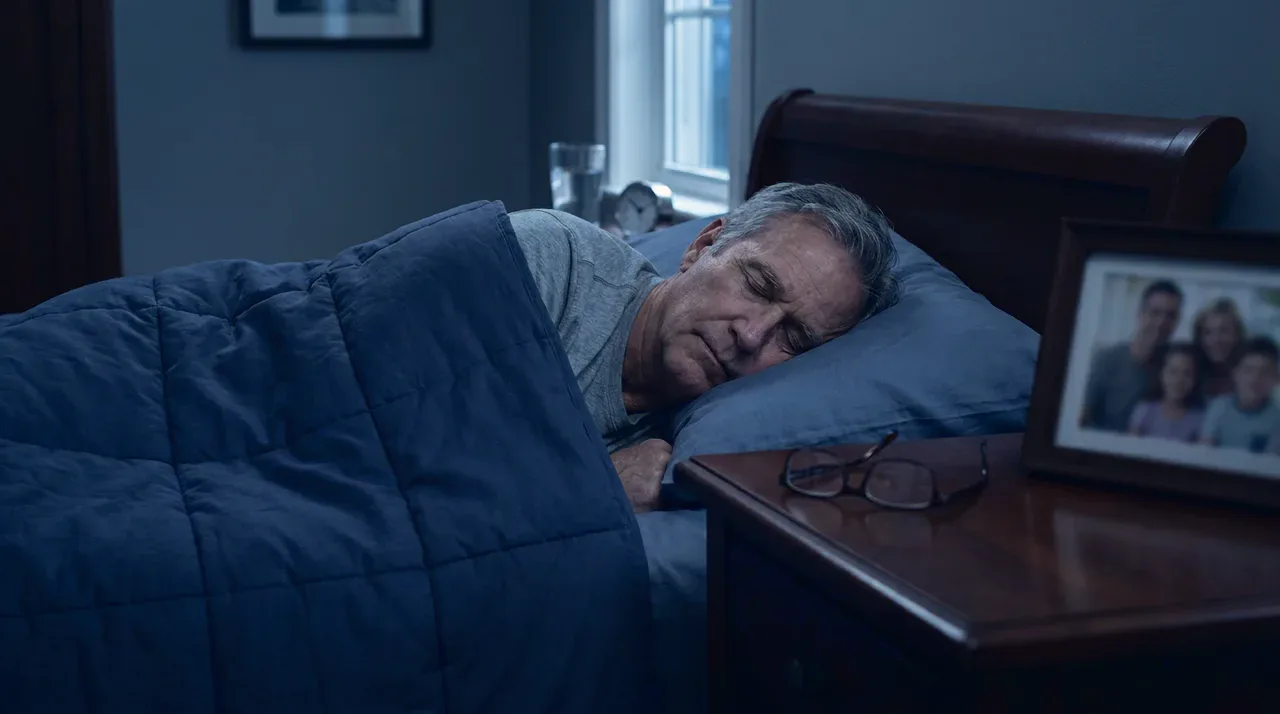
Many people who search for "apnea and memory" or "apnea and Alzheimer" are worried by a real fact: untreated sleep apnea is associated with more forgetfulness, more mental fog and a higher risk of cognitive decline and dementia. That association is real and worth knowing — but it has to be read honestly. It is a plausible link, not proof that apnea causes Alzheimer, and treating apnea is not a guaranteed shield against dementia. Here is what the evidence actually supports.
The short answer
- ·Apnea is ASSOCIATED with a higher risk of dementia and Alzheimer, but causation is NOT proven.
- ·In a 2025 meta-analysis, OSA raised the risk of all-cause dementia by about 33% and of Alzheimer by about 45% — a moderate increase, not a certainty.
- ·Plausible reasons: oxygen dips (intermittent hypoxia), fragmented deep sleep, and worse "brain rinsing" of amyloid (the glymphatic system).
- ·Treating apnea helps alertness and some cognition; it has NOT been shown to prevent Alzheimer.
What the evidence shows
The most useful summary is a 2025 meta-analysis (Ungvari and colleagues, GeroScience) that pooled 39 cohort studies. People with obstructive sleep apnea had a higher risk of all-cause dementia (hazard ratio 1.33, 95% CI 1.09–1.61) and of Alzheimer disease (HR 1.45, 95% CI 1.24–1.69). The link with vascular dementia did not reach statistical significance. A separate 2024 meta-analysis of cohort studies (Tian and colleagues, Sleep and Breathing) found a similar overall increase in cognitive impairment or dementia (HR 1.52), but, importantly, the effect was weaker and uncertain when only studies that diagnosed apnea with a sleep study were counted.
Why the caution? These are observational studies. People with apnea also tend to have more obesity, high blood pressure and diabetes — themselves risk factors for dementia — so it is hard to separate apnea from the company it keeps. The association is consistent and biologically plausible, but consistency is not the same as proof of cause.
How apnea could harm the brain — three plausible routes
1) Intermittent hypoxia. In apnea the airway collapses again and again, so blood oxygen dips dozens or hundreds of times a night. Laboratory studies link this repeated low oxygen to oxidative stress, inflammation and, in animal models, more amyloid and tau — the proteins that build up in Alzheimer. This is mechanism, not proof of dementia in people, but it explains the worry.
2) Fragmented sleep. Each apnea ends in a micro-awakening, so the brain barely reaches the deep, slow-wave sleep it needs to consolidate memories. Chronically broken sleep itself impairs attention and memory — which is why untreated apnea so often feels like "I cannot concentrate or remember".
3) The glymphatic system — the brain's "rinse cycle". A landmark study showed that during sleep the spaces between brain cells widen and cerebrospinal fluid flushes through, clearing waste including amyloid-beta (Xie and colleagues, Science, 2013). Deep sleep is when this cleaning is most active. The plausible idea — still being investigated, not proven as the cause of dementia — is that apnea, by shredding deep sleep, may leave that nightly rinse working worse.
Does treating apnea protect the brain?
What we can say
- CPAP reliably improves daytime alertness and sleep quality.
- In severe apnea, treatment can improve attention and processing speed (meta-analysis of randomized trials, Wang 2020).
- In a large Medicare cohort, CPAP use was linked to fewer new Alzheimer and dementia diagnoses (Dunietz 2021).
What we cannot promise
- No randomized trial has shown that CPAP prevents Alzheimer or dementia.
- Cognitive trials are mixed: some show benefit, others (such as the APPLES trial at 6 months) did not.
- The Medicare data are observational — a link, not proof that CPAP itself prevents dementia.
Forgetfulness from bad sleep is not dementia
It helps to separate two things. The forgetfulness, poor focus and mental fog of untreated apnea come largely from broken, oxygen-poor sleep, and they often improve once the apnea is treated — that part is reversible. Dementia is a progressive disease and is something different. If memory problems are getting worse, interfere with daily life or worry your family, they deserve their own assessment by a neurologist, while the apnea is treated in parallel. Treating your sleep is good medicine; it is not a substitute for a memory work-up when one is truly needed.
Honest note: apnea is not on the 2024 Lancet Commission list of 14 modifiable dementia risk factors, but several factors that are on it — obesity, high blood pressure, physical inactivity — travel closely with apnea. Treating the apnea, and the health it shares a bed with, is sensible whatever the final verdict on dementia turns out to be.
References: Ungvari et al., Sleep disorders increase the risk of dementia, Alzheimer's disease, and cognitive decline: a meta-analysis (GeroScience, 2025; OSA and all-cause dementia HR 1.33 [1.09–1.61], OSA and Alzheimer HR 1.45 [1.24–1.69], 39 cohorts); Tian et al., Association between sleep apnoea and risk of cognitive impairment and Alzheimer's disease: a meta-analysis of cohort-based studies (Sleep and Breathing, 2024; overall HR 1.52 [1.32–1.74], weaker in polysomnography-diagnosed studies); Xie et al., Sleep drives metabolite clearance from the adult brain (Science, 2013; ~60% increase in interstitial space and amyloid-beta clearance during sleep — the glymphatic mechanism); Wang et al., Cognitive Effects of Treating Obstructive Sleep Apnea: A Meta-Analysis of Randomized Controlled Trials (Journal of Alzheimer's Disease, 2020; CPAP improved attention and processing speed mainly in severe OSA); Dunietz et al., Obstructive sleep apnea treatment and dementia risk in older adults (Sleep, 2021; PAP use associated with lower odds of incident Alzheimer's disease, adjusted OR 0.78 [0.69–0.89] — observational).
Worried about apnea, your sleep and your memory? The first step is simple: find out whether you have apnea and how severe it is.
Frequently asked questions
Does sleep apnea cause Alzheimer or dementia?
The honest answer is: it is associated with a higher risk, but it has not been proven to cause it. In a 2025 meta-analysis of 39 cohort studies, people with obstructive sleep apnea had a moderately higher risk of all-cause dementia (about 33% higher) and of Alzheimer disease (about 45% higher). "Higher risk" is not the same as "it will give you Alzheimer". Apnea is one factor among many (age, genetics, blood pressure, diabetes, obesity), and most people with apnea will never develop dementia.
Why would apnea affect memory and the brain?
There are three plausible mechanisms, all well described but not fully proven as the cause of dementia. First, intermittent hypoxia: each apnea drops your oxygen, and these repeated dips stress brain tissue. Second, fragmented sleep: apnea breaks up deep sleep, the stage you need to consolidate memories. Third, the glymphatic system: during deep sleep the brain "rinses" out waste, including the amyloid protein linked to Alzheimer; if deep sleep is broken, that cleaning may work worse.
If I treat my apnea with CPAP, will it prevent dementia?
We cannot promise that. Treating apnea (mainly with CPAP) clearly improves daytime alertness and, in some studies, certain aspects of attention and processing speed, especially in severe apnea. Large observational studies have linked CPAP use to fewer new dementia diagnoses, but these are not proof of prevention — no randomized trial has yet shown that CPAP prevents Alzheimer. Treat your apnea for the proven benefits (sleep, alertness, heart, quality of life); a possible brain benefit is a reasonable hope, not a guarantee.
I have apnea and I am becoming forgetful — should I worry?
Forgetfulness, poor concentration and mental fog are common in untreated apnea and are usually due to poor, fragmented sleep — they often improve when the apnea is treated, and that is reversible. That is different from dementia. If memory problems are progressive, interfere with daily life or worry your family, they should be assessed by a doctor (neurology) on their own merits, while also treating the apnea. Treating the sleep does not replace a proper memory work-up when one is needed.
What is the most useful thing I can do?
Get a proper diagnosis. If you snore, stop breathing at night, wake up unrefreshed or feel sleepy by day, the priority is to find out whether you have apnea and how severe it is with a sleep study. Treating apnea has solid, proven benefits for alertness, the heart and quality of life regardless of the dementia question, and it tackles risk factors shared with dementia such as high blood pressure. The brain is one more reason to take apnea seriously, not a reason to panic.
Related: is snoring dangerous? · apnea, the heart and blood pressure
Take the next step in your evaluation
Dr. Méndez-Benegassi uses your data to answer your message. Email is not end-to-end encrypted: it can be read on the servers it passes through. Do not send medical reports or health data that way.
Data controller: Dr. Iván Méndez-Benegassi Silva, ENT physician.
Purpose: To read and answer your message. Tell us only what is essential; the rest is covered in the consultation.
Legal basis: The healthcare you are requesting (Art. 9.2.h GDPR).
Recipients: Your data is not shared with third parties; only the technical providers needed are involved, as data processors.
Your rights: Access, rectify or erase your data, object, restrict its processing and request its portability by writing to contacto@ronquidoyapneas.com. You may also lodge a complaint with the Spanish Data Protection Agency.
Full details in the Privacy policy.