
CPAP mask choice and adherence in sleep apnea
Reviewed by Dr. Iván Méndez-Benegassi Silva
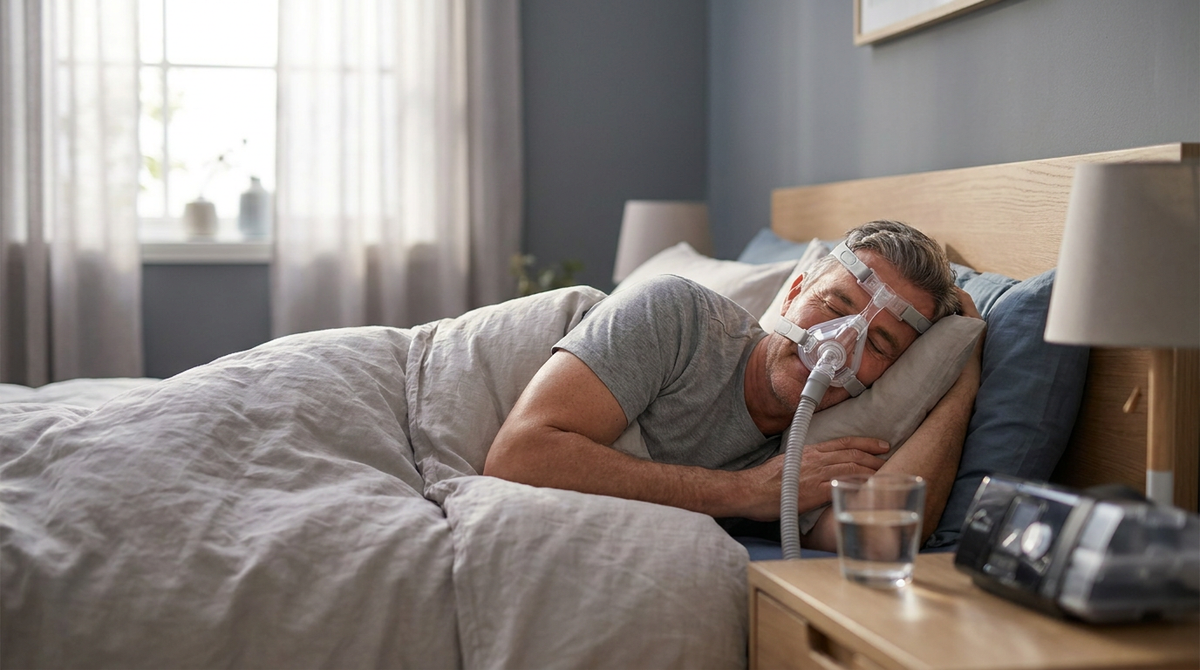
The CPAP interface affects nightly use: nasal masks and nasal pillows are linked to better adherence than oronasal masks in adults.
CPAP only protects you if you use it. Of all the parts of the equipment, the mask is the one you notice most: it is on your face all night. Choosing the right interface can make the difference between giving up within weeks and making treatment part of your routine.
This guide summarizes what is known about how mask type affects adherence in adults with obstructive sleep apnea. It is general information and does not replace an individual medical assessment.
- What it is
- the mask (interface) is the piece that delivers CPAP air to your airway
- Types
- nasal mask, nasal pillows and oronasal mask
- What the evidence shows
- nasal masks and pillows are linked to better adherence than oronasal masks
- Other factors
- comfort, dryness, claustrophobia, leaks and follow-up
- Who decides
- the choice is individual and adjusted with your medical team
Why the mask affects adherence
Think of a shoe: it can be well made and still give you blisters. The mask works the same way. If it hurts, leaks, dries your mouth or feels suffocating, it easily ends up in a drawer.
Reviews of long-term treatment point to mask discomfort, airway dryness, claustrophobia and lack of support at home as common reasons for stopping [2]. The mask is not a detail: it is part of the treatment.
The three types of interface
The most commonly used interfaces fall into three families. This table summarizes what the comparative evidence allows us to say about each one.
| Interface | How it works | What is observed |
|---|---|---|
| Nasal mask | Covers the nose | Lowest residual AHI, highest adherence |
| Nasal pillows | Rest at the nostrils | Lowest pressure needed |
| Oronasal mask | Covers nose and mouth | Higher pressure, higher residual AHI, lower adherence |
Residual AHI is the number of apneas and hypopneas per hour that still occur while on CPAP. The lower it is, the better the apnea is controlled.
What the evidence says about adherence
A 2022 network meta-analysis pooled 29 studies with 6,378 participants and directly compared the three interface types [1]. Both nasal masks and nasal pillows were linked to lower residual AHI, lower pressure and higher adherence than oronasal masks.
In that analysis's ranking, nasal masks had the lowest residual AHI and the highest adherence, while nasal pillows needed the lowest pressure [1]. Differences were larger in patients with a lower AHI before treatment and in those whose pressure had been set during a titration rather than during therapy itself.
This does not mean an oronasal mask is a bad option for everyone. It is a group-level finding: for an individual, mouth leaks, comfort and personal preference may matter more.
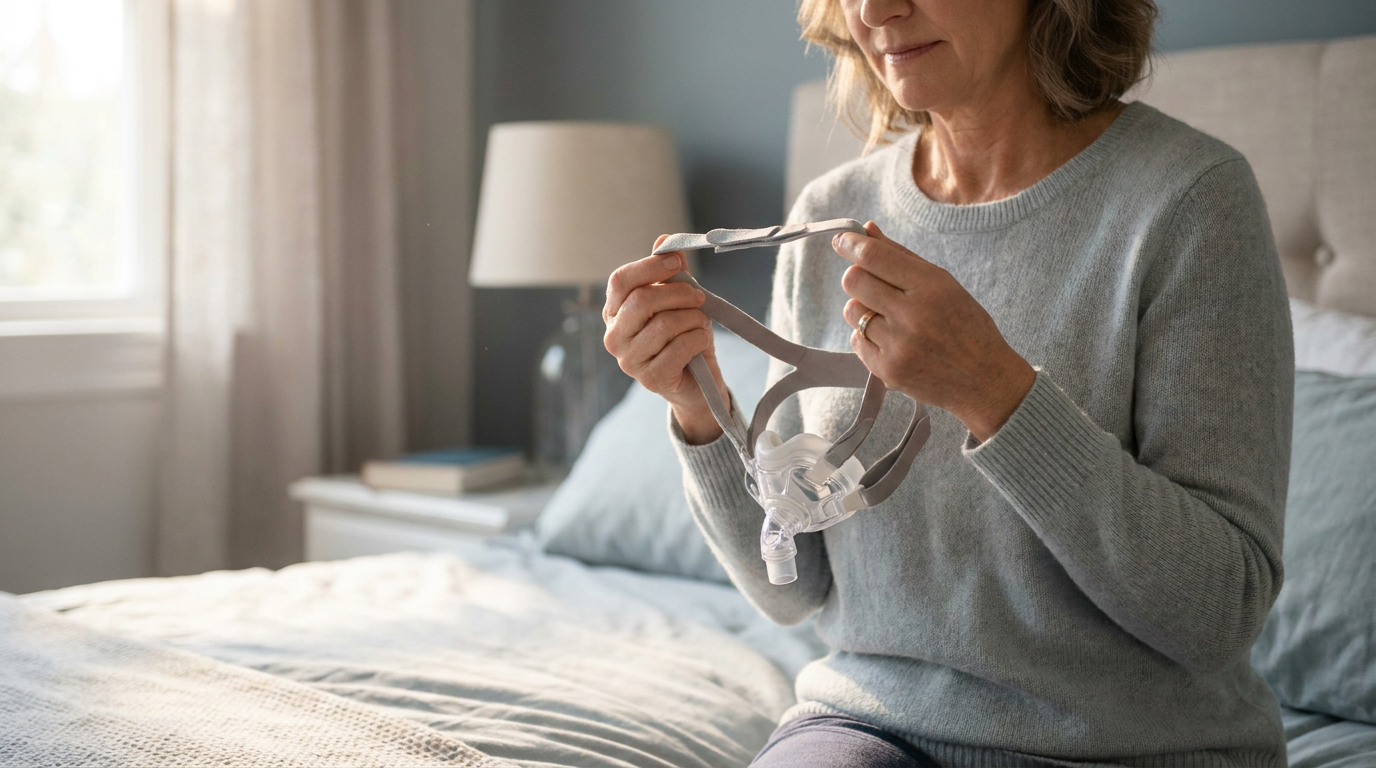
Pressure, leaks and CO2 rebreathing
There is a lesser-known effect: part of the air you breathe out can stay in the mask and be breathed in again. This is called CO2 rebreathing.
A 2024 bench study, using a lung simulator and nine masks, found that all of them performed worse at low pressures, high tidal volumes and high breathing rates. Some designs were also more prone to rebreathing than others [3]. Because it was a laboratory study and not a patient study, it helps explain the mechanism, not predict how any one person will feel. Even so, it supports choosing the mask carefully when CPAP is started.
Beyond mask type: fit, comfort and follow-up
Mask type is only one piece. Much dropout can be avoided by solving small problems early.
- Size and fit: a poorly fitted mask causes leaks, marks and noise.
- Dryness and congestion: mention them early, because they can change the mask or the recommended settings.
- Early follow-up: contact with your team, including remote monitoring, helps fix problems before the patient gives up CPAP [2].
- Gradual adaptation: getting used to the mask during the day can help people who feel claustrophobic.
Reviews also describe smart-fit interfaces and telemonitoring systems that aim to improve comfort and adherence [2].
The nose matters too
A nasal mask or nasal pillows assume that air passes well through the nose. With marked nasal blockage they can be hard to tolerate, and you may end up breathing through your mouth.
That is why, in some cases, the nose and its link to snoring and sleep apnea is assessed. Nasal surgery is considered, in carefully selected patients, as a support to tolerate CPAP better and not as a stand-alone cure for apnea.
If you cannot tolerate the mask
Changing the interface is usually the first step, but not the only one. If CPAP is still not tolerated after adjusting the mask and follow-up, there are alternatives to CPAP that are assessed case by case. For the different models and selection criteria, see the guide on types of CPAP mask.
The decision depends on your anatomy, your apnea and how you breathe through your nose and mouth. An individual assessment helps organize all this before changing treatment.
Key points
- Compared with oronasal masks, nasal masks and nasal pillows are linked to better adherence and lower residual AHI.
- Comfort, fit and follow-up weigh as much as mask type.
- The best mask is the one you can use all night, every night, with the support of your medical team.
Frequently asked questions
Which CPAP mask is linked to better adherence?
In a 2022 meta-analysis, nasal masks and nasal pillows were linked to higher adherence than oronasal masks. This is a group-level finding, and the final choice is individual.
Why is the oronasal mask linked to poorer results?
Comparative studies link it to higher pressure, higher residual AHI and lower adherence. Even so, it may suit some people, depending on how they breathe and tolerate treatment.
What should I do if the mask bothers me or leaks?
It is worth telling your medical team early. It is often solved by adjusting the size or fit, or trying another interface type, before the problem leads to stopping CPAP.
Can I use CPAP if I have trouble breathing through my nose?
Nasal obstruction can make CPAP harder to use, especially with nasal masks. In some cases treating the nose is considered to support tolerance, but only after an individual assessment.
References
- In search of a better CPAP interface: A network meta-analysis comparing nasal masks, nasal pillows and oronasal masks (2022)
- Long-Term Management of Sleep Apnea-Hypopnea Syndrome: Efficacy and Challenges of Continuous Positive Airway Pressure Therapy - A Narrative Review (2024)
- Circuit-dependent carbon dioxide rebreathing during continuous positive airway pressure (2024)
Informational content reviewed by Dr. Méndez-Benegassi. It does not replace a medical consultation.