
Childhood sleep apnea: symptoms, when to operate and techniques
Medically reviewed by Dr. Iván Méndez-Benegassi Silva · Otorhinolaryngology (ENT) Specialist with over 25 years of experience in sleep surgery and advanced rhinology · European Board Certificate (ORL-HNS) · HM Hospitales, Madrid · License No. 282855946
In children, sleep apnea is usually caused by large tonsils and adenoids, and it shows as hyperactivity and behaviour problems rather than sleepiness — it can mimic or worsen ADHD. The decision to operate depends on severity measured with a sleep study: mild cases can be watched and re-assessed at about 6 months (up to half improve medically), moderate cases should be operated, and severe cases should be operated within a month. The sleep study also sets the safety plan for surgery. Our preferred technique is intracapsular tonsillectomy with coblation plus endoscopically-guided adenoidectomy.
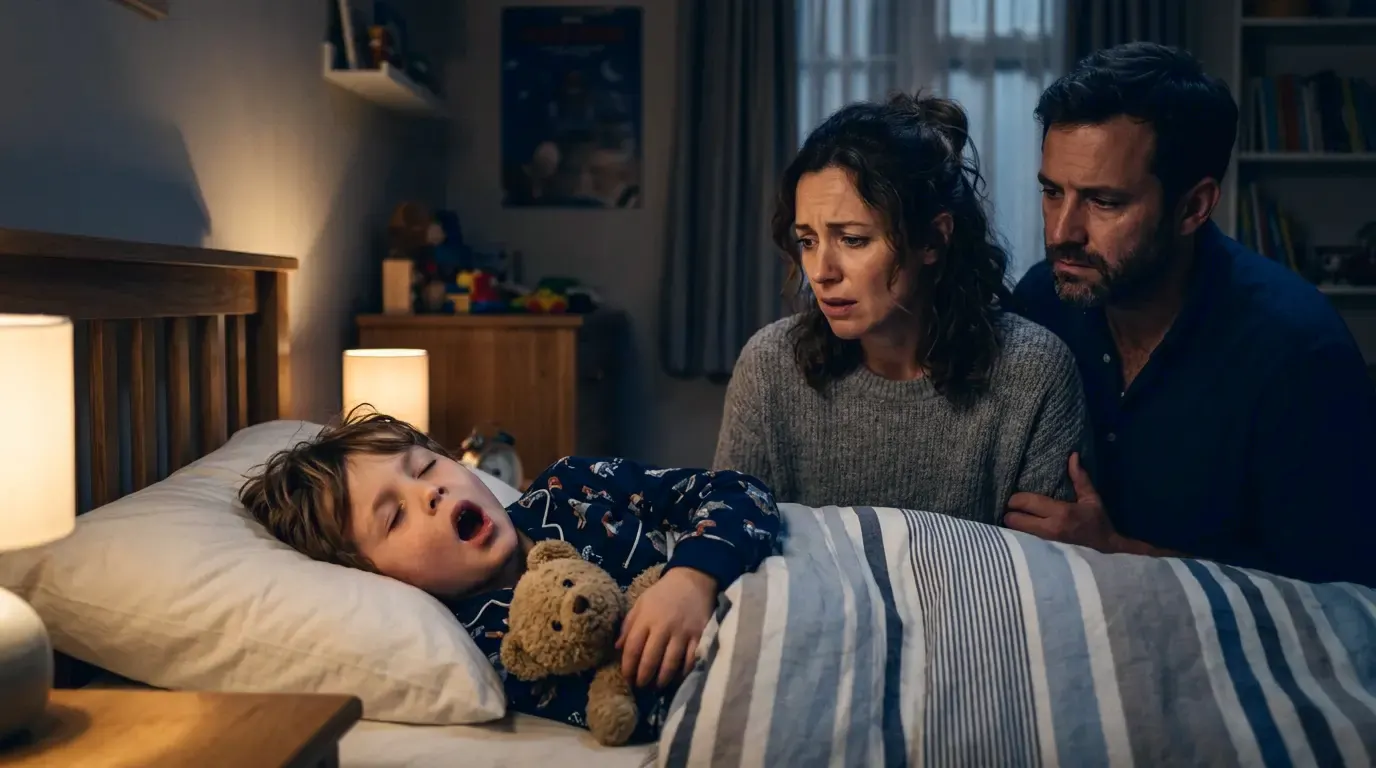
Symptoms in children: hyperactivity, not sleepiness
This is the key difference from adults. A tired adult feels sleepy; a child with apnea often becomes hyperactive, inattentive and irritable. That is why it is so often confused with — or worsens — ADHD.
At night
- Habitual snoring (most nights), loud or laboured
- Witnessed breathing pauses or gasping/choking
- Visible effort to breathe; chest "sucking in"
- Mouth breathing while asleep, restless sleep, odd positions (neck hyper-extended)
- Sweating at night, bed-wetting (enuresis), frequent awakenings
During the day
- Hyperactivity, restlessness and impulsivity (NOT the daytime sleepiness adults show)
- Inattention, poor concentration, irritability and mood swings
- Poor school performance, behavioural problems
- Chronic mouth breathing, "adenoid face", morning headache
- Faltering growth (deep sleep, when growth hormone is released, is fragmented)
ADHD differential. Some children labelled as hyperactive or inattentive actually have undiagnosed sleep apnea, and in children who do have ADHD, untreated apnea makes it worse. Treating the apnea can improve attention, behaviour and school performance — which is why apnea should be ruled out before attributing everything to ADHD.
Chervin questionnaire (PSQ): calculate the score
PSQ stands for Pediatric Sleep Questionnaire, and the part used for apnea is its SRBD scale (Sleep-Related Breathing Disorder). It was created and validated by Dr. Ronald Chervin (University of Michigan) in 2000, which is why it is usually called "the Chervin questionnaire". It is answered by the parents about what they observe in the child.
What is it for: in children, apnea hides behind snoring, mouth-breathing and especially hyperactivity and behaviour problems rather than daytime sleepiness, so it is easy to miss. This questionnaire is a quick way for the family to gauge how likely apnea is and to decide whether a sleep study and an ENT visit are worthwhile. It is a screening aid, not a diagnosis.
It has 22 Yes / No items. Answer each one; when all 22 are answered, the score and result are calculated automatically.
Breathing / snoring
- Snores more than half the time
- Always snores
- Snores loudly
- Has heavy or noisy breathing at night
- Struggles or makes a big effort to breathe while asleep
- You have seen the child stop breathing (pauses) at night
Daytime symptoms
- Breathes through the mouth during the day
- Wakes with a dry mouth in the morning
- Wets the bed (enuresis)
- Wakes up feeling unrefreshed
- Is sleepy during the day
- A teacher or other adult has noticed they seem sleepy during the day
- Is hard to wake in the morning
- Wakes up with a headache
- Stopped growing at a normal rate at some point
- Is overweight
Behaviour (ADHD-type)
- Does not seem to listen when spoken to directly
- Has trouble organising tasks and activities
- Is easily distracted
- Fidgets with hands or feet, squirms in the seat
- Is "on the go", as if driven by a motor
- Interrupts or intrudes on others
Answer all 22 items to get the score. A positive screen is a PSQ-SRBD score ≥ 0.33 (about 8 of 22 affirmative).
Screening aid, not a diagnosis. Source: Chervin RD et al. Pediatric Sleep Questionnaire (PSQ). Sleep Med. 2000;1(1):21-32.
When does it need surgery? It depends on severity
Severity is graded by the apnea–hypopnea index (AHI) from a sleep study. The cut-offs below are orientative; the specialist interprets them together with the symptoms and the airway exam.
Mild
AHI 1–5Watchful waiting is reasonable. Treat the medical contributors first (nasal corticosteroid, allergy/rhinitis) and re-assess at ~6 months: up to half of mild cases improve with medical treatment and growth.
Moderate
AHI 5–10Surgery is indicated. Adenotonsillar tissue rarely shrinks enough on its own; planned surgery resolves the obstruction.
Severe
AHI > 10Surgery should not be delayed — ideally within the first month. Severe apnea carries cardiovascular, growth and neurocognitive risk, and needs extra perioperative safety measures.
Why a sleep study is essential — not only for severity
A sleep study does not just classify how severe the apnea is — it identifies the high-risk child so we can plan preventive measures for the surgery itself and the immediate recovery. This is why it should not be skipped:
- It guides the anaesthetic plan and the level of monitoring — a child with severe apnea has a sensitised airway and is more vulnerable to opioids and sedatives.
- It decides whether the surgery can be day-case or needs an overnight monitored bed (or paediatric ICU) the first night.
- After removing tonsils and adenoids there is swelling; in severe apnea this raises the risk of respiratory complications in the first hours, which can be anticipated.
- It flags the highest-risk children (under 3, severe apnea, obesity, Down syndrome, craniofacial or neuromuscular conditions) who benefit most from these precautions.
The three surgical techniques, compared
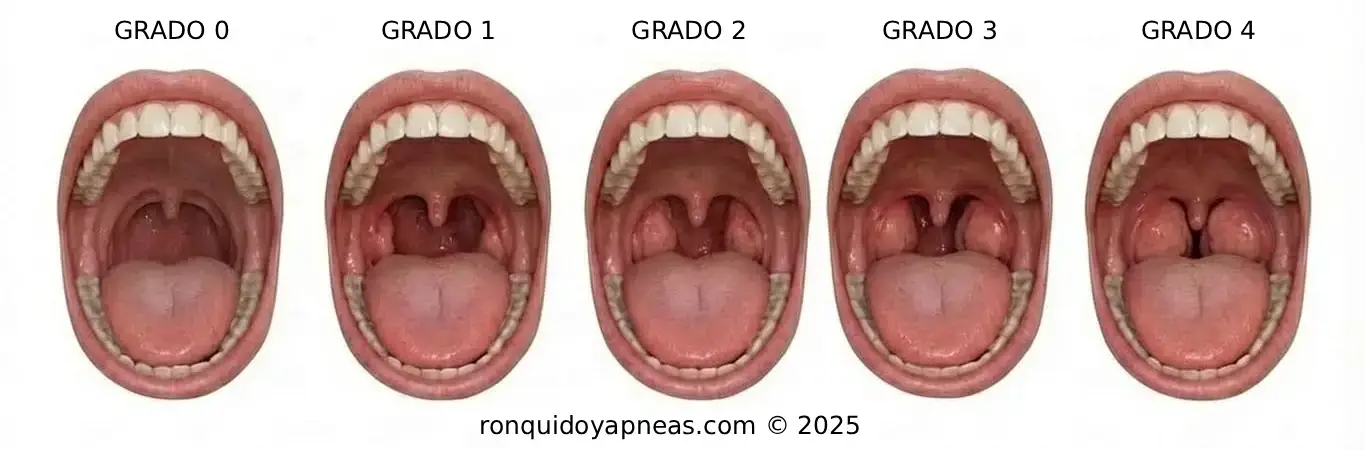
There are three ways to treat the tonsils and adenoids. They are not equivalent. The size of the tonsils (Friedman grade) also guides the choice: large grade III–IV tonsils are best removed with intracapsular coblation, not radiofrequency.
To understand first why tonsils and adenoids make a child snore, read snoring and childhood sleep apnea: the role of tonsils and adenoids.
| Technique | What it does | Pain | Bleeding risk | Recovery | Result visible in surgery | Indication |
|---|---|---|---|---|---|---|
| Classic adenotonsillectomy (extracapsular) | Removes the whole tonsil down to the throat muscle + adenoid curettage | Higher | Higher | 10–14 days | Yes | Traditional standard |
| Intracapsular tonsillectomy with coblation + endoscopically-guided adenoidectomyOur choice | Reduces the obstructive tonsil preserving a protective capsule; adenoids removed under direct endoscopic vision | Lower | Lower (tonsillar and adenoidal) | 3–4 days | Yes, controlled in the act | Our preferred technique — the reference in countries such as the UK |
| Radiofrequency tonsil reduction | Shrinks volume with thermal energy, without removing tissue in the act | Lower | Lower | Variable (weeks) | No — result not seen for > 1 month | Good option for adenoids; NOT advised for grade III–IV tonsils |
Why we prefer coblation
- You control the result during the operation — you see how much you reduce, so you do not fall short. With radiofrequency the result is only seen weeks later, and an under-correction cannot be fixed in the same surgery.
- It preserves the tonsil capsule and the underlying muscle, which means much less pain.
- It seals blood vessels as it works, lowering the risk of bleeding both at the tonsil and the adenoid.
- The adenoids are removed under direct endoscopic vision, so the resection is complete and not done blindly.
- Recovery is fast (3–4 days) and the child returns to school quickly.
Rhinitis treated in the same procedure. Coblation and radiofrequency can also reduce the inferior turbinates to treat rhinitis and nasal obstruction in the same operation and the same anaesthetic — so the child also breathes better through the nose.
Video: adenoids in children, what they are and how they are operated on
Frequently asked questions
When does childhood sleep apnea need surgery?
It depends on severity measured with a sleep study. Mild cases (AHI 1–5) can often be watched and re-assessed at about 6 months, because up to half improve with medical treatment and growth. Moderate cases (AHI 5–10) should be operated. Severe cases (AHI > 10) should be operated without delay, ideally within the first month.
Why does my hyperactive child need a sleep study, not just an exam?
In children, apnea often looks like hyperactivity, inattention and behaviour problems rather than sleepiness, and it overlaps with — or worsens — ADHD. A sleep study confirms whether there really is apnea and, crucially, how severe it is, which sets the safety plan for the surgery and the immediate recovery.
What is the Chervin questionnaire?
It is a validated paediatric sleep questionnaire (PSQ) of 22 yes/no items about snoring and breathing, daytime symptoms and behaviour. If about a third or more are positive (roughly 8 of 22), obstructive sleep apnea is highly likely and a sleep study is warranted. It is a screening aid, not a diagnosis.
Which surgical technique is best?
For us, intracapsular tonsillectomy with coblation plus endoscopically-guided adenoidectomy. It causes less pain and less bleeding, allows a 3–4 day recovery, and — unlike radiofrequency — the result is controlled during the operation, so the surgeon does not fall short. Radiofrequency is a good option for adenoids but not for large (grade III–IV) tonsils.
Can the rhinitis or blocked nose be treated at the same time?
Yes. The same coblation and radiofrequency technology can reduce the inferior turbinates to treat rhinitis and nasal obstruction in the same procedure and the same anaesthetic, improving the child’s nasal breathing.
This guide is educational and does not replace a medical diagnosis or a sleep study. If your child snores most nights, has witnessed breathing pauses, mouth-breathing or behaviour and attention problems, consult a specialist.
Reviewed by Dr. Iván Méndez-Benegassi Silva · Otorhinolaryngology (ENT) Specialist with over 25 years of experience in sleep surgery and advanced rhinology · European Board Certificate (ORL-HNS) · HM Hospitales · Last reviewed: 22 Jun 2026
Take the next step in your evaluation
Dr. Méndez-Benegassi uses your data to answer your message. Email is not end-to-end encrypted: it can be read on the servers it passes through. Do not send medical reports or health data that way.
Data controller: Dr. Iván Méndez-Benegassi Silva, ENT physician.
Purpose: To read and answer your message. Tell us only what is essential; the rest is covered in the consultation.
Legal basis: The healthcare you are requesting (Art. 9.2.h GDPR).
Recipients: Your data is not shared with third parties; only the technical providers needed are involved, as data processors.
Your rights: Access, rectify or erase your data, object, restrict its processing and request its portability by writing to contacto@ronquidoyapneas.com. You may also lodge a complaint with the Spanish Data Protection Agency.
Full details in the Privacy policy.